
Penguins in Stewart Island
Stewart Island is linked here mainly with Fiordland Penguin. Regional hubs with one species are still useful: they show the place-specific trap that bird is in.
Stewart Island is part of the penguin world because the surrounding seas, nesting ground, and climate make life possible there. On this page that means one bird first: Fiordland Penguin. They must move between rough surf and concealed forest nests while staying hidden from predators and human disturbance in a very narrow breeding window.
Species in lens
1
Singleton hub — depth over breadth
Profile focus
Fiordland Penguin
Up to 71 cm
Highest risk in view
Fiordland Penguin
Vulnerable
Species profile entry
Stewart Island is part of the penguin world because the surrounding seas, nesting ground, and climate make life possible there.
Signature insight
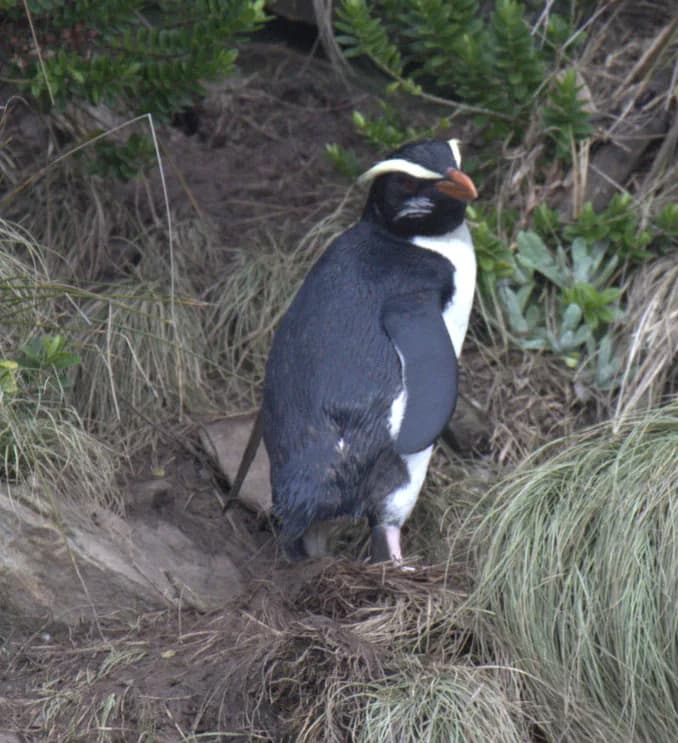
Fiordland Penguins look like crested rock specialists until they vanish into wet forest. Tawaki survive by being hard to reach and harder to read.
Open full Fiordland Penguin profileWhat this view reveals
- Fiordland Penguin is the only species in this region view right now.
- They must move between rough surf and concealed forest nests while staying hidden from predators and human disturbance in a very narrow breeding window.
- Conservation: Vulnerable · ~6,250 mature individuals.
Understanding Penguins in Stewart Island
Stewart Island currently highlights one species in this catalogue: Fiordland Penguin (Eudyptes pachyrhynchus). Fiordland Penguins look like crested rock specialists until they vanish into wet forest.
Survival brief: They must move between rough surf and concealed forest nests while staying hidden from predators and human disturbance in a very narrow breeding window. Myth people still carry: All crested penguins breed on bare, noisy slopes. What the evidence supports instead: Fiordland birds often nest in dark, wet, sheltered places where secrecy matters more than spectacle.
Field numbers: 51–71 cm, 2.7–5.9 kg, lifespan about 10–20 years. Status Vulnerable; population ~6,250 mature individuals; trend decreasing.
Where and what: ranges include New Zealand (South Island) and Stewart Island; habitats Temperate rainforest, Rocky coastlines, and Dense vegetation; diet squid, crustaceans, and small fish. Listed as Vulnerable with an estimated 5,500–7,000 breeding pairs. Open the full profile for sources, research gaps, and related species.
Frequently asked questions
Which penguins live in Stewart Island?
In this catalogue, Fiordland Penguin is the species tied to this region page. Also known as Tawaki, this elusive yellow-crested penguin nests in dense temperate rainforests along New Zealand's Fiordland coast — one of the few penguins to breed in forest environments.
What is the main survival problem for Fiordland Penguin?
They must move between rough surf and concealed forest nests while staying hidden from predators and human disturbance in a very narrow breeding window.
What is the conservation status of Fiordland Penguin?
Fiordland Penguin is listed as Vulnerable, with an estimated population of ~6,250 mature individuals. Trend: decreasing. Listed as Vulnerable with an estimated 5,500–7,000 breeding pairs.