
Penguins in Gough Island
Gough Island is linked here mainly with Northern Rockhopper Penguin. Regional hubs with one species are still useful: they show the place-specific trap that bird is in.
Gough Island is part of the penguin world because the surrounding seas, nesting ground, and climate make life possible there. On this page that means one bird first: Northern Rockhopper Penguin. This species needs remote island breeding sites plus reliable warm-temperate foraging systems, and its historical decline suggests that combination has been failing for decades.
Species in lens
1
Singleton hub — depth over breadth
Profile focus
Northern Rockhopper Penguin
Up to 62 cm
Highest risk in view
Northern Rockhopper Penguin
Endangered
Species profile entry
Gough Island is part of the penguin world because the surrounding seas, nesting ground, and climate make life possible there.
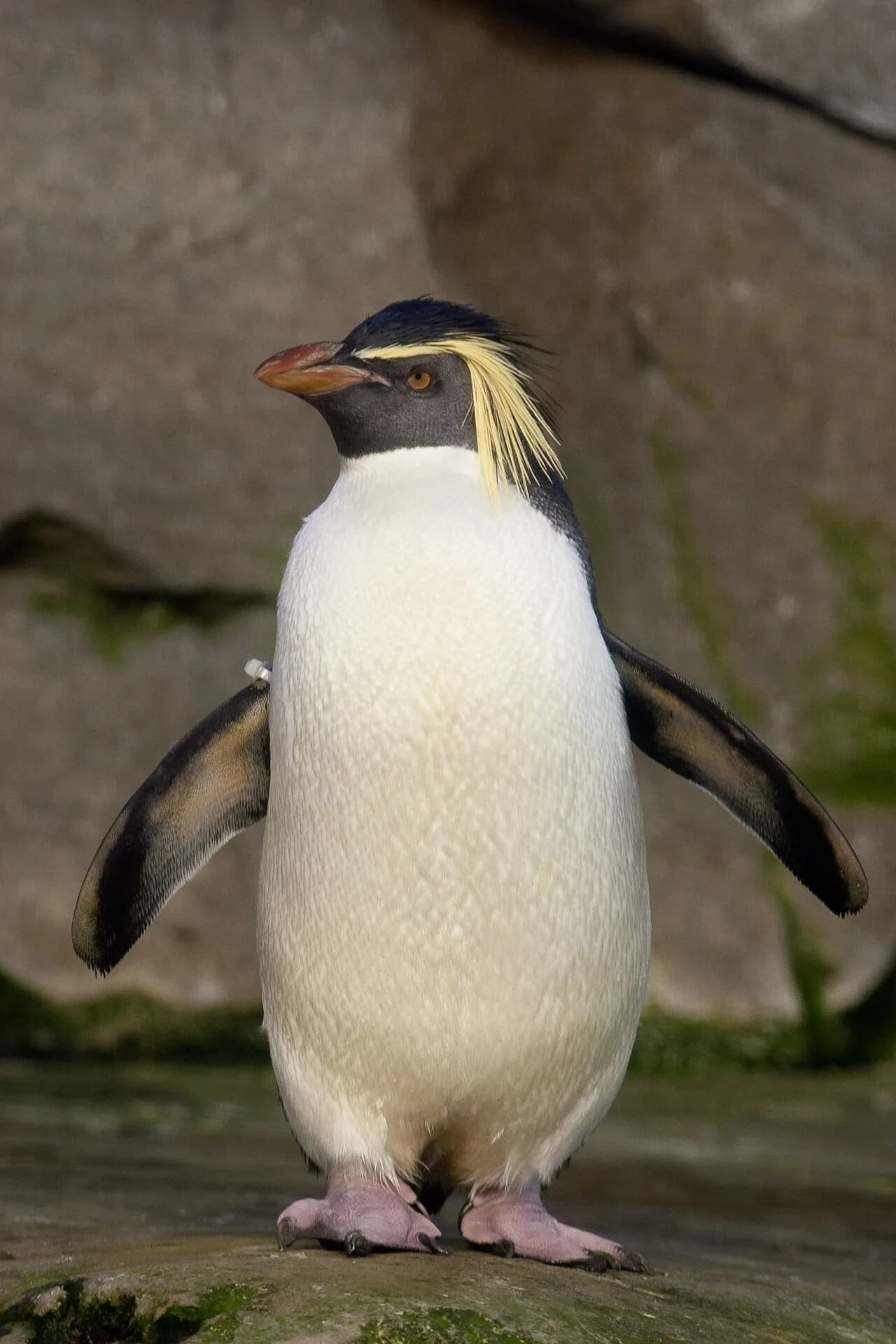
Signature insight
Northern Rockhoppers are the clearest case for why a charismatic bird can still disappear in plain sight. Bright crests do not stop a slow food-web collapse.
Open full Northern Rockhopper Penguin profileWhat this view reveals
- Northern Rockhopper Penguin is the only species in this region view right now.
- This species needs remote island breeding sites plus reliable warm-temperate foraging systems, and its historical decline suggests that combination has been failing for decades.
- Conservation: Endangered · ~240,300 breeding pairs.
Understanding Penguins in Gough Island
Gough Island currently highlights one species in this catalogue: Northern Rockhopper Penguin (Eudyptes moseleyi). Northern Rockhoppers are the clearest case for why a charismatic bird can still disappear in plain sight.
Survival brief: This species needs remote island breeding sites plus reliable warm-temperate foraging systems, and its historical decline suggests that combination has been failing for decades. Myth people still carry: Remote islands shield penguins from most human pressure. What the evidence supports instead: Distance protects colonies from tourists, not from climate shifts or food-web disruption spread across entire ocean basins.
Field numbers: 52–62 cm, 2.5–4.3 kg, lifespan about 10–25 years. Status Endangered; population ~240,300 breeding pairs; trend decreasing.
Where and what: ranges include Tristan da Cunha, Gough Island, Amsterdam Island, and St. Paul Island; habitats Rocky coastlines, Cliff faces, and Tussock grass; diet krill, squid, fish, and crustaceans. Classified as Endangered, with populations having fallen by almost 90% since the 1950s. Open the full profile for sources, research gaps, and related species.
Frequently asked questions
Which penguins live in Gough Island?
In this catalogue, Northern Rockhopper Penguin is the species tied to this region page. Only recognized as a separate species from the Southern Rockhopper in 2006, Northern Rockhoppers have longer, more luxuriant crest feathers and have suffered a devastating ~90% population decline over the past century.
What is the main survival problem for Northern Rockhopper Penguin?
This species needs remote island breeding sites plus reliable warm-temperate foraging systems, and its historical decline suggests that combination has been failing for decades.
What is the conservation status of Northern Rockhopper Penguin?
Northern Rockhopper Penguin is listed as Endangered, with an estimated population of ~240,300 breeding pairs. Trend: decreasing. Classified as Endangered, with populations having fallen by almost 90% since the 1950s.