
Northern Rockhopper Penguin
Eudyptes moseleyi
Only recognized as a separate species from the Southern Rockhopper in 2006, Northern Rockhoppers have longer, more luxuriant crest feathers and have suffered a devastating ~90% population decline over the past century.
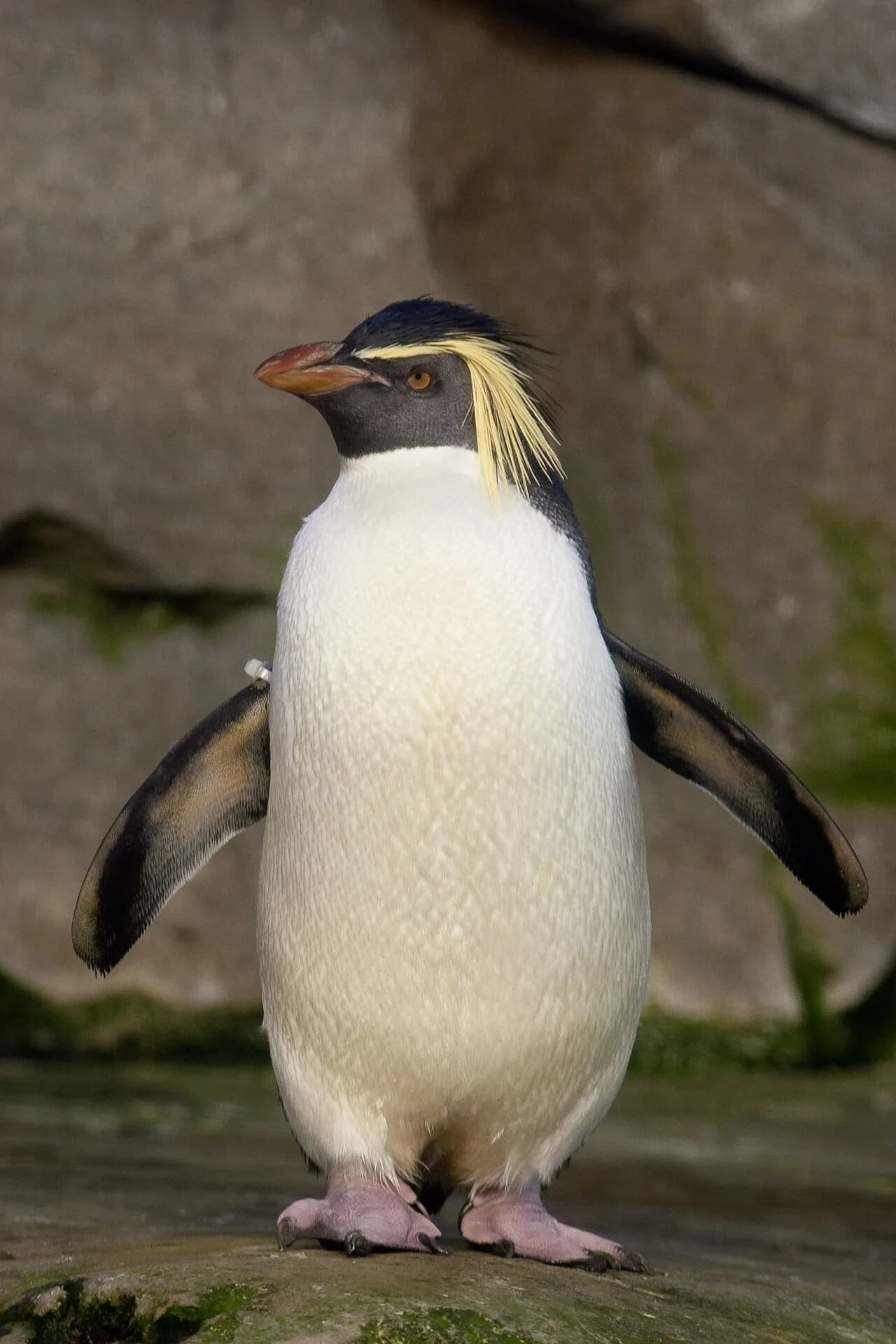
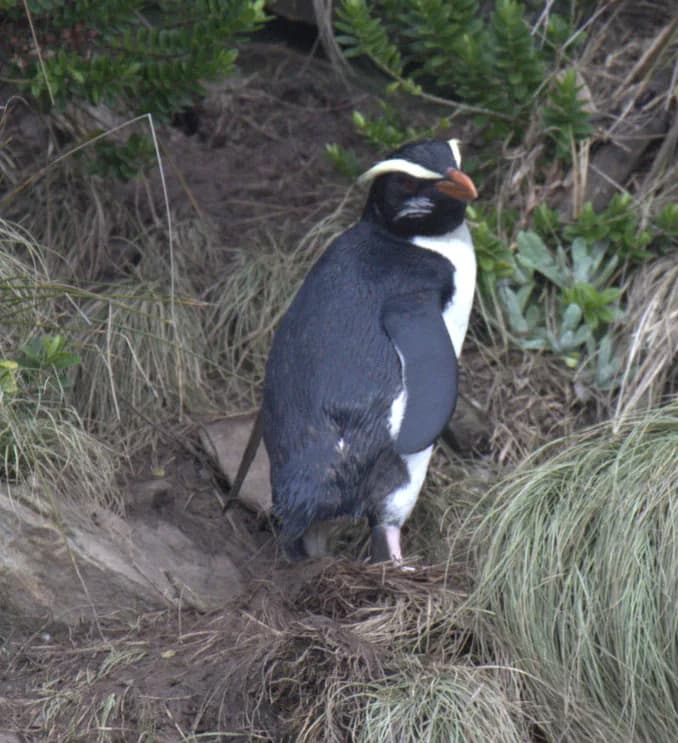
Northern rockhopper penguin on remote island cliff
IUCN Red List status
Classified as Endangered, with populations having fallen by almost 90% since the 1950s.
Red List history and threatsEstimated population
~240,300 breeding pairs
Decreasing trend
Estimate assessed 2020.
Northern rockhoppers live on remote South Atlantic and Indian Ocean islands such as Tristan da Cunha, where they navigate steep rocky coasts by hopping rather than tobogganing on their bellies, which is how they got their name. They were only recognized as a separate species from the Southern Rockhopper in 2006, and are instantly noticeable thanks to long, bright yellow eyebrow feathers that extend well beyond the head.
The species is classified as Endangered, with populations having fallen by almost 90 percent since the 1950s, largely attributed to climate change, overfishing and other human-driven pressures. They breed on some of the most remote islands in the world, making population monitoring and conservation efforts particularly challenging.
If You Only Learn One Thing About This Penguin
Northern Rockhoppers are the clearest case for why a charismatic bird can still disappear in plain sight. Bright crests do not stop a slow food-web collapse.
The Survival Problem
This species needs remote island breeding sites plus reliable warm-temperate foraging systems, and its historical decline suggests that combination has been failing for decades.
What Makes This Species Weird
Northern birds take the rockhopper design and push it into steeper, warmer, more isolated settings where the line between toughness and over-specialization gets thin.
Myth vs Reality
Myth
Remote islands shield penguins from most human pressure.
Reality
Distance protects colonies from tourists, not from climate shifts or food-web disruption spread across entire ocean basins.
Behavior & Traits
- Navigate steep rocky coasts by hopping rather than tobogganing on their bellies
- Have longer, more elaborate bright yellow eyebrow feathers than their Southern relatives
- Breed on some of the most remote islands in the world, including Tristan da Cunha
- Only recognized as a separate species from Southern Rockhoppers in 2006
Habitat & Range
Diet
Conservation
Classified as Endangered, with populations having fallen by almost 90% since the 1950s. Climate change, overfishing, and other human-driven pressures are the primary drivers of decline. They breed on some of the most remote islands in the world (Tristan da Cunha, Gough Island), making population monitoring and conservation efforts particularly challenging.
Red List history
What is driving it: A long, poorly explained decline across Tristan da Cunha and Gough, likely tied to changes in prey availability.
- 2008EndangeredCurrent
Recognised as a species separate from the southern rockhoppers and assessed on its own steep decline.
Main threats
- Climate change
- Overfishing and reduced prey availability
- Remote-colony monitoring challenges
Common predators
Breeding & Movement
Breeding
- Breeds on steep, rocky islands in the South Atlantic and Indian Ocean.
- Adults climb difficult shorelines to reach colonies set back from surf zones.
Movement
- Northern Rockhopper Penguins spend much of the year foraging at sea and return to established breeding colonies on land or ice.
Fun Facts
Only recognized as a separate species from Southern Rockhoppers in 2006
Their population has declined by approximately 90% since the 1950s
They have longer and more elaborate crest feathers than Southern Rockhoppers
They breed on some of the most remote islands in the world
Their bright yellow eyebrow feathers extend well beyond the head, making them instantly recognizable
Climate change, overfishing and other human-driven pressures are the main causes of their dramatic decline
They navigate steep rocky coasts by hopping rather than sliding on their bellies
Research Gap
Researchers still do not have a neat answer for what proportion of the northern rockhopper collapse came from climate forcing, prey competition, or longer-term ecosystem shifts.
Frequently Asked Questions
How tall is a Northern Rockhopper Penguin?
Northern Rockhopper Penguins stand 52–62 cm tall and typically weigh 2.5–4.3 kg.
What do Northern Rockhopper Penguins eat?
Northern Rockhopper Penguins primarily eat krill, squid, fish, and crustaceans. Prey choice tracks ocean conditions and breeding season energy needs as much as preference.
Where do Northern Rockhopper Penguins live?
Northern Rockhopper Penguins are found in Tristan da Cunha, Gough Island, Amsterdam Island, and St. Paul Island. Habitats include Rocky coastlines, Cliff faces, and Tussock grass.
What is the main survival problem for Northern Rockhopper Penguins?
This species needs remote island breeding sites plus reliable warm-temperate foraging systems, and its historical decline suggests that combination has been failing for decades.
Are Northern Rockhopper Penguins endangered?
The Northern Rockhopper Penguin is classified as Endangered on the IUCN Red List. Estimated population: ~240,300 breeding pairs. Population trend: decreasing. Classified as Endangered, with populations having fallen by almost 90% since the 1950s. Climate change, overfishing, and other human-driven pressures are the primary drivers of decline. They breed on some of the most remote islands in the world (Tristan da Cunha, Gough Island), making population monitoring and conservation efforts particularly challenging.
How long do Northern Rockhopper Penguins live?
Northern Rockhopper Penguins typically live 10–25 years in the wild, though food access, predation, and breeding success can cut that short.
What is a common myth about Northern Rockhopper Penguins?
Myth: Remote islands shield penguins from most human pressure. Reality: Distance protects colonies from tourists, not from climate shifts or food-web disruption spread across entire ocean basins.
What threatens Northern Rockhopper Penguins?
The main pressures include climate change, overfishing and reduced prey availability, and remote-colony monitoring challenges. Natural predators include Fur seals, Skuas, and Giant petrels.
What is one surprising fact about Northern Rockhopper Penguins?
Only recognized as a separate species from Southern Rockhoppers in 2006
Written for the Survival Lab series on Penguin Place
Penguin Place is written like a natural-history notebook, not a content mill. The job is to explain what each penguin is up against, what makes it strange, and where the evidence still runs thin.
Quick Facts
- Scientific Name
- Eudyptes moseleyi
- Height
- 52–62 cm
- Weight
- 2.5–4.3 kg
- Lifespan
- 10–25 years
- Status
- Endangered
- Population
- ~240,300 breeding pairs
- Genus
- Eudyptes
Explore by Topic
Status
Genus
Regions
Habitats
Compare
Start with the closest side-by-side matches by lineage, habitat, and size.
How we source claims
We start with conservation assessments, research institutions, and field guides that have to survive real scrutiny. Then we write only what still sounds true after the comparison.
- Use IUCN, BirdLife, museums, aquariums, conservation groups, and research institutions before broad explainers.
- Lead with a survival problem, not a keyword bucket.
- Say when the science is uncertain instead of sanding every gap into fake certainty.
Further reading
This profile was reviewed on February 27, 2026 using the sources listed below.
- IUCN Red List - Global conservation assessments and extinction-risk categories.
- BirdLife Data Zone - Species accounts, distribution, and population summaries.
- Penguins International - Species explainers and conservation context focused on penguins.
- British Antarctic Survey - Antarctic penguin ecology, diving, and sea-ice context.
Continue the trail
Broader Survival Lab reading on Penguin Place connected to Northern Rockhopper Penguin — survival, habitat, food, and conservation pressure.
Why Rockhopper Penguins Hop
The survival logic behind the most ridiculous-looking penguin gait, and why hopping is exactly right for cliffs, boulders, and surf-cut colonies.
How Many Penguin Species Are There?
A field-guide answer to the living penguin count, why many lists say 18, and why Penguin Place profiles 19 after the rockhopper split.
Related to Northern Rockhopper Penguin
Nearby species by lineage, range, size, and conservation pressure — better next reads than a random list.
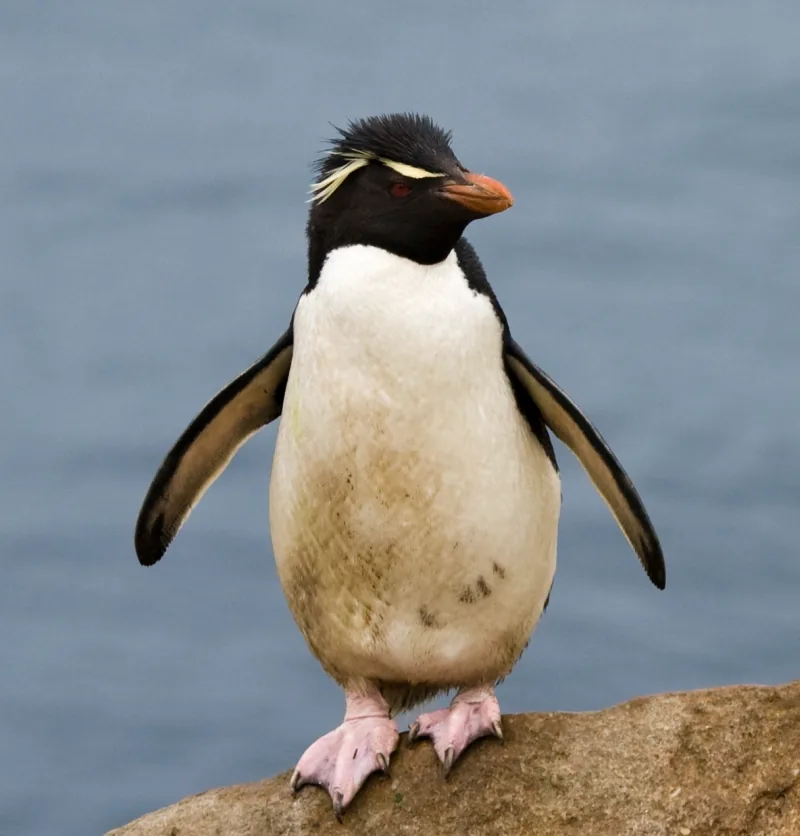
Western Rockhopper Penguin
Eudyptes chrysocome
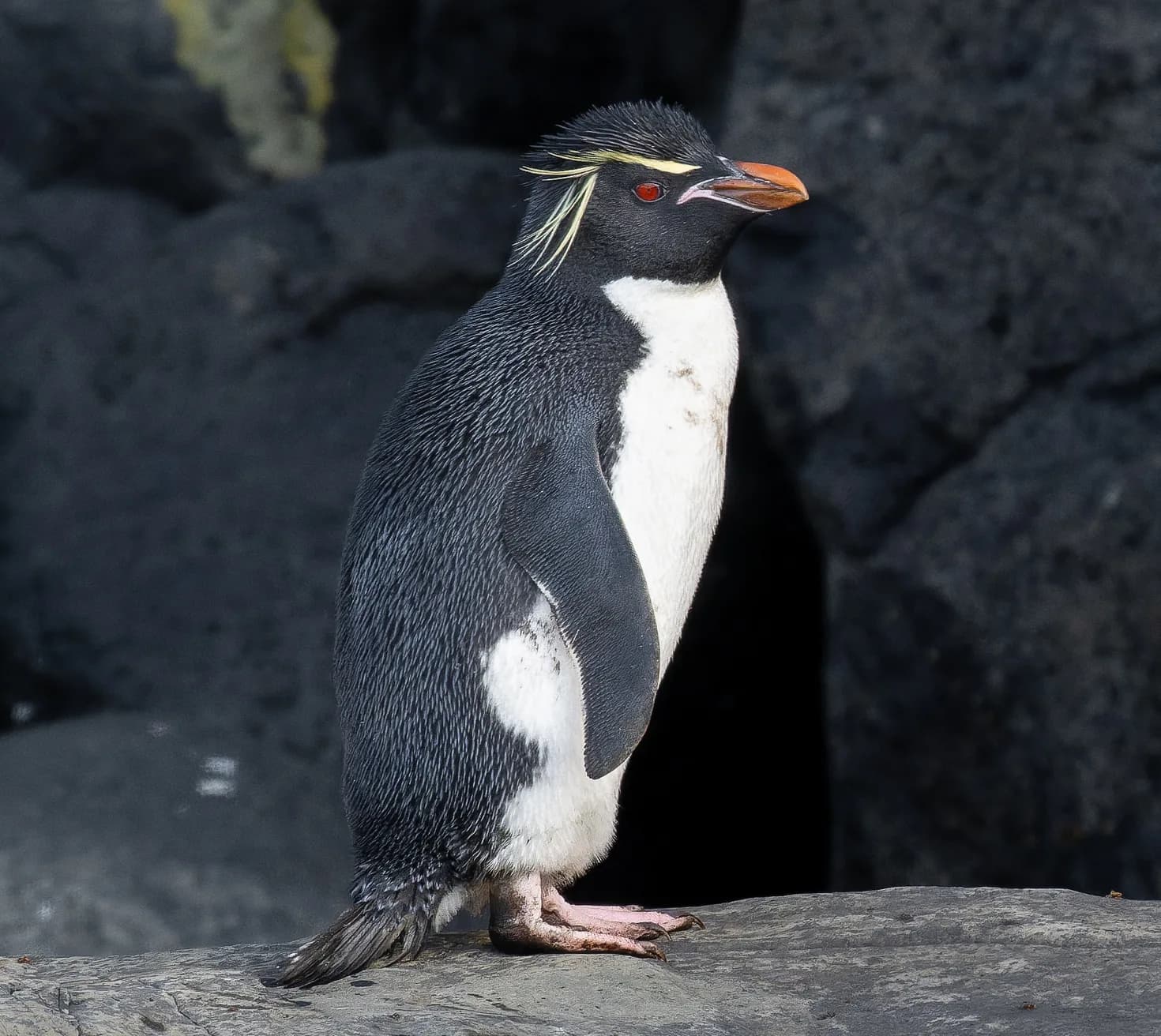
Eastern Rockhopper Penguin
Eudyptes filholi
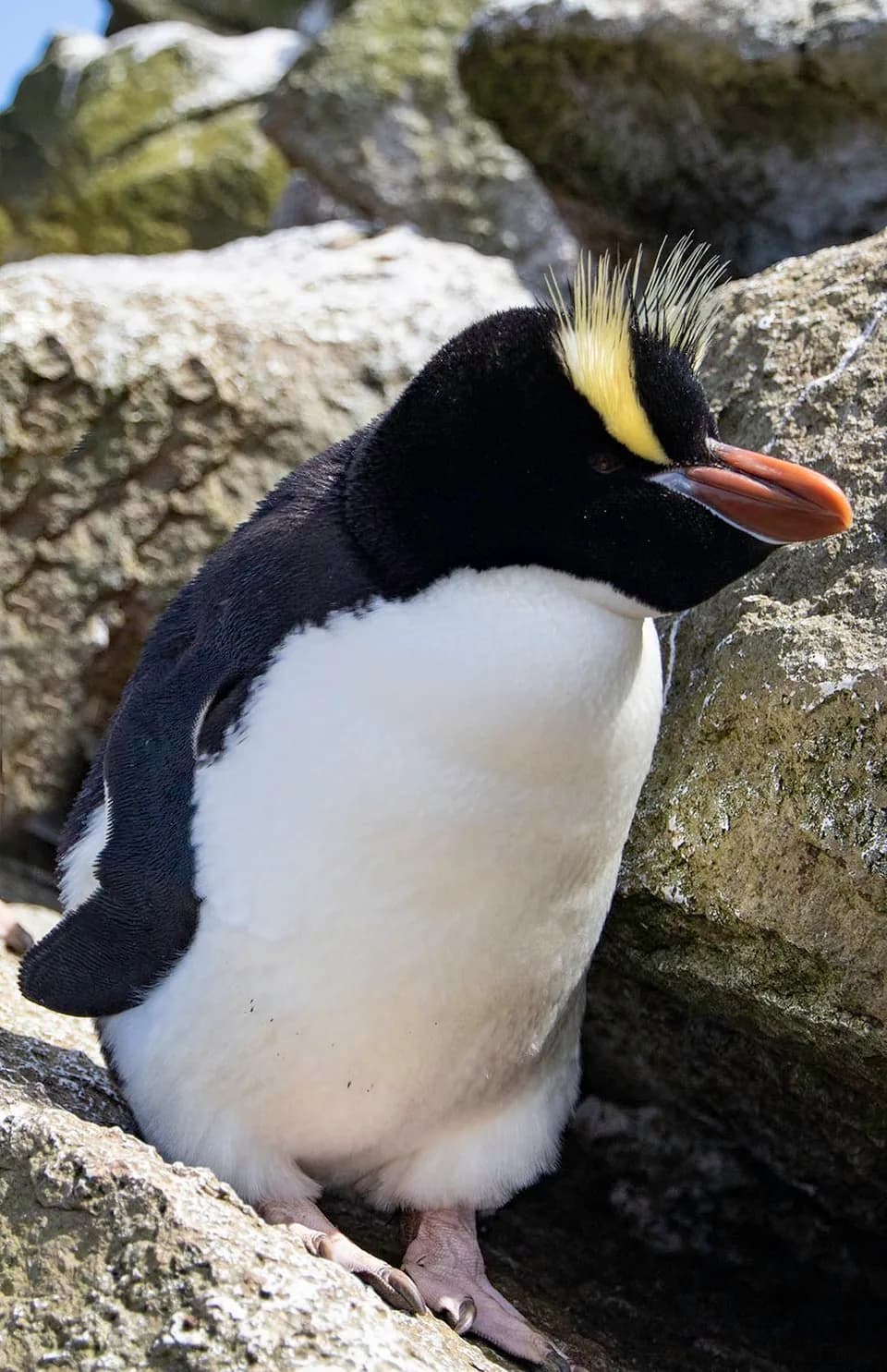
Erect-crested Penguin
Eudyptes sclateri
Fiordland Penguin
Eudyptes pachyrhynchus