
Gentoo Penguin vs Little Blue Penguin
Put a Gentoo Penguin (90 cm) beside a Little Blue Penguin (33 cm) and the penguin family stops looking like one interchangeable bird. Gentoo Penguin: Gentoo Penguins are the rare case where flexibility looks almost like swagger. Speed, dietary breadth, and adaptable breeding habits have made them one of the few modern penguin success stories. Little Blue Penguin: The Little Blue Penguin survives by being small, coastal, and secretive. It is a night commuter living in a world that humans have made dangerously easy for predators. The comparison table is the raw material; the sections under it are the reading.
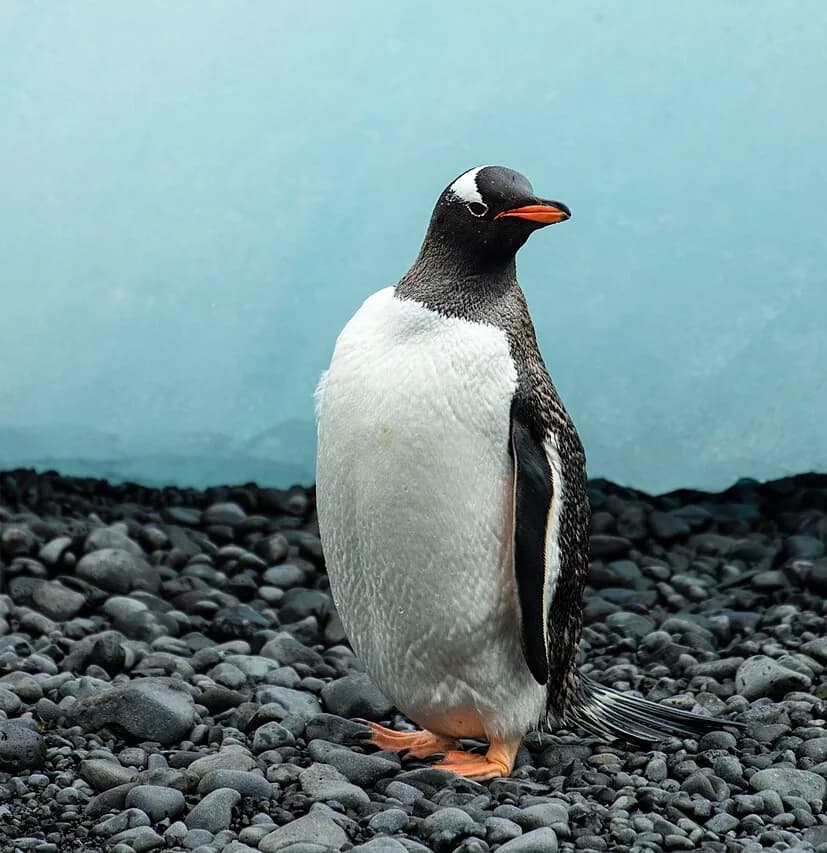
Gentoo Penguin
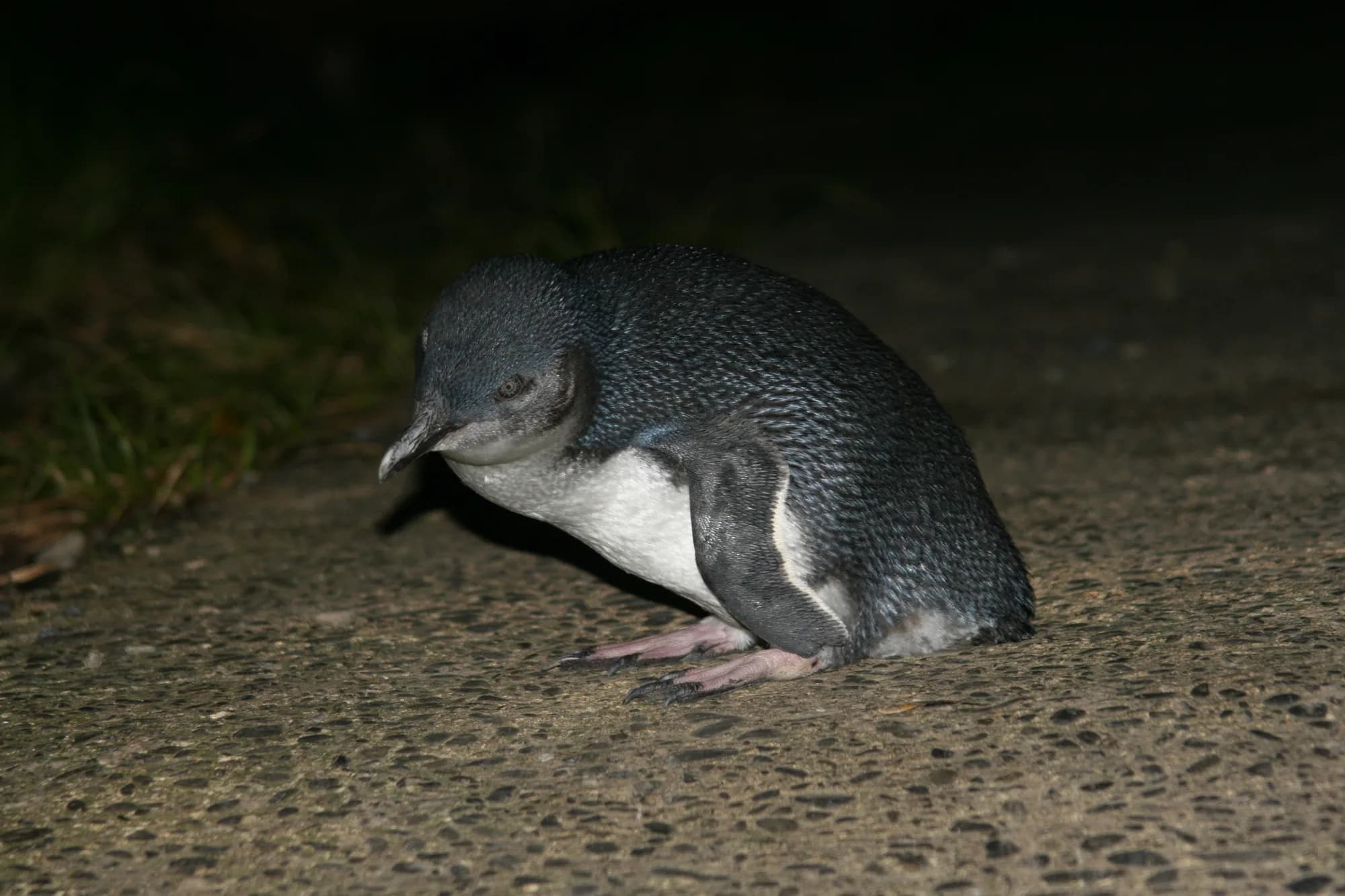
Little Blue Penguin
Size Comparison
Gentoo Penguin
51-90 cm
4.5-8.5 kg
Little Blue Penguin
30-33 cm
1-1.5 kg
| Feature | Gentoo Penguin | Little Blue Penguin |
|---|---|---|
| Conservation | Least Concern | Least Concern |
| Scientific Name | Pygoscelis papua | Eudyptula minor |
| Height | 51-90 cm | 30-33 cm |
| Weight | 4.5-8.5 kg | 1-1.5 kg |
| Lifespan | 15-20 years | 6-25 years |
| Population | ~774,000 breeding pairs | ~469,760 individuals |
| Diet | Crustaceans, Fish, Squid | Small fish, Squid, Crustaceans |
| Habitat | Sub-Antarctic islands, Antarctic Peninsula | Rocky coastlines, Burrows, Coastal forests |
| Regions | Falkland Islands, South Georgia, Kerguelen Islands, Antarctic Peninsula | New Zealand, Southern Australia |
| Genus | Pygoscelis | Eudyptula |
Conservation Status
Gentoo Penguin
Least ConcernLittle Blue Penguin
Least ConcernScientific Name
Gentoo Penguin
Pygoscelis papua
Little Blue Penguin
Eudyptula minor
Height
Gentoo Penguin
51-90 cm
Little Blue Penguin
30-33 cm
Weight
Gentoo Penguin
4.5-8.5 kg
Little Blue Penguin
1-1.5 kg
Lifespan
Gentoo Penguin
15-20 years
Little Blue Penguin
6-25 years
Population
Gentoo Penguin
~774,000 breeding pairs
Little Blue Penguin
~469,760 individuals
Diet
Gentoo Penguin
Crustaceans, Fish, Squid
Little Blue Penguin
Small fish, Squid, Crustaceans
Habitat
Gentoo Penguin
Sub-Antarctic islands, Antarctic Peninsula
Little Blue Penguin
Rocky coastlines, Burrows, Coastal forests
Regions
Gentoo Penguin
Falkland Islands, South Georgia, Kerguelen Islands, Antarctic Peninsula
Little Blue Penguin
New Zealand, Southern Australia
Genus
Gentoo Penguin
Pygoscelis
Little Blue Penguin
Eudyptula
Key Differences
Not a second table — the reasons the numbers diverge.
Survival problem
Gentoo Penguin: Gentoos survive by staying opportunistic without losing breeding stability, which means exploiting changing coasts while still finding enough food close to colonies. Little Blue Penguin: Little Blues have to breed close enough to shore for short feeding trips while still keeping nests safe from dogs, cats, traffic, lights, and rough weather. Those two sentences are the comparison’s spine — stats only make sense if they map back to the problem each bird is actually solving.
Size and mass
The Gentoo Penguin is nearly twice as tall on average — up to 90 cm and 8.5 kg against the Little Blue Penguin's 33 cm and 1.5 kg. That gap changes dive physics, fasting capacity, and how each bird spends energy on land and at sea.
Habitat logic
Gentoo Penguins use sub-antarctic islands and antarctic peninsula; Little Blue Penguins use rocky coastlines, burrows, and coastal forests. There is little shared nesting or haul-out habitat between them. Habitat here is architecture, not scenery: shelter, predators, and access to prey decide who can breed successfully.
Separate ranges
Gentoo Penguins live in Falkland Islands, South Georgia, Kerguelen Islands, and Antarctic Peninsula; Little Blue Penguins live in New Zealand and Southern Australia. Non-overlapping ranges usually mean different currents, predator guilds, and fisheries pressure — which is why conservation headlines for one rarely transfer cleanly to the other.
What they hunt
Gentoo Penguins eat crustaceans, fish, and squid; Little Blue Penguins eat small fish, squid, and crustaceans. Distinct items on each list (fish versus small fish) hint at different dive depths and foraging schedules. Both still lean on crustaceans and squid, so ocean productivity swings can hit them together.
Dive depth
The Gentoo Penguin reaches 200 m — more than twice the Little Blue Penguin's 72 m. Depth buys access to prey that shallower divers never reach, and it is paid for in oxygen storage, muscle chemistry, and the time each foraging trip takes.
Abundance
There are roughly 3.3 times as many Gentoo Penguins as Little Blue Penguins — ~774,000 breeding pairs against ~469,760 individuals. Rarity is not the same as risk, but it sets how little has to go wrong before a decline becomes irreversible.
Shared risk band
Both sit at IUCN Least Concern. Estimated numbers still differ — ~774,000 breeding pairs for the Gentoo Penguin versus ~469,760 individuals for the Little Blue Penguin. Even under the same IUCN label, trends differ: Gentoo Penguins are tracked as increasing, while Little Blue Penguins are mixed. A shared status means comparable risk class, not identical causes.
Lifespan window
Little Blue Penguins are built for a longer adult career (6–25 years) than Gentoo Penguins (15–20 years). Longer lives amplify the cost of a bad breeding decade; shorter lives put more pressure on every successful chick year.
Key Similarities
Same family, different genera
Both are penguins in Spheniscidae, yet they sit in different genera (Pygoscelis vs Eudyptula). That distance usually shows up as different colony style, crest or band patterns, and how hard each bird depends on a single prey or ice type.
Overlapping prey
They both take crustaceans and squid. Shared prey is a coupling: a krill or forage-fish crash can stress both populations even when colonies sit far apart.
Both Least Concern
IUCN places both at Least Concern. Treat that as a risk band, not a single storyline: the Gentoo Penguin and Little Blue Penguin can share a label while failing for different local reasons.
How to read this matchup
Read this pair as distant solutions to “how to be a penguin.” Size, genus, and risk already point different ways: Gentoo Penguin versus Little Blue Penguin, Pygoscelis versus Eudyptula, Least Concern versus Least Concern. Use the profiles for depth — this page is the decision tree for which difference matters first.
About Each Species
Gentoo Penguin
Gentoo Penguins are the rare case where flexibility looks almost like swagger. Speed, dietary breadth, and adaptable breeding habits have made them one of the few modern penguin success stories.
The third-largest penguin and the fastest underwater swimmer of all penguins at 36 km/h, Gentoos are easily identified by their bright orange-red bill and white "bonnet" across the top of the head.
Full Gentoo Penguin profileLittle Blue Penguin
The Little Blue Penguin survives by being small, coastal, and secretive. It is a night commuter living in a world that humans have made dangerously easy for predators.
The world's smallest penguin species at just 30–33 cm tall and around 1 kg, Little Blue Penguins are unique for their slate-blue plumage and nocturnal habits on land, returning to their burrows only after dark.
Full Little Blue Penguin profileFrequently Asked Questions
Which is bigger, the Gentoo Penguin or the Little Blue Penguin?
The Gentoo Penguin is larger — up to 90 cm and 8.5 kg — while the Little Blue Penguin reaches about 33 cm and 1.5 kg.
Are Gentoo Penguins or Little Blue Penguins more endangered?
Both are listed as Least Concern. Numbers still differ: ~774,000 breeding pairs for the Gentoo Penguin versus ~469,760 individuals for the Little Blue Penguin. Trends: increasing vs mixed.
Do Gentoo Penguins and Little Blue Penguins live in the same place?
No meaningful range overlap. Gentoo Penguins: Falkland Islands, South Georgia, Kerguelen Islands, and Antarctic Peninsula. Little Blue Penguins: New Zealand and Southern Australia.
What do Gentoo Penguins and Little Blue Penguins eat?
Both take crustaceans and squid. Full lists: crustaceans, fish, and squid for the Gentoo Penguin; small fish, squid, and crustaceans for the Little Blue Penguin.
What is the biggest survival difference between Gentoo Penguins and Little Blue Penguins?
Gentoo Penguin: Gentoos survive by staying opportunistic without losing breeding stability, which means exploiting changing coasts while still finding enough food close to colonies. Little Blue Penguin: Little Blues have to breed close enough to shore for short feeding trips while still keeping nests safe from dogs, cats, traffic, lights, and rough weather.
Are Gentoo Penguins and Little Blue Penguins closely related?
They are both penguins (Spheniscidae) but sit in different genera: Pygoscelis (Gentoo Penguin) and Eudyptula (Little Blue Penguin). That is family-level relatedness, not a close sister-species pair.
Which lives longer, the Gentoo Penguin or the Little Blue Penguin?
The Little Blue Penguin generally has the longer window (6–25 years) versus 15–20 years for the Gentoo Penguin.