
Humboldt Penguin vs Yellow-eyed Penguin
Humboldt Penguins and Yellow-eyed Penguins share the penguin toolkit — flippers, countershading, marine hunting — then spend it on different habitats and life histories. Humboldt Penguin: Humboldt Penguins are cold-current birds wearing a desert costume. They look like warm-climate penguins only if you ignore the ocean that actually feeds them. Yellow-eyed Penguin: Yellow-eyed Penguins do not behave like tidy colony birds. They breed like private recluses, which makes every breeding pair feel expensive. Start with the table, then read what the gaps between those rows actually cost.
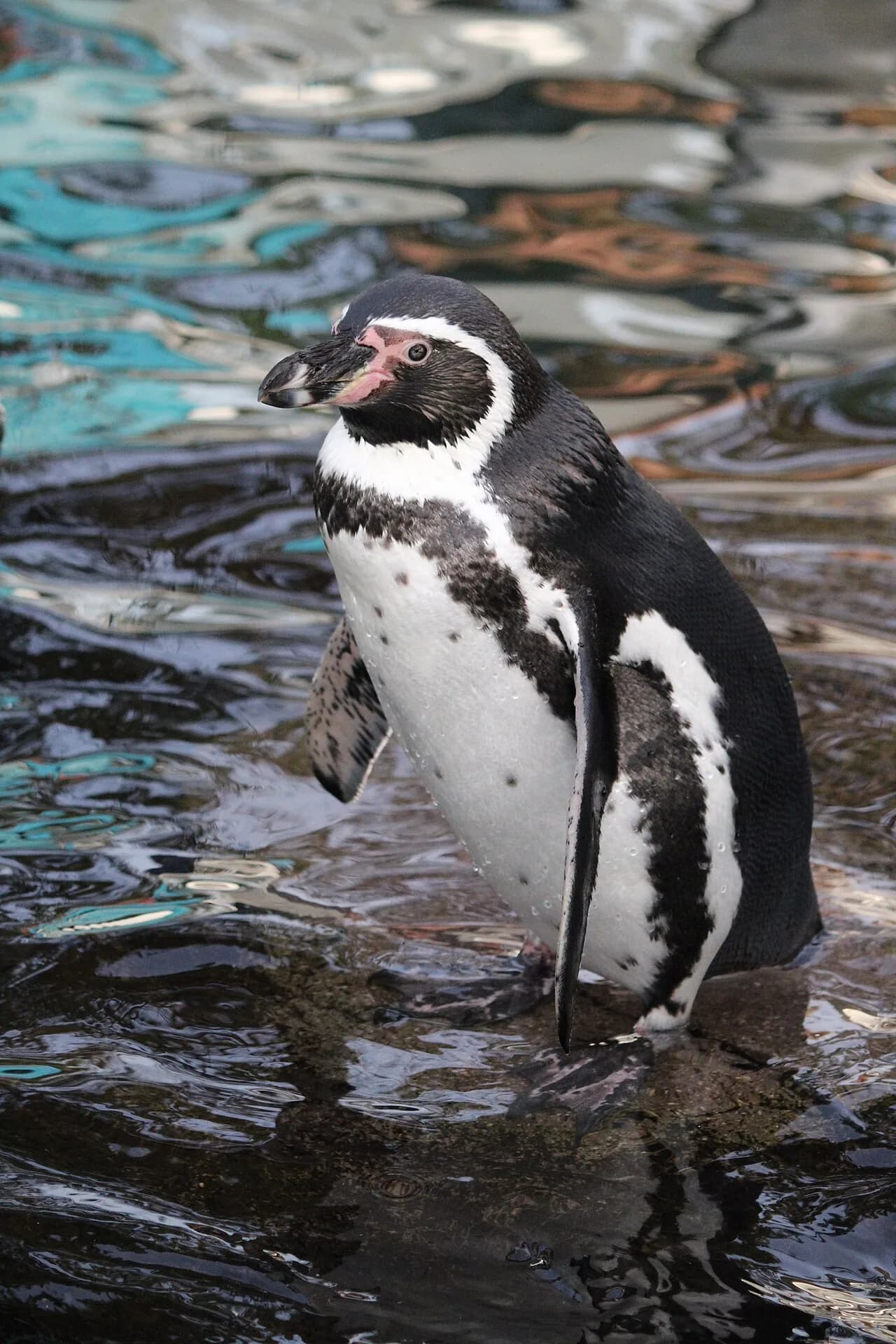
Humboldt Penguin
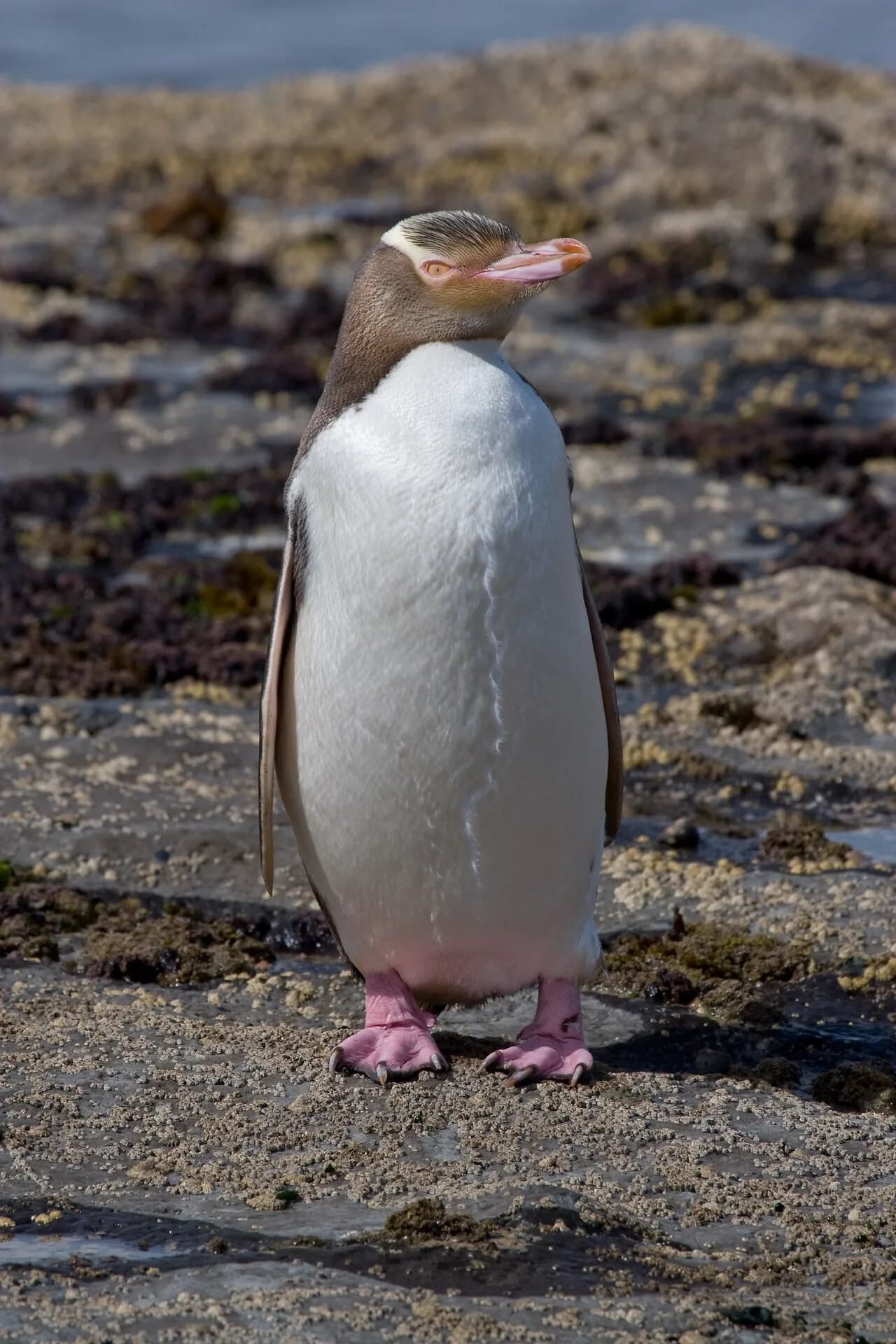
Yellow-eyed Penguin
Size Comparison
Humboldt Penguin
56-70 cm
3.6-5.9 kg
Yellow-eyed Penguin
62-79 cm
4.5-8.5 kg
| Feature | Humboldt Penguin | Yellow-eyed Penguin |
|---|---|---|
| Conservation | Vulnerable | Endangered |
| Scientific Name | Spheniscus humboldti | Megadyptes antipodes |
| Height | 56-70 cm | 62-79 cm |
| Weight | 3.6-5.9 kg | 4.5-8.5 kg |
| Lifespan | 15-20 years | 8-25 years |
| Population | ~23,800 individuals | ~3,400 individuals |
| Diet | Anchovies, Sardines, Herring, Squid | Fish, Squid, Crustaceans |
| Habitat | Rocky coastlines, Desert coasts, Islands | Coastal forests, Scrubland, Sandy beaches |
| Regions | Peru, Chile | New Zealand, Auckland Islands, Campbell Islands |
| Genus | Spheniscus | Megadyptes |
Conservation Status
Humboldt Penguin
VulnerableYellow-eyed Penguin
EndangeredScientific Name
Humboldt Penguin
Spheniscus humboldti
Yellow-eyed Penguin
Megadyptes antipodes
Height
Humboldt Penguin
56-70 cm
Yellow-eyed Penguin
62-79 cm
Weight
Humboldt Penguin
3.6-5.9 kg
Yellow-eyed Penguin
4.5-8.5 kg
Lifespan
Humboldt Penguin
15-20 years
Yellow-eyed Penguin
8-25 years
Population
Humboldt Penguin
~23,800 individuals
Yellow-eyed Penguin
~3,400 individuals
Diet
Humboldt Penguin
Anchovies, Sardines, Herring, Squid
Yellow-eyed Penguin
Fish, Squid, Crustaceans
Habitat
Humboldt Penguin
Rocky coastlines, Desert coasts, Islands
Yellow-eyed Penguin
Coastal forests, Scrubland, Sandy beaches
Regions
Humboldt Penguin
Peru, Chile
Yellow-eyed Penguin
New Zealand, Auckland Islands, Campbell Islands
Genus
Humboldt Penguin
Spheniscus
Yellow-eyed Penguin
Megadyptes
Key Differences
Not a second table — the reasons the numbers diverge.
Survival problem
Humboldt Penguin: Their whole breeding system depends on the Humboldt Current staying productive enough to deliver anchovies and sardines to colonies on otherwise harsh, dry coasts. Yellow-eyed Penguin: Hoiho need quiet nest cover, dependable benthic foraging grounds, and enough adult survival in a very small population already under pressure from disease, predators, and disturbance. Those two sentences are the comparison’s spine — stats only make sense if they map back to the problem each bird is actually solving.
Size and mass
The Yellow-eyed Penguin is only slightly taller on average — up to 79 cm and 8.5 kg against the Humboldt Penguin's 70 cm and 5.9 kg. That gap changes dive physics, fasting capacity, and how each bird spends energy on land and at sea.
Habitat logic
Humboldt Penguins use rocky coastlines, desert coasts, and islands; Yellow-eyed Penguins use coastal forests, scrubland, and sandy beaches. There is little shared nesting or haul-out habitat between them. Habitat here is architecture, not scenery: shelter, predators, and access to prey decide who can breed successfully.
Separate ranges
Humboldt Penguins live in Peru and Chile; Yellow-eyed Penguins live in New Zealand, Auckland Islands, and Campbell Islands. Non-overlapping ranges usually mean different currents, predator guilds, and fisheries pressure — which is why conservation headlines for one rarely transfer cleanly to the other.
What they hunt
Humboldt Penguins eat anchovies, sardines, herring, and squid; Yellow-eyed Penguins eat fish, squid, and crustaceans. Distinct items on each list (anchovies, sardines, and herring versus fish and crustaceans) hint at different dive depths and foraging schedules. Both still lean on squid, so ocean productivity swings can hit them together.
Both work the same part of the water column
Recorded maximum dives are close — 150 m for the Humboldt Penguin against 160 m for the Yellow-eyed Penguin. When two penguins hunt at the same depth they are usually competing for the same prey layer, which makes where they breed matter more than how they hunt.
Incubation length
Both lay 2 eggs, but the Yellow-eyed Penguin incubates for 39–51 days against the Humboldt Penguin's 40–42. Every extra day on the nest is a day of fasting for one partner and a day the egg is exposed to whatever the season does next.
Abundance
There are roughly 7.0 times as many Humboldt Penguins as Yellow-eyed Penguins — ~23,800 individuals against ~3,400 individuals. Rarity is not the same as risk, but it sets how little has to go wrong before a decline becomes irreversible.
Conservation pressure
The Yellow-eyed Penguin carries the sharper label (Endangered, population ~3,400 individuals) against the Humboldt Penguin's Vulnerable (~23,800 individuals). Classified as Endangered by the IUCN and listed as threatened under U. The lower-risk bird is not “safe”; it simply has a wider margin before the same kinds of ocean or land failure become terminal.
Lifespan window
Yellow-eyed Penguins are built for a longer adult career (8–25 years) than Humboldt Penguins (15–20 years). Longer lives amplify the cost of a bad breeding decade; shorter lives put more pressure on every successful chick year.
Key Similarities
Same family, different genera
Both are penguins in Spheniscidae, yet they sit in different genera (Spheniscus vs Megadyptes). That distance usually shows up as different colony style, crest or band patterns, and how hard each bird depends on a single prey or ice type.
Overlapping prey
They both take squid. Shared prey is a coupling: a krill or forage-fish crash can stress both populations even when colonies sit far apart.
Why both still feel like penguins
They nest in guano, caves, or rock crevices on desert shorelines where shade matters as much as food, which is a very different penguin life from sea ice or forest nesting. Instead of packing into giant colonies, they spread out through coastal vegetation and forest edges, making them feel more like secretive land birds that happen to be elite divers. Underneath those quirks sit the same flightless, flipper-driven design that makes every living penguin a swimming specialist rather than an aerial one.
How to read this matchup
Read this pair as distant solutions to “how to be a penguin.” Size, genus, and risk already point different ways: Yellow-eyed Penguin versus Humboldt Penguin, Spheniscus versus Megadyptes, Vulnerable versus Endangered. Use the profiles for depth — this page is the decision tree for which difference matters first.
About Each Species
Humboldt Penguin
Humboldt Penguins are cold-current birds wearing a desert costume. They look like warm-climate penguins only if you ignore the ocean that actually feeds them.
Named after the cold Humboldt Current, these penguins live along the coasts of Peru and Chile in one of the most arid environments inhabited by any penguin, nesting in burrows dug into guano deposits.
Full Humboldt Penguin profileYellow-eyed Penguin
Yellow-eyed Penguins do not behave like tidy colony birds. They breed like private recluses, which makes every breeding pair feel expensive.
Known as Hoiho ('noise shouter') in Māori, this large, pale-faced penguin endemic to New Zealand is one of the world's rarest, unique among penguins for being largely solitary and nesting out of sight of others.
Full Yellow-eyed Penguin profileFrequently Asked Questions
Which is bigger, the Humboldt Penguin or the Yellow-eyed Penguin?
The Yellow-eyed Penguin is larger — up to 79 cm and 8.5 kg — while the Humboldt Penguin reaches about 70 cm and 5.9 kg.
Which is more endangered, the Humboldt Penguin or the Yellow-eyed Penguin?
The Yellow-eyed Penguin sits higher on the IUCN ladder (Endangered, ~3,400 individuals) than the Humboldt Penguin (Vulnerable, ~23,800 individuals). Classified as Endangered by the IUCN and listed as threatened under U.
Do Humboldt Penguins and Yellow-eyed Penguins live in the same place?
No meaningful range overlap. Humboldt Penguins: Peru and Chile. Yellow-eyed Penguins: New Zealand, Auckland Islands, and Campbell Islands.
What do Humboldt Penguins and Yellow-eyed Penguins eat?
Both take squid. Full lists: anchovies, sardines, herring, and squid for the Humboldt Penguin; fish, squid, and crustaceans for the Yellow-eyed Penguin.
What is the biggest survival difference between Humboldt Penguins and Yellow-eyed Penguins?
Humboldt Penguin: Their whole breeding system depends on the Humboldt Current staying productive enough to deliver anchovies and sardines to colonies on otherwise harsh, dry coasts. Yellow-eyed Penguin: Hoiho need quiet nest cover, dependable benthic foraging grounds, and enough adult survival in a very small population already under pressure from disease, predators, and disturbance.
Are Humboldt Penguins and Yellow-eyed Penguins closely related?
They are both penguins (Spheniscidae) but sit in different genera: Spheniscus (Humboldt Penguin) and Megadyptes (Yellow-eyed Penguin). That is family-level relatedness, not a close sister-species pair.
Which lives longer, the Humboldt Penguin or the Yellow-eyed Penguin?
The Yellow-eyed Penguin generally has the longer window (8–25 years) versus 15–20 years for the Humboldt Penguin.