
Macaroni Penguin
Eudyptes chrysolophus
One of the most numerous penguin species with an estimated 6.3 million breeding pairs, named after the flamboyant 18th-century 'Macaroni' fashion trend. Despite their huge numbers, they are Vulnerable due to rapid declines.
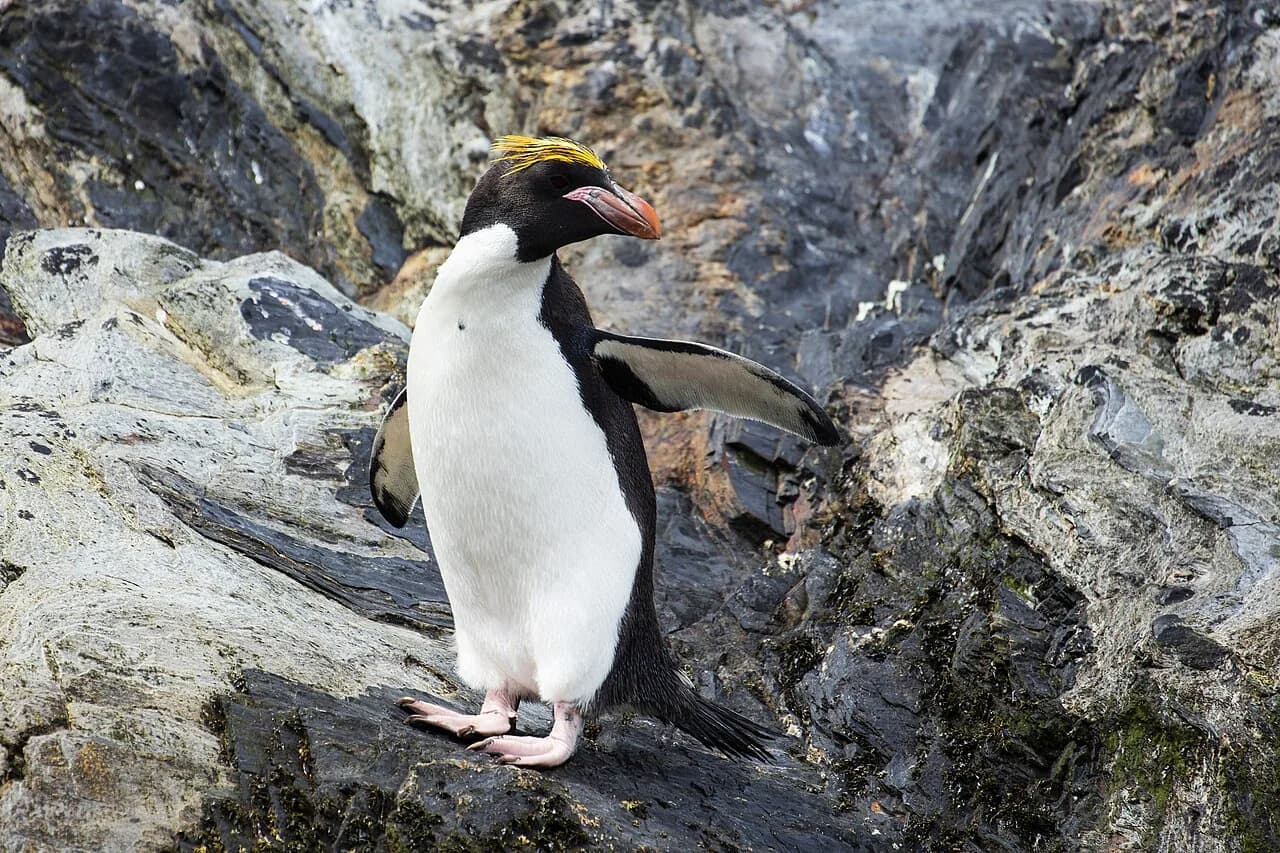
Macaroni penguin with golden-orange crest feathers
IUCN Red List status
Classified as Vulnerable despite still numbering around 6.3 million breeding pairs.
Red List history and threatsEstimated population
~6.3 million breeding pairs
Decreasing trend
Estimate assessed 2020.
Macaroni penguins are large crested penguins with flamboyant yellow head feathers, a wide orange-brown bill and red eyes, breeding in huge colonies on sub-Antarctic islands like South Georgia. Their name comes from 18th-century British slang: sailors thought the birds' gaudy crests resembled the exaggerated "macaroni" fashion referenced in the song "Yankee Doodle."
Macaronis are among the most numerous penguins, with an estimated 6.3 million breeding pairs — revised down from historical figures of 9–12 million — and their population is still declining due to environmental change and competition for krill, their main prey. They consume more marine resources than any other seabird species, making them a critical component of Southern Ocean food webs.
If You Only Learn One Thing About This Penguin
Macaroni Penguins may be among the most numerous penguins on Earth, which makes them dangerous to underestimate. A giant population can still be living on borrowed ecological luck.
The Survival Problem
Macaronis have to feed enormous krill-driven colonies, so sustained changes in Southern Ocean productivity hit them at industrial scale.
What Makes This Species Weird
They look flamboyant, but the deeper weirdness is scale: few penguins operate in colonies or prey systems this massive and this dependent on krill.
Myth vs Reality
Myth
Huge numbers mean Macaroni Penguins are secure.
Reality
Large populations can mask long declines for a long time, especially when breeding is concentrated in a handful of major island systems.
Behavior & Traits
- Breed in huge colonies on sub-Antarctic islands, with some colonies numbering in the hundreds of thousands
- Consume more marine resources than any other seabird species
- Their gaudy yellow crests inspired their name from 18th-century 'macaroni' fashion slang
- Krill is their main prey, tightly linking their breeding success to Southern Ocean productivity
Habitat & Range
Diet
Conservation
Classified as Vulnerable despite still numbering around 6.3 million breeding pairs. Their population is declining due to environmental change and competition for krill, their main prey. They consume more marine resources than any other seabird species, making them both ecologically critical and sensitive to changes in Southern Ocean productivity.
Red List history
What is driving it: Long-run decline at major colonies despite very large absolute numbers, linked to krill availability.
- 2020VulnerableCurrent
Main threats
- Climate-driven prey change
- Competition for krill
- Large-colony breeding disturbances
Common predators
Breeding & Movement
Breeding
- Forms very dense colonies on rocky slopes and tussock margins.
- Usually lays two eggs but often raises one chick successfully.
Movement
- Macaroni Penguins spend much of the year foraging at sea and return to established breeding colonies on land or ice.
Fun Facts
Among the most abundant penguins, with an estimated 6.3 million breeding pairs — down from historical estimates of 9–12 million
Named after 18th-century 'Macaroni' fashion — the same reference as in 'Yankee Doodle'
They consume more marine resources than any other seabird species
Despite their huge absolute numbers, their populations have declined significantly
Sailors thought their gaudy crests resembled the exaggerated fashion of 18th-century dandies
They have flamboyant yellow head feathers, a wide orange-brown bill, and red eyes
Their breeding success is tightly linked to krill availability in the Southern Ocean
Research Gap
Researchers are still working to separate climate-driven krill change from fishery pressure and natural oscillation across different macaroni strongholds.
Frequently Asked Questions
How tall is a Macaroni Penguin?
Macaroni Penguins stand 51–77 cm tall and typically weigh 3.3–6.6 kg.
What do Macaroni Penguins eat?
Macaroni Penguins primarily eat krill, squid, small fish, and crustaceans. Prey choice tracks ocean conditions and breeding season energy needs as much as preference.
Where do Macaroni Penguins live?
Macaroni Penguins are found in South Georgia, Falkland Islands, Crozet Islands, Kerguelen Islands, Heard Island, and South Sandwich Islands. Habitats include Rocky, cliff-bound coastlines and Sub-Antarctic islands.
What is the main survival problem for Macaroni Penguins?
Macaronis have to feed enormous krill-driven colonies, so sustained changes in Southern Ocean productivity hit them at industrial scale.
Are Macaroni Penguins endangered?
The Macaroni Penguin is classified as Vulnerable on the IUCN Red List. Estimated population: ~6.3 million breeding pairs. Population trend: decreasing. Classified as Vulnerable despite still numbering around 6.3 million breeding pairs. Their population is declining due to environmental change and competition for krill, their main prey. They consume more marine resources than any other seabird species, making them both ecologically critical and sensitive to changes in Southern Ocean productivity.
How long do Macaroni Penguins live?
Macaroni Penguins typically live 8–15 years in the wild, though food access, predation, and breeding success can cut that short.
What is a common myth about Macaroni Penguins?
Myth: Huge numbers mean Macaroni Penguins are secure. Reality: Large populations can mask long declines for a long time, especially when breeding is concentrated in a handful of major island systems.
What threatens Macaroni Penguins?
The main pressures include climate-driven prey change, competition for krill, and large-colony breeding disturbances. Natural predators include Leopard seals, Fur seals, and Skuas.
What is one surprising fact about Macaroni Penguins?
Among the most abundant penguins, with an estimated 6.3 million breeding pairs — down from historical estimates of 9–12 million
Written for the Survival Lab series on Penguin Place
Penguin Place is written like a natural-history notebook, not a content mill. The job is to explain what each penguin is up against, what makes it strange, and where the evidence still runs thin.
Quick Facts
- Scientific Name
- Eudyptes chrysolophus
- Height
- 51–77 cm
- Weight
- 3.3–6.6 kg
- Lifespan
- 8–15 years
- Status
- Vulnerable
- Population
- ~6.3 million breeding pairs
- Genus
- Eudyptes
Explore by Topic
Status
Genus
Compare
Start with the closest side-by-side matches by lineage, habitat, and size.
How we source claims
We start with conservation assessments, research institutions, and field guides that have to survive real scrutiny. Then we write only what still sounds true after the comparison.
- Use IUCN, BirdLife, museums, aquariums, conservation groups, and research institutions before broad explainers.
- Lead with a survival problem, not a keyword bucket.
- Say when the science is uncertain instead of sanding every gap into fake certainty.
Further reading
This profile was reviewed on January 29, 2026 using the sources listed below.
- IUCN Red List - Global conservation assessments and extinction-risk categories.
- BirdLife Data Zone - Species accounts, distribution, and population summaries.
- British Antarctic Survey - Antarctic penguin ecology, diving, and sea-ice context.
- Penguins International - Species explainers and conservation context focused on penguins.
Continue the trail
Broader Survival Lab reading on Penguin Place connected to Macaroni Penguin — survival, habitat, food, and conservation pressure.
Related to Macaroni Penguin
Nearby species by lineage, range, size, and conservation pressure — better next reads than a random list.
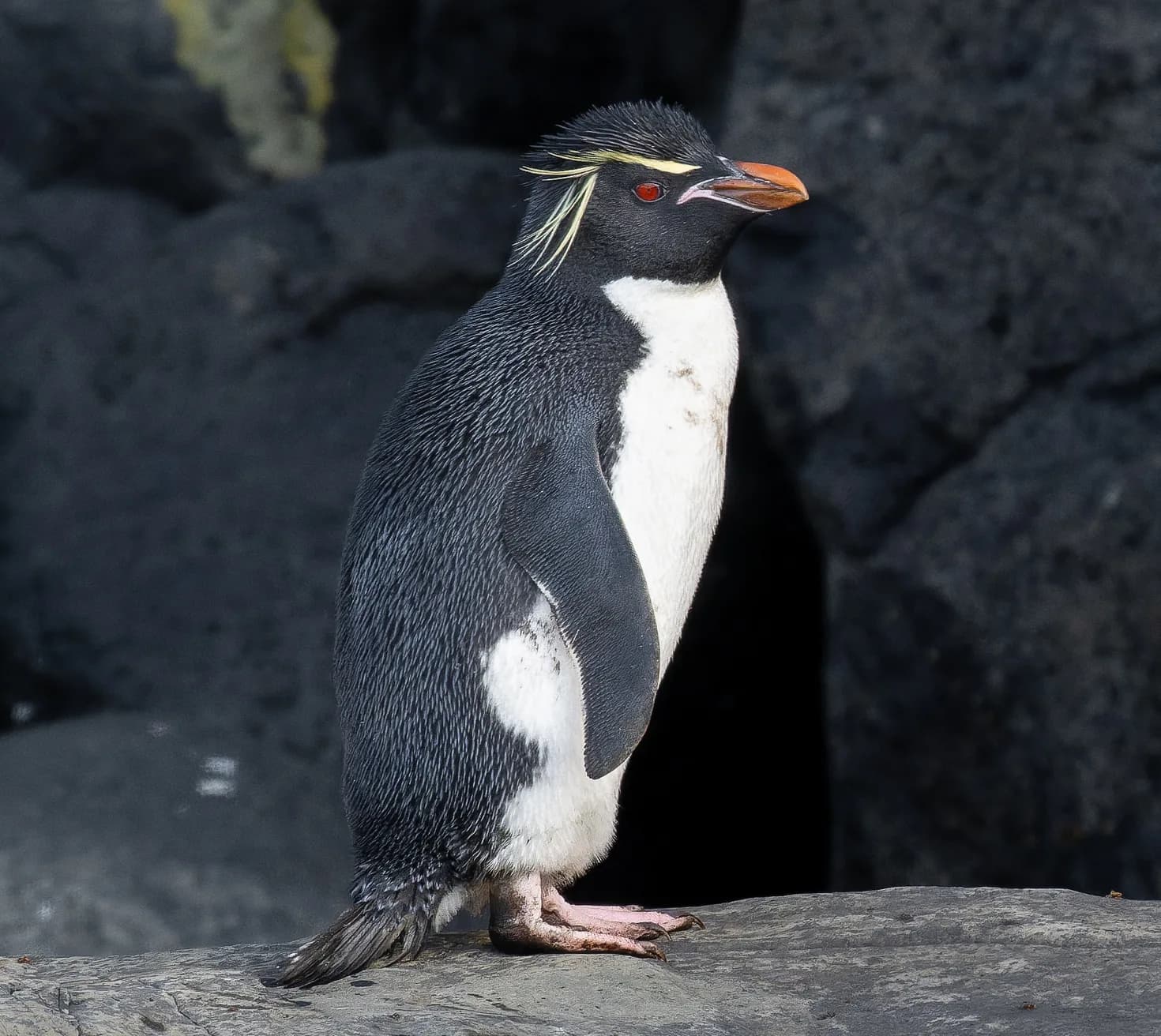
Eastern Rockhopper Penguin
Eudyptes filholi
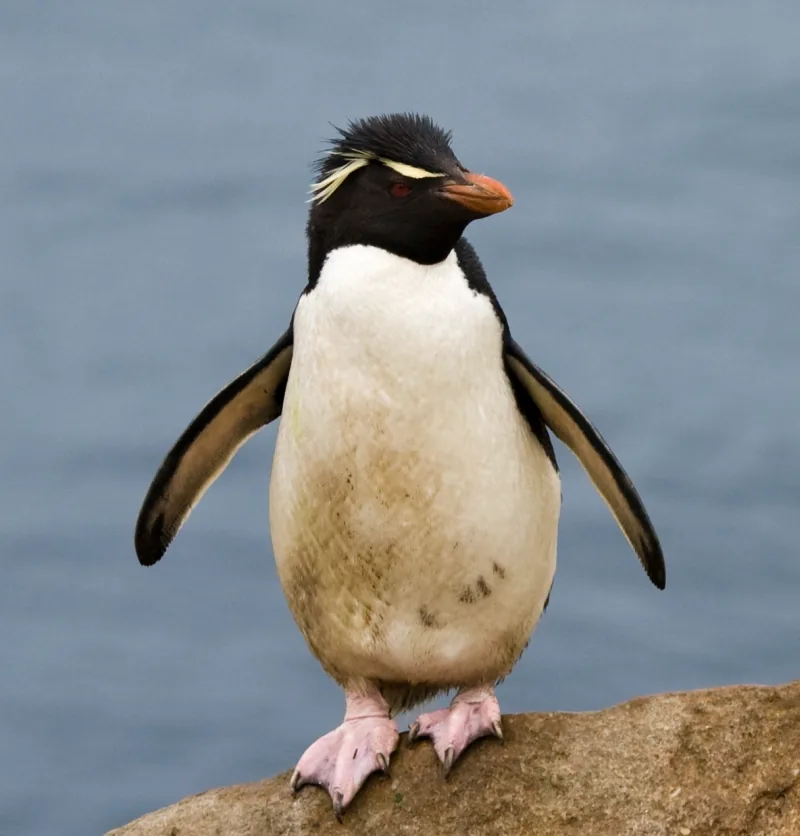
Western Rockhopper Penguin
Eudyptes chrysocome
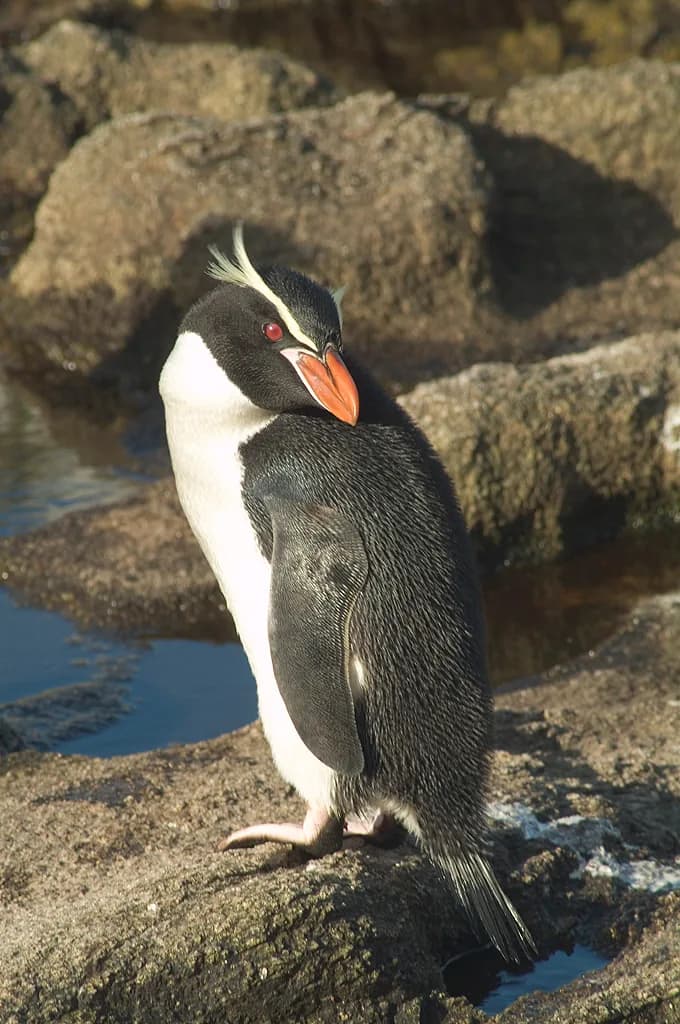
Snares Penguin
Eudyptes robustus
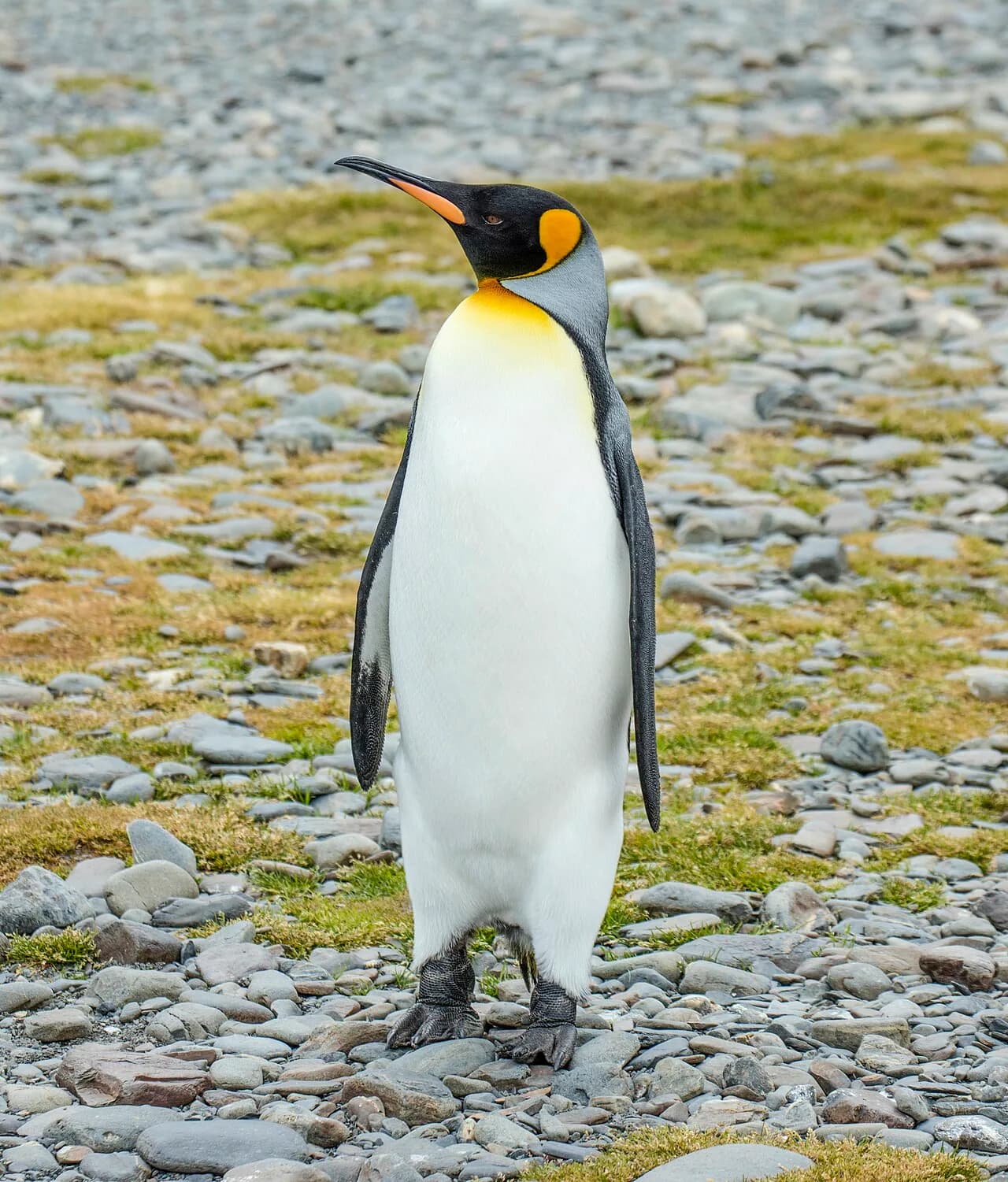
King Penguin
Aptenodytes patagonicus