
Emperor Penguin
Aptenodytes forsteri
The largest penguin species, Emperor Penguins are the only animal to breed during the Antarctic winter, trekking up to 120 km over sea ice to reach their colonies and enduring temperatures below −40 °C.
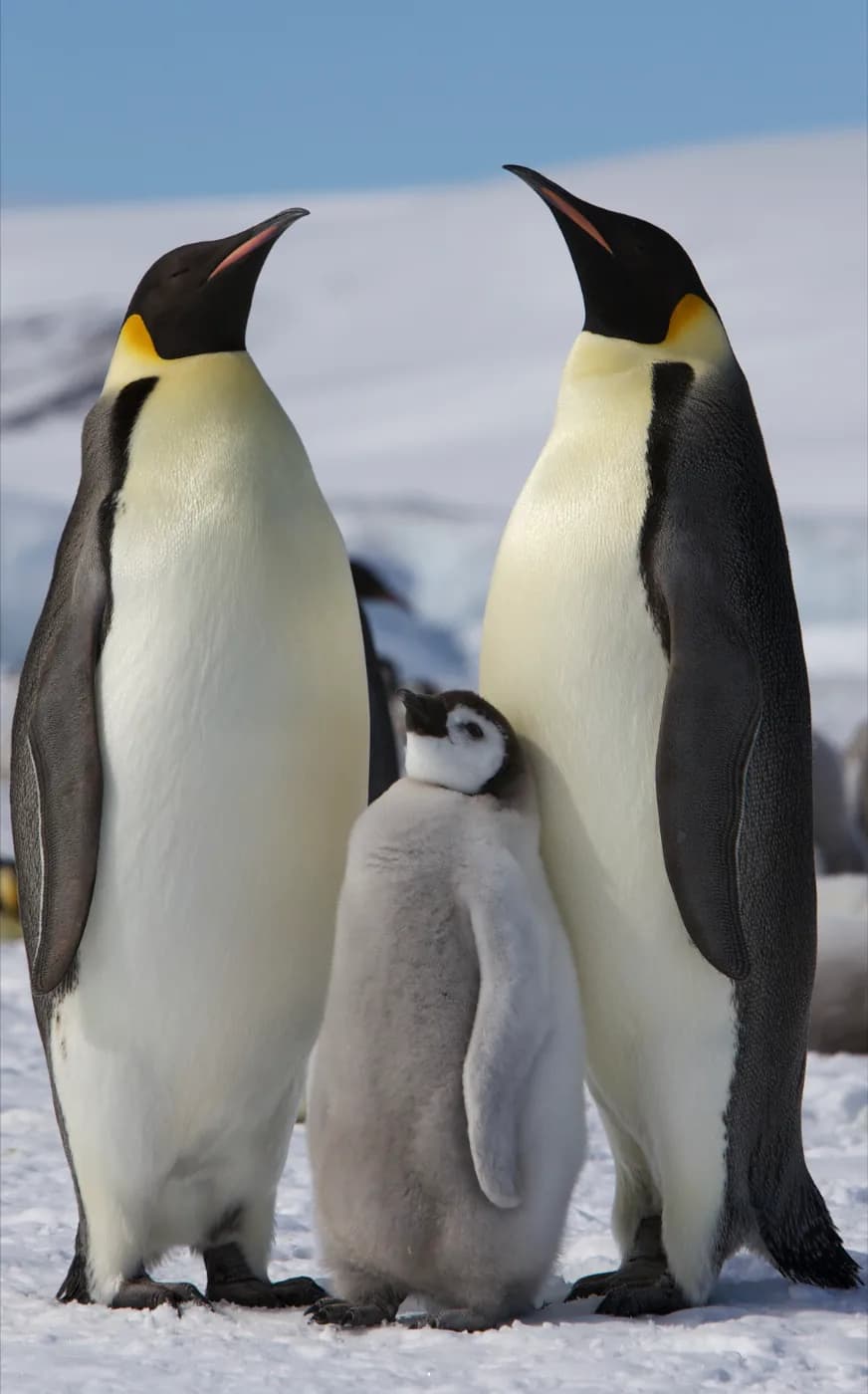
Emperor penguin standing on Antarctic ice
IUCN Red List status
Uplisted from Near Threatened to Endangered on the IUCN Red List in April 2026, in an assessment coordinated by BirdLife International.
Red List history and threatsEstimated population
~595,000 individuals
Decreasing trend
Estimate assessed 2026.
Emperor penguins are the largest penguin species, reaching up to about 1.2 m tall and 45 kg, and uniquely breed in the depths of the Antarctic winter after trekking 50–120 km over sea ice from the ocean to their colonies. Colonies scattered around the Antarctic continent range from a few hundred to over 20,000 pairs, usually on stable "fast ice" locked between islands or grounded icebergs.
During incubation the male fasts for more than two months in temperatures that can drop below −40 °C, losing around 12 kg while balancing the single egg on his feet under a brood pouch until the female returns from the sea. This extreme breeding strategy makes them one of the most remarkable animals on Earth and a powerful symbol of Antarctic wildlife.
If You Only Learn One Thing About This Penguin
The Emperor Penguin is not built to defeat Antarctic winter. It survives by turning a breeding pair into a relay team, with the male becoming a walking incubator on sea ice.
The Survival Problem
Everything about an emperor colony depends on stable sea ice lasting long enough for one chick to hatch, survive the coldest weeks of the year, and meet open water again before the platform breaks apart.
What Makes This Species Weird
Most birds solve incubation by sitting on a nest. Emperors solve it by carrying the egg on their feet under a brood pouch while standing in a blizzard and living off stored fat.
Myth vs Reality
Myth
Big penguins are basically untouchable in Antarctica.
Reality
Emperors are spectacularly specialized, but that specialization is also the trap. Lose the right sea-ice timing and the colony can fail.
Behavior & Traits
- Males incubate the single egg on their feet under a brood pouch for over two months while fasting, losing around 12 kg
- Colonies huddle in groups of thousands during blizzards, continuously rotating so each bird takes a turn in the warm center
- They trek 50–120 km over sea ice from the ocean to their breeding colonies each winter
- Can dive deeper than any other bird, reaching depths over 500 m and holding their breath for more than 20 minutes
Habitat & Range
Habitats
Regions
Diet
Conservation
Uplisted from Near Threatened to Endangered on the IUCN Red List in April 2026, in an assessment coordinated by BirdLife International. The driver is sea ice: emperors need fast ice that stays intact from laying through fledging and moult, and it has been reaching record lows since 2016. Satellite counts show roughly a 10% population loss between 2009 and 2018 alone — more than 20,000 adults — and population modelling across a range of climate scenarios projects the species will halve by the 2080s without steep cuts to greenhouse gas emissions. Their remote habitat buffers them from direct human disturbance, which is precisely why the threat that reaches them is atmospheric rather than local.
Red List history
What is driving it: Loss of the stable fast ice emperors need to hold from laying through fledging and moult.
- 2026EndangeredCurrent
Uplisted two categories. Satellite counts showed roughly a 10% loss between 2009 and 2018, and modelling across a range of emissions scenarios projects the population halving by the 2080s.
- 2012Near Threatened
Uplisted as sea-ice projections began to show breeding habitat contracting later this century.
- 1988Least Concern
First assessed. The population was considered large and stable, and the Antarctic range was treated as a buffer against human pressure.
Direction of travel: Least Concern in 1988 to Endangered in 2026.
Verify on the IUCN Red ListMain threats
- Sea-ice loss linked to climate change
- Shifts in prey availability
- Breeding disruption during unstable winters
Common predators
Breeding & Movement
Breeding
- Breeds during the Antarctic winter on stable sea ice.
- Males incubate a single egg on their feet while fasting for weeks.
Movement
- Adults commute between offshore feeding grounds and inland sea-ice colonies.
Fun Facts
Emperor penguins can dive deeper than any other bird, reaching depths of over 500 meters
They can hold their breath for more than 20 minutes underwater
Males lose around 12 kg — roughly 45% of their body weight — while incubating eggs during the harsh Antarctic winter
They huddle together in groups of thousands to conserve warmth, taking turns in the center
Colonies form on stable 'fast ice' locked between islands or grounded icebergs, with some colonies exceeding 20,000 pairs
They are the only animal species that breeds during the Antarctic winter, when temperatures can drop below −60 °C
Chicks are born during the coldest months and depend entirely on their father's brood pouch for warmth until the mother returns from the sea
Research Gap
The big open question is how quickly emperor colonies can shift breeding location or timing as sea-ice patterns become less reliable.
Frequently Asked Questions
How tall is an Emperor Penguin?
Emperor Penguins stand 100–130 cm tall and typically weigh 22–45 kg.
What do Emperor Penguins eat?
Emperor Penguins primarily eat fish, squid, and krill. Prey choice tracks ocean conditions and breeding season energy needs as much as preference.
Where do Emperor Penguins live?
Emperor Penguins are found in Antarctica. Habitats include Antarctic sea ice and Antarctic coastline.
What is the main survival problem for Emperor Penguins?
Everything about an emperor colony depends on stable sea ice lasting long enough for one chick to hatch, survive the coldest weeks of the year, and meet open water again before the platform breaks apart.
Are Emperor Penguins endangered?
The Emperor Penguin is classified as Endangered on the IUCN Red List. Estimated population: ~595,000 individuals. Population trend: decreasing. Uplisted from Near Threatened to Endangered on the IUCN Red List in April 2026, in an assessment coordinated by BirdLife International. The driver is sea ice: emperors need fast ice that stays intact from laying through fledging and moult, and it has been reaching record lows since 2016. Satellite counts show roughly a 10% population loss between 2009 and 2018 alone — more than 20,000 adults — and population modelling across a range of climate scenarios projects the species will halve by the 2080s without steep cuts to greenhouse gas emissions. Their remote habitat buffers them from direct human disturbance, which is precisely why the threat that reaches them is atmospheric rather than local.
How long do Emperor Penguins live?
Emperor Penguins typically live 15–20 years in the wild, though food access, predation, and breeding success can cut that short.
What is a common myth about Emperor Penguins?
Myth: Big penguins are basically untouchable in Antarctica. Reality: Emperors are spectacularly specialized, but that specialization is also the trap. Lose the right sea-ice timing and the colony can fail.
What threatens Emperor Penguins?
The main pressures include sea-ice loss linked to climate change, shifts in prey availability, and breeding disruption during unstable winters. Natural predators include Leopard seals, Killer whales, and Skuas near colonies.
What is one surprising fact about Emperor Penguins?
Emperor penguins can dive deeper than any other bird, reaching depths of over 500 meters
Written for the Survival Lab series on Penguin Place
Penguin Place is written like a natural-history notebook, not a content mill. The job is to explain what each penguin is up against, what makes it strange, and where the evidence still runs thin.
Quick Facts
- Scientific Name
- Aptenodytes forsteri
- Height
- 100–130 cm
- Weight
- 22–45 kg
- Lifespan
- 15–20 years
- Status
- Endangered
- Population
- ~595,000 individuals
- Genus
- Aptenodytes
Explore by Topic
Status
Genus
Regions
Compare
Start with the closest side-by-side matches by lineage, habitat, and size.
How we source claims
We start with conservation assessments, research institutions, and field guides that have to survive real scrutiny. Then we write only what still sounds true after the comparison.
- Use IUCN, BirdLife, museums, aquariums, conservation groups, and research institutions before broad explainers.
- Lead with a survival problem, not a keyword bucket.
- Say when the science is uncertain instead of sanding every gap into fake certainty.
Further reading
This profile was reviewed on August 4, 2026 using the sources listed below.
- IUCN Red List - Global conservation assessments and extinction-risk categories.
- BirdLife Data Zone - Species accounts, distribution, and population summaries.
- Australian Antarctic Division - Antarctic species profiles, breeding, and environmental context.
- British Antarctic Survey - Antarctic penguin ecology, diving, and sea-ice context.
Continue the trail
Broader Survival Lab reading on Penguin Place connected to Emperor Penguin — survival, habitat, food, and conservation pressure.
Why Penguins Don't Freeze
How Emperor Penguins and their relatives stay alive in lethal cold, from feather geometry to blood-flow tricks and huddle physics.
How Penguins Dive So Deep
Why some penguins dive like compressed springs, and how Emperor and King Penguins turn oxygen, pressure, and timing into depth.
How Penguins Survive Long Fasts
Why fasting is normal penguin biology, from Emperor males on winter sea ice to chicks and moulting birds trapped on land.
Related to Emperor Penguin
Nearby species by lineage, range, size, and conservation pressure — better next reads than a random list.
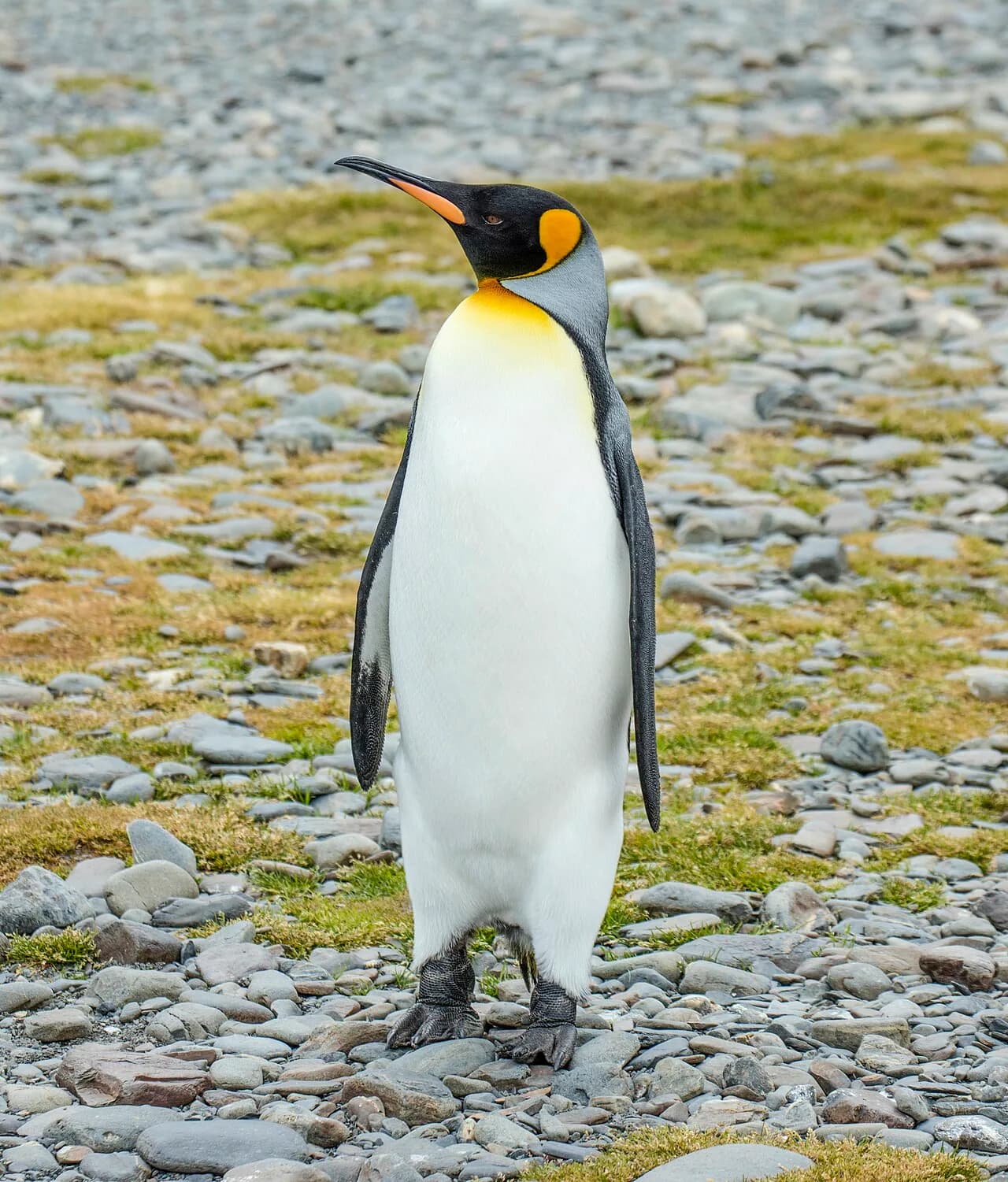
King Penguin
Aptenodytes patagonicus
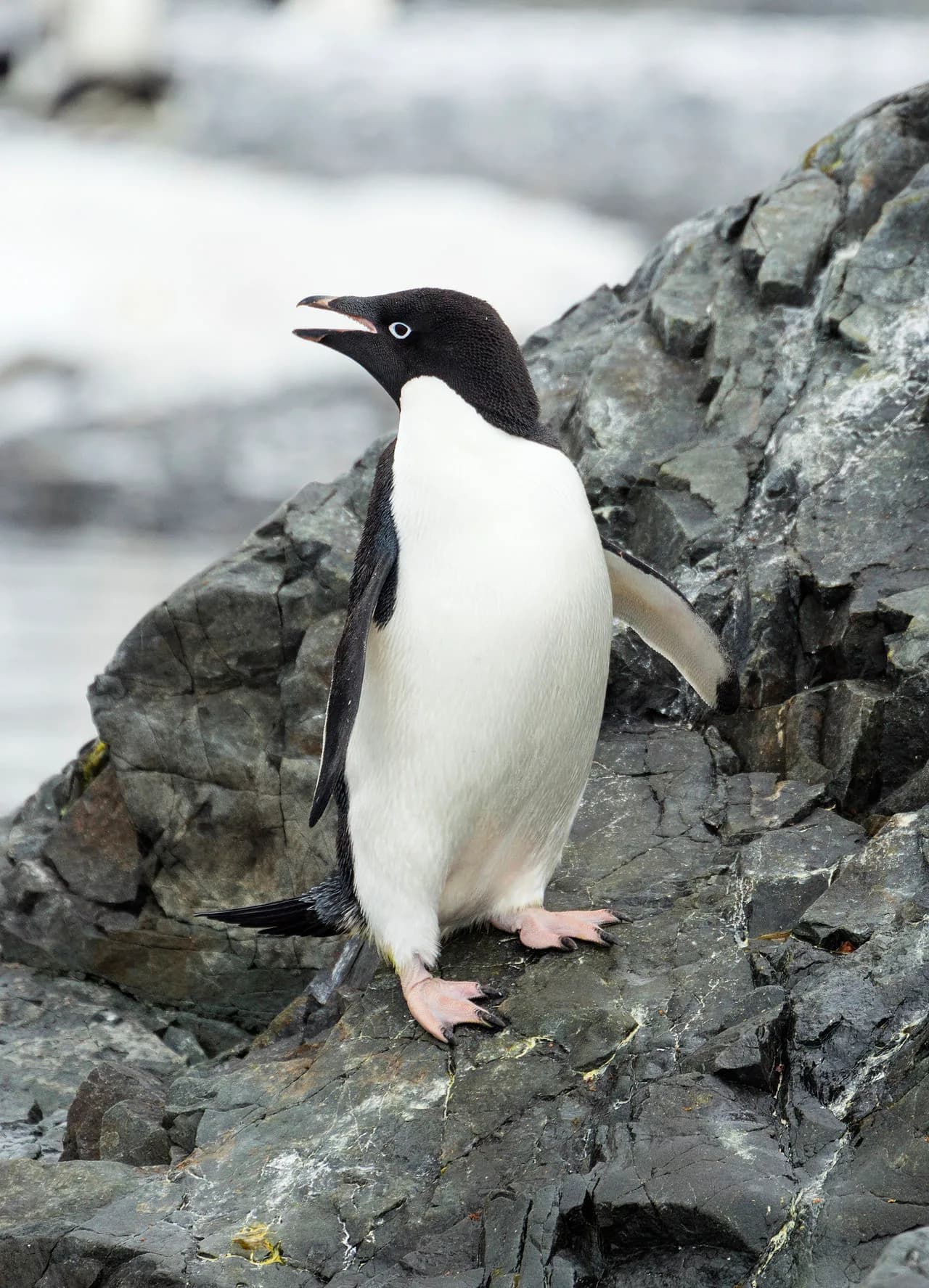
Adelie Penguin
Pygoscelis adeliae
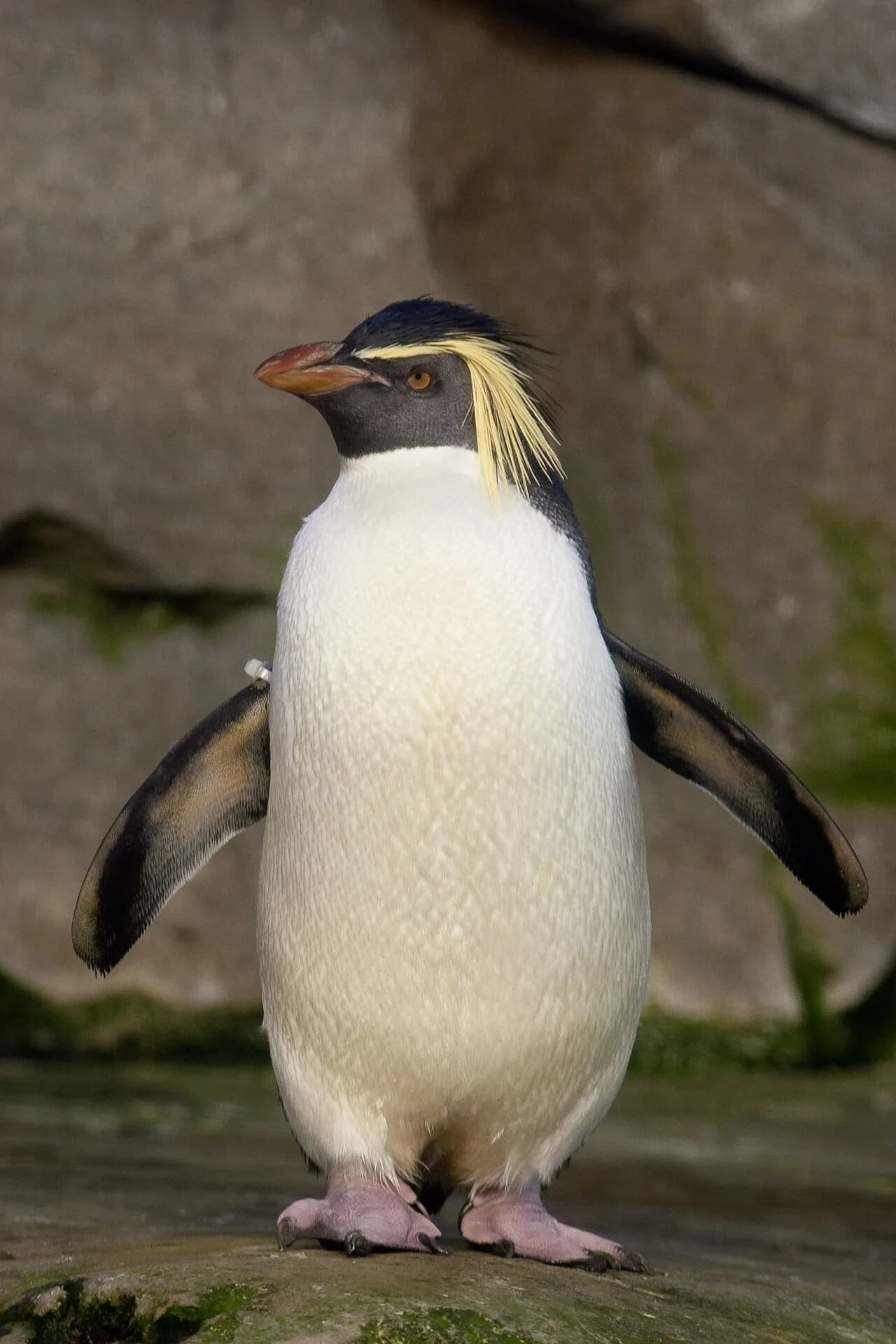
Northern Rockhopper Penguin
Eudyptes moseleyi
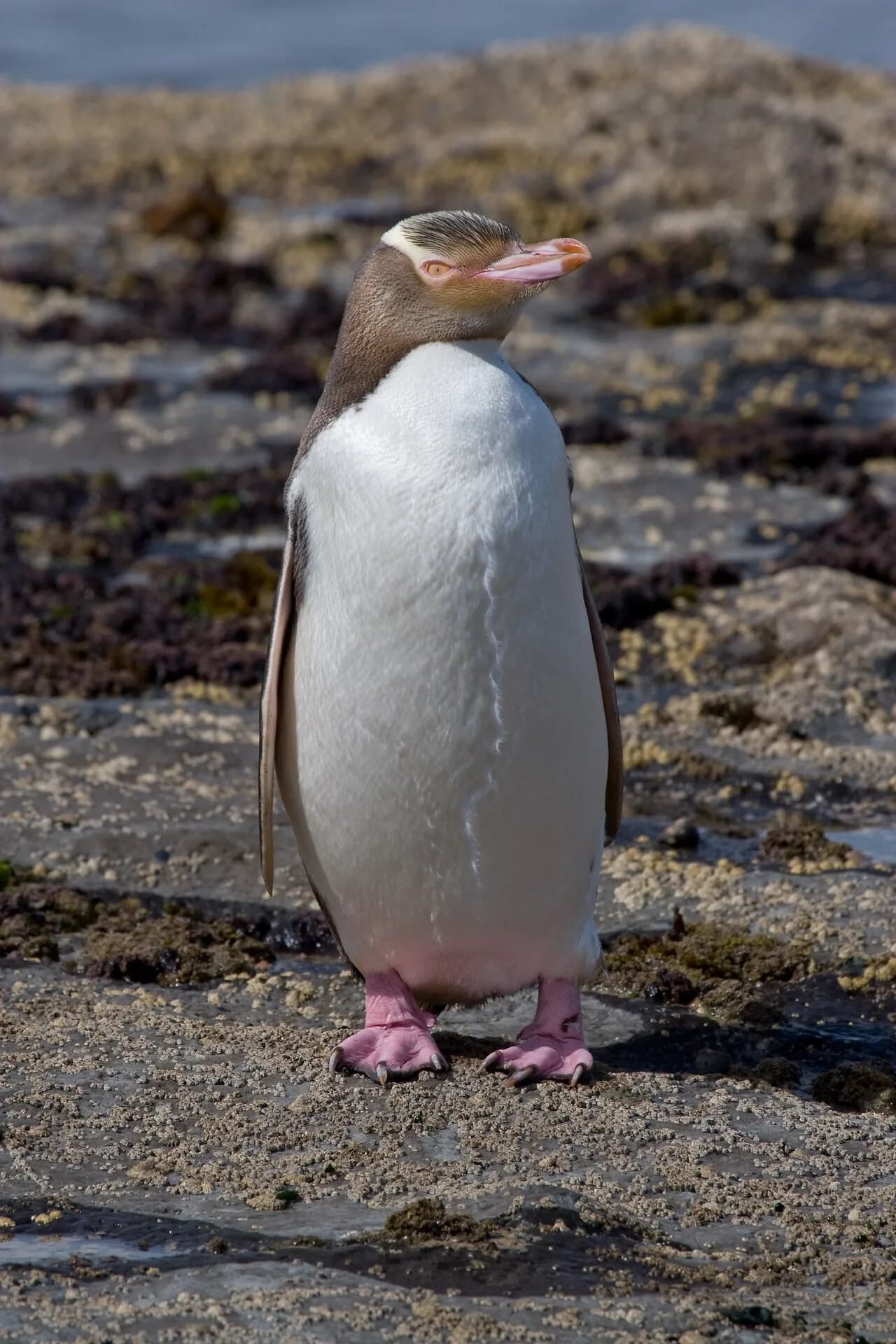
Yellow-eyed Penguin
Megadyptes antipodes