
Galapagos Penguin
Spheniscus mendiculus
The only penguin species found north of the equator in the wild and the smallest South American penguin, Galápagos Penguins survive in a tropical setting thanks to cool upwelling from the Humboldt and Cromwell Currents.
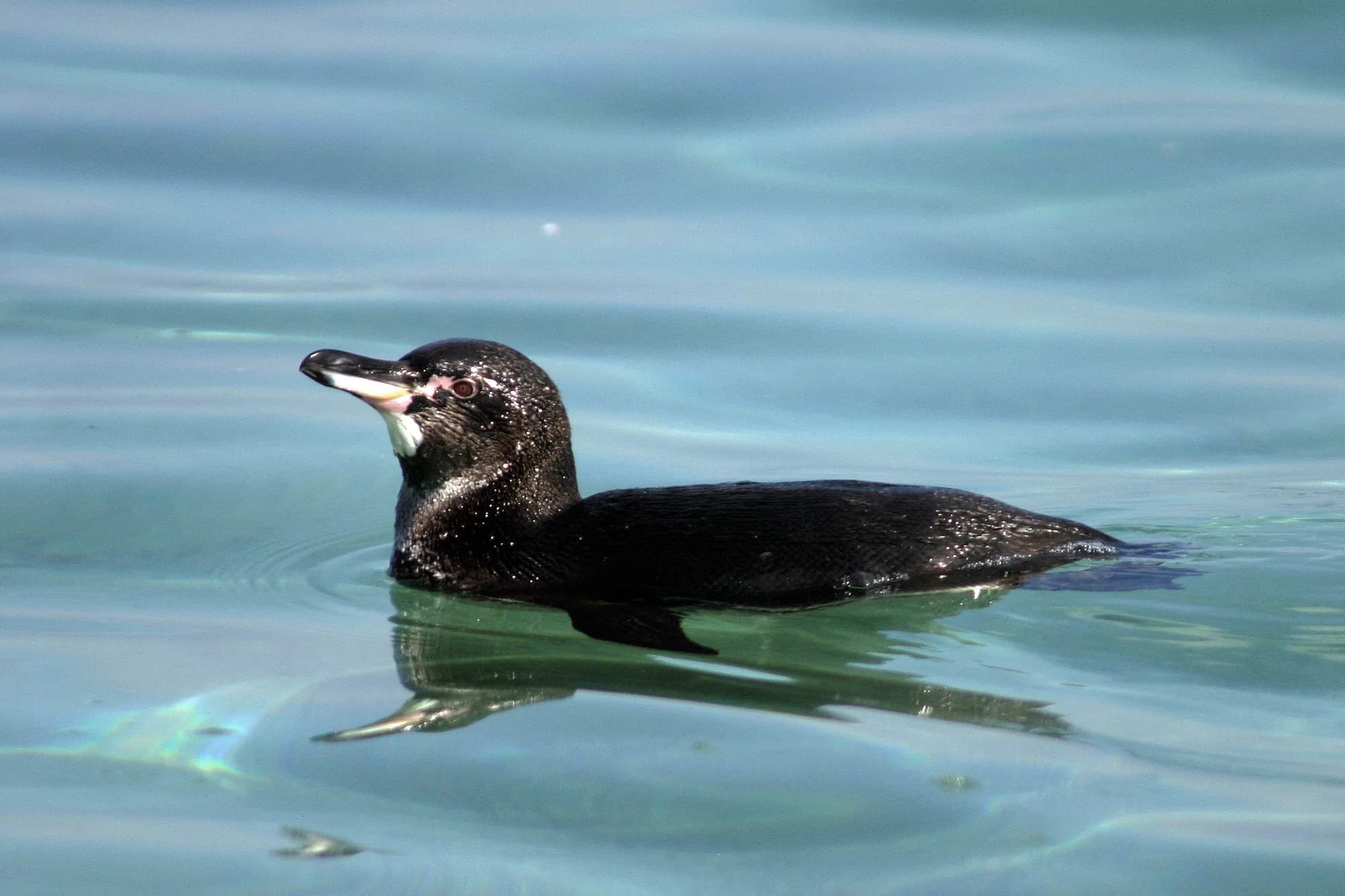
Galapagos penguin standing on volcanic rock
IUCN Red List status
Classified as Endangered with only about 1,200 individuals.
Red List history and threatsEstimated population
~1,200 mature individuals
Decreasing trend
Estimate assessed 2021.
Galápagos penguins are the smallest South American penguin and the only penguin species living near the equator, making them the most northerly-breeding penguins — a small part of the population even lives just north of the equator. They are endemic to the Galápagos Islands and are one of the rarest penguin species, with only about 1,200 individuals.
They survive in this tropical setting thanks to cool upwelling from the Humboldt and Cromwell Currents, with about 95 percent of birds concentrated on the western islands of Isabela and Fernandina where nutrient-rich waters support dense fish stocks. To avoid overheating they rely on behaviors and anatomy such as seeking shade in lava crevices, small body size that lets them wedge into cool caves, bare facial patches, panting and holding their flippers out to radiate excess heat.
If You Only Learn One Thing About This Penguin
Galapagos Penguins are the cleanest proof that penguins do not worship latitude. They worship cold, productive water, even on equatorial islands.
The Survival Problem
This species survives only while cool upwelling keeps fish available around a tiny range. When strong El Nino events flatten productivity, the margin disappears fast.
What Makes This Species Weird
They nest in lava cracks, breed near the equator, and still operate like penguins that are negotiating constantly with heat stress and food collapse rather than just tropical sunshine.
Myth vs Reality
Myth
The Galapagos Penguin's main challenge is staying cool on land.
Reality
Shade matters, but the real existential problem is marine productivity. If the fish vanish, the colony crashes no matter how cool the nest site is.
Behavior & Traits
- Seek shade in lava crevices and hold flippers out to radiate excess heat in the tropical climate
- About 95% of the population concentrates on the western islands of Isabela and Fernandina
- Their small body size lets them wedge into cool caves and crevices to escape the heat
- Pant and use bare facial patches to thermoregulate — unique adaptations among penguins
Habitat & Range
Habitats
Regions
Diet
Conservation
Classified as Endangered with only about 1,200 individuals. Their tiny population is extremely vulnerable to El Niño events, which warm the surrounding waters and collapse fish stocks, sometimes causing dramatic breeding failures. About 95% of the population is concentrated on just two islands (Isabela and Fernandina), making them vulnerable to localized catastrophes. Climate change threatens to increase the frequency and severity of El Niño events.
Red List history
What is driving it: El Niño events that warm the surrounding water and remove the cold, productive upwelling the species depends on.
- 2000EndangeredCurrent
Listed on the basis of a very small range and a population repeatedly halved by strong El Niño events.
Main threats
- El Nino-driven food shortages
- Small population size
- Human disturbance around nesting coasts
Common predators
Breeding & Movement
Breeding
- Nests in lava crevices and shaded coastal cavities.
- Breeding success swings sharply with marine productivity.
Movement
- Galapagos Penguins spend much of the year foraging at sea and return to established breeding colonies on land or ice.
Fun Facts
The only penguin species that lives north of the equator in the wild
One of the rarest penguin species with only about 1,200 individuals
They pant and spread their flippers to cool down in the tropical heat
They are endemic to the Galápagos Islands and found nowhere else
About 95% of the population lives on just two islands — Isabela and Fernandina
They survive in the tropics thanks to cool upwelling from the Humboldt and Cromwell Currents
Their small body size lets them wedge into cool lava caves and crevices to escape the heat
Research Gap
What remains unclear is how repeated extreme El Nino years will affect long-term recovery in such a small, geographically pinned population.
Frequently Asked Questions
How tall is a Galapagos Penguin?
Galapagos Penguins stand 49–53 cm tall and typically weigh 1.7–2.6 kg.
What do Galapagos Penguins eat?
Galapagos Penguins primarily eat small fish, mullet, and sardines. Prey choice tracks ocean conditions and breeding season energy needs as much as preference.
Where do Galapagos Penguins live?
Galapagos Penguins are found in Galapagos Islands (Ecuador). Habitats include Volcanic coastlines and Rocky shores.
What is the main survival problem for Galapagos Penguins?
This species survives only while cool upwelling keeps fish available around a tiny range. When strong El Nino events flatten productivity, the margin disappears fast.
Are Galapagos Penguins endangered?
The Galapagos Penguin is classified as Endangered on the IUCN Red List. Estimated population: ~1,200 mature individuals. Population trend: decreasing. Classified as Endangered with only about 1,200 individuals. Their tiny population is extremely vulnerable to El Niño events, which warm the surrounding waters and collapse fish stocks, sometimes causing dramatic breeding failures. About 95% of the population is concentrated on just two islands (Isabela and Fernandina), making them vulnerable to localized catastrophes. Climate change threatens to increase the frequency and severity of El Niño events.
How long do Galapagos Penguins live?
Galapagos Penguins typically live 15–20 years in the wild, though food access, predation, and breeding success can cut that short.
What is a common myth about Galapagos Penguins?
Myth: The Galapagos Penguin's main challenge is staying cool on land. Reality: Shade matters, but the real existential problem is marine productivity. If the fish vanish, the colony crashes no matter how cool the nest site is.
What threatens Galapagos Penguins?
The main pressures include el nino-driven food shortages, small population size, and human disturbance around nesting coasts. Natural predators include Sharks, Galapagos hawks, and Crabs and snakes near nests.
What is one surprising fact about Galapagos Penguins?
The only penguin species that lives north of the equator in the wild
Written for the Survival Lab series on Penguin Place
Penguin Place is written like a natural-history notebook, not a content mill. The job is to explain what each penguin is up against, what makes it strange, and where the evidence still runs thin.
Quick Facts
- Scientific Name
- Spheniscus mendiculus
- Height
- 49–53 cm
- Weight
- 1.7–2.6 kg
- Lifespan
- 15–20 years
- Status
- Endangered
- Population
- ~1,200 mature individuals
- Genus
- Spheniscus
Explore by Topic
Compare
Start with the closest side-by-side matches by lineage, habitat, and size.
How we source claims
We start with conservation assessments, research institutions, and field guides that have to survive real scrutiny. Then we write only what still sounds true after the comparison.
- Use IUCN, BirdLife, museums, aquariums, conservation groups, and research institutions before broad explainers.
- Lead with a survival problem, not a keyword bucket.
- Say when the science is uncertain instead of sanding every gap into fake certainty.
Further reading
This profile was reviewed on February 20, 2026 using the sources listed below.
- IUCN Red List - Global conservation assessments and extinction-risk categories.
- BirdLife Data Zone - Species accounts, distribution, and population summaries.
- Galapagos Conservancy - Equatorial penguin range, breeding, and El Nino context.
- Penguins International - Species explainers and conservation context focused on penguins.
Continue the trail
Broader Survival Lab reading on Penguin Place connected to Galapagos Penguin — survival, habitat, food, and conservation pressure.
Why Some Penguins Live in Hot Places
Why penguins show up on tropical and desert coasts, and why warm-weather species still depend on cold, productive oceans.
Where Penguins Live
A Survival Lab series map of the penguin world, from Antarctic fast ice to New Zealand forest edges and the equatorial Galapagos.
Smallest Penguins
The shortest penguins in the world, and why being tiny changes everything from nest choice to heat loss and predator risk.
Related to Galapagos Penguin
Nearby species by lineage, range, size, and conservation pressure — better next reads than a random list.
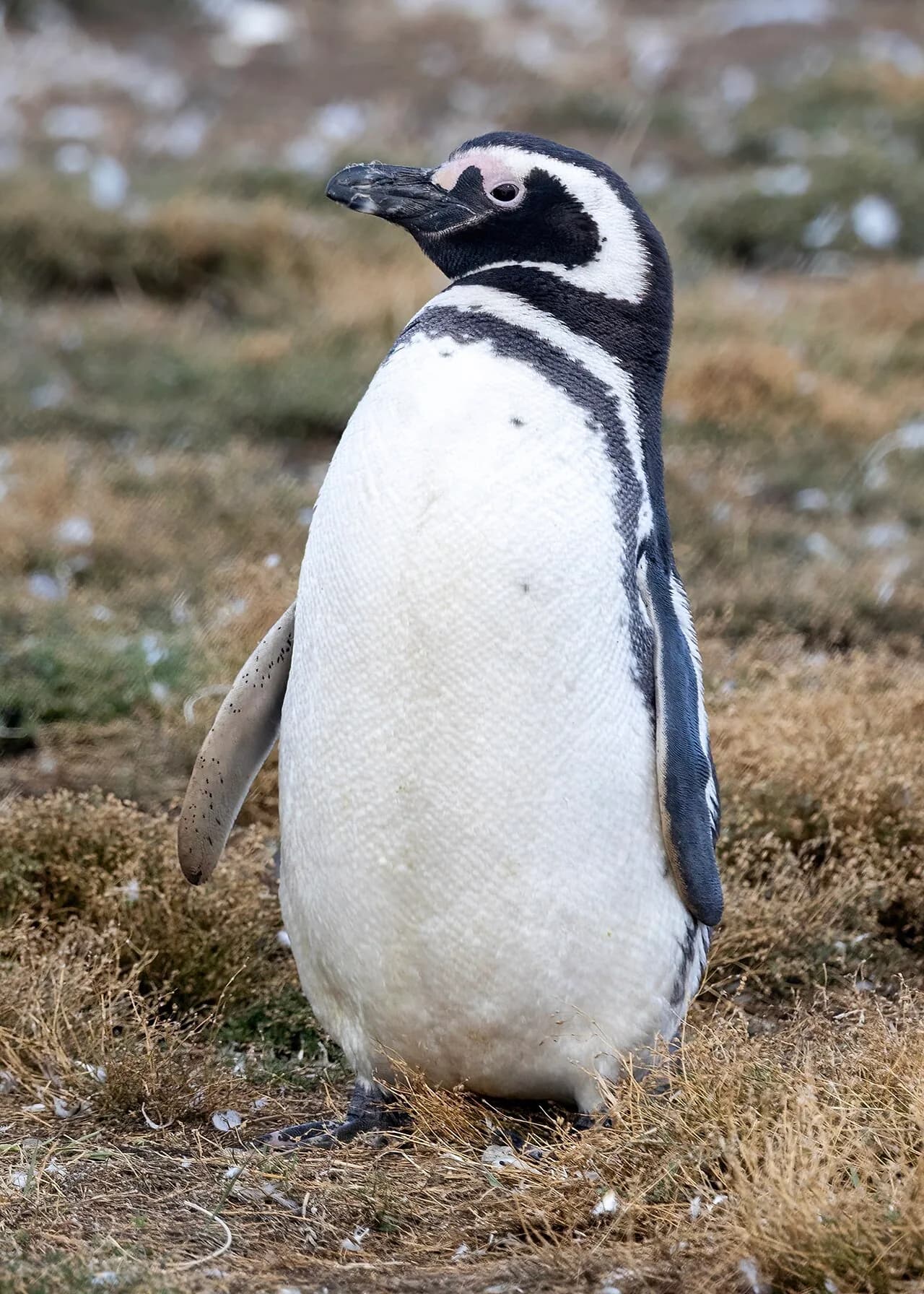
Magellanic Penguin
Spheniscus magellanicus
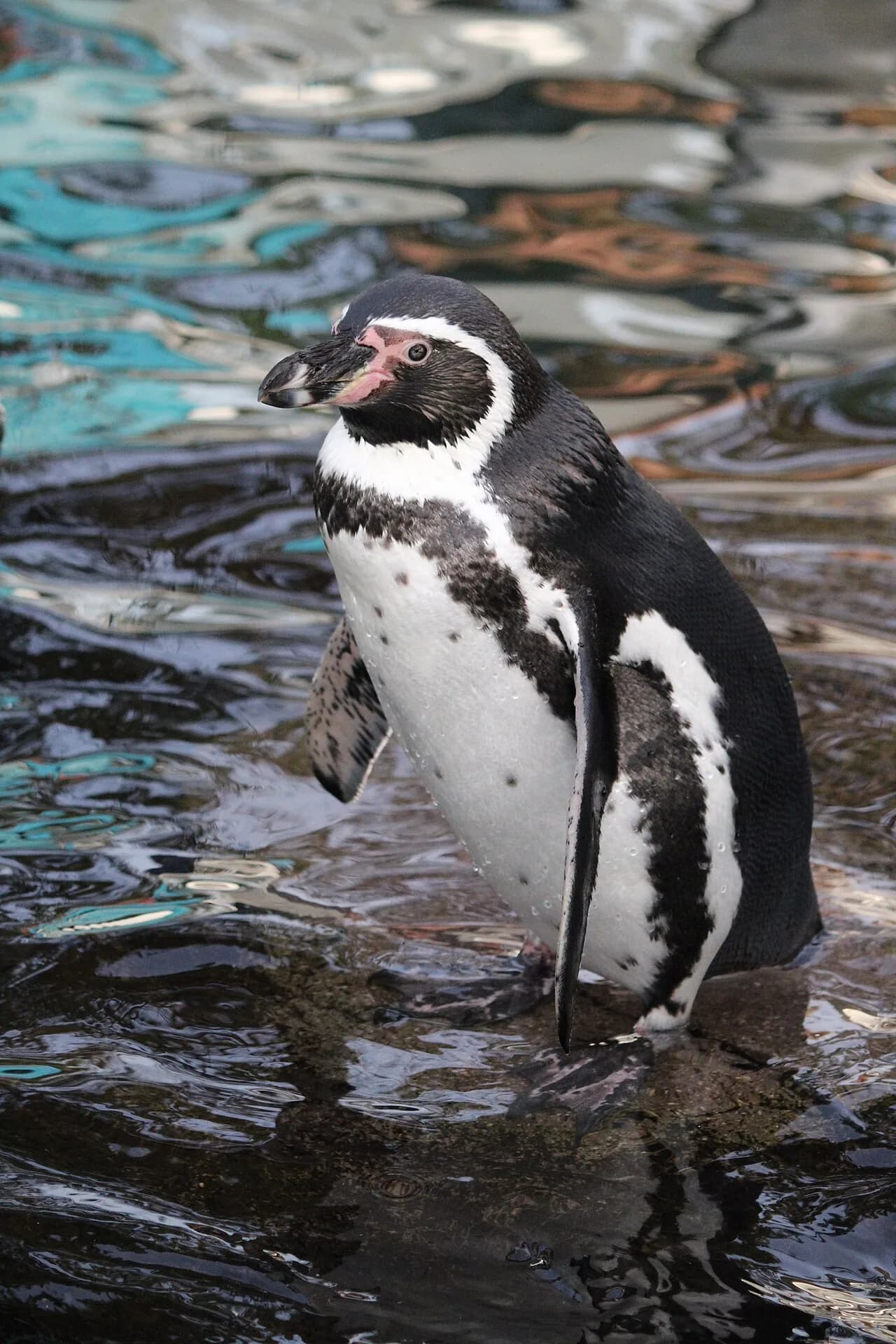
Humboldt Penguin
Spheniscus humboldti
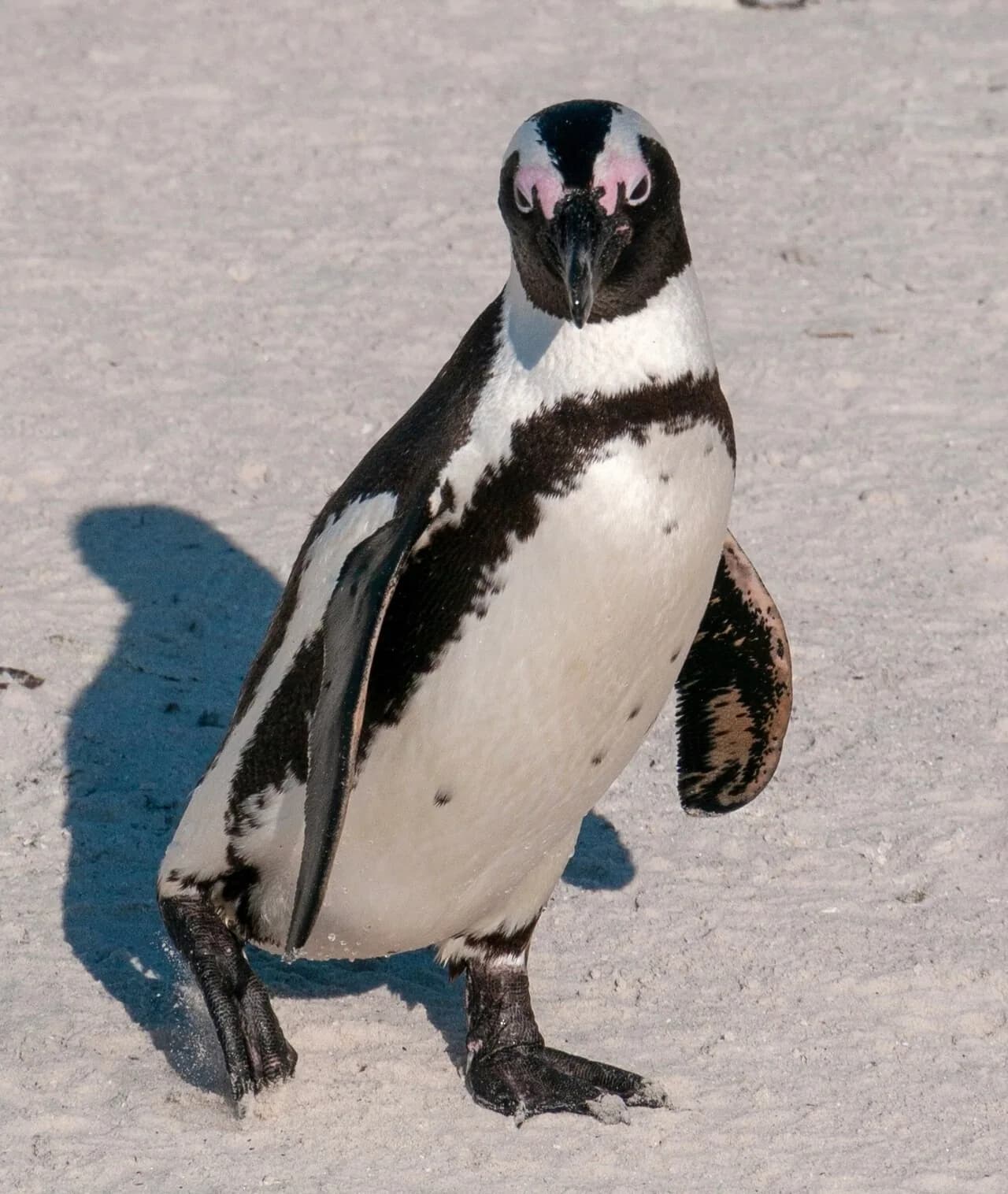
African Penguin
Spheniscus demersus
Erect-crested Penguin
Eudyptes sclateri