
African Penguin
Spheniscus demersus
The only penguin species that breeds in Africa, now Critically Endangered after losing about 97% of their historical population. Each bird has a unique chest spot pattern, like human fingerprints.
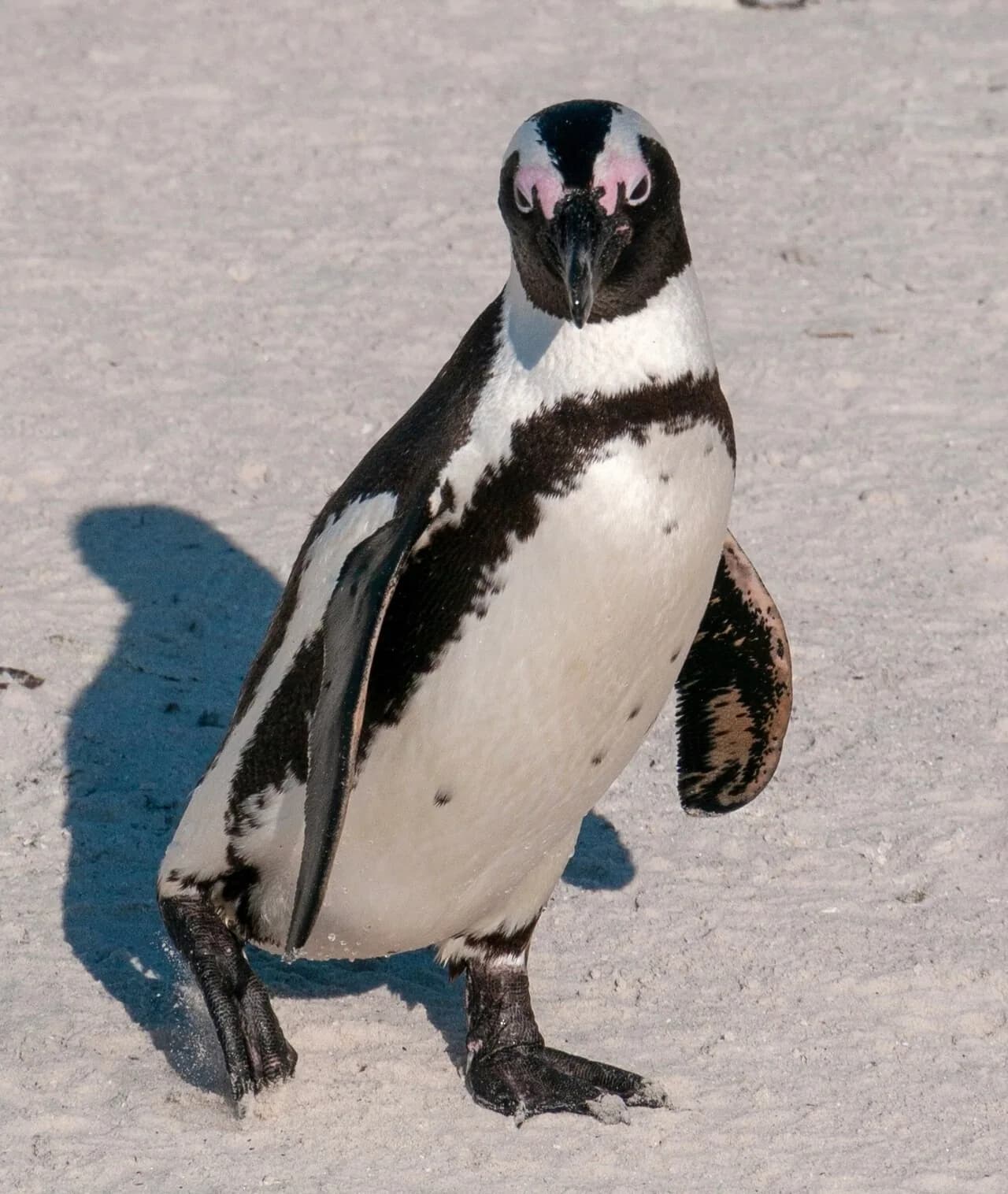
African penguin on sandy beach in South Africa
IUCN Red List status
Uplisted to Critically Endangered in 2024 after losing about 97% of their historical population.
Red List history and threatsEstimated population
~9,900 breeding pairs
Decreasing trend
Estimate assessed 2023.
African penguins, also called jackass penguins for their loud braying call, breed along the coasts of South Africa and Namibia and play a key role in coastal marine food webs. They are the only penguin species native to Africa and have unique spot patterns on their chest, like human fingerprints, that can be used to identify individuals.
BirdLife International reported in 2024 that they have been uplisted from Endangered to Critically Endangered on the IUCN Red List after losing about 97 percent of their historical population, with projections that they could vanish from the wild in fewer than 4,000 days without drastic action. Overfishing of sardines and anchovies, climate-driven shifts in prey, and historical habitat damage have driven breeding pairs from around 70,000 in 1980 to fewer than 20,000 today, though targeted conservation at some colonies has produced modest local rebounds.
If You Only Learn One Thing About This Penguin
African Penguins are not running out of charm. They are running out of fish in the wrong places at the wrong times.
The Survival Problem
Adults have to find enough sardines and anchovies near colonies to feed chicks, while hotter breeding conditions, disturbance, and historical habitat loss keep nesting success brittle.
What Makes This Species Weird
They once nested in thick guano deposits that insulated eggs from heat. Strip the guano away and the species is suddenly trying to breed in a much harsher thermal world.
Myth vs Reality
Myth
Tourist disturbance is the main reason African Penguins are in trouble.
Reality
Disturbance matters, but prey shortage near colonies is one of the central reasons the species is collapsing.
Behavior & Traits
- Produce a loud donkey-like braying call that earns them the nickname 'jackass penguin'
- Each individual has a unique pattern of spots on its chest, like human fingerprints, used for identification
- Play a key role in coastal marine food webs along the coasts of South Africa and Namibia
- Breed on rocky islands, sandy beaches, and coastal mainland sites
Habitat & Range
Diet
Conservation
Uplisted to Critically Endangered in 2024 after losing about 97% of their historical population. Breeding pairs have fallen from around 70,000 in 1980 to fewer than 20,000 today. Overfishing of sardines and anchovies, climate-driven shifts in prey, and historical habitat damage are the primary drivers. Projections suggest they could vanish from the wild in fewer than 4,000 days without drastic action, though targeted conservation at some colonies has produced modest local rebounds.
Red List history
What is driving it: Competition with purse-seine fisheries for sardine and anchovy, plus prey shifting away from established colonies faster than the birds can follow.
- 2024Critically EndangeredCurrent
The first penguin to reach the highest risk category. Breeding numbers are down roughly 97% from historical levels.
- 2010Endangered
Uplisted after the collapse of sardine and anchovy availability around the western colonies.
- 2000Vulnerable
Listed as declines at South African and Namibian colonies became consistent rather than cyclical.
Direction of travel: Vulnerable in 2000 to Critically Endangered in 2024.
Verify on the IUCN Red ListMain threats
- Food shortages linked to overfishing
- Oil spills and pollution
- Hotter breeding conditions
Common predators
Breeding & Movement
Breeding
- Uses burrows or shaded nest sites to protect eggs from heat.
- Can breed in more than one season when local conditions allow.
Movement
- African Penguins spend much of the year foraging at sea and return to established breeding colonies on land or ice.
Fun Facts
The only penguin species native to Africa
Also called the Jackass Penguin because of its donkey-like braying call
Each penguin has a unique pattern of spots on its chest, like fingerprints
Their population has declined by over 97% since the early 1900s
Uplisted from Endangered to Critically Endangered in 2024 by BirdLife International
Breeding pairs have fallen from around 70,000 in 1980 to fewer than 20,000 today
Without drastic conservation action, projections suggest they could vanish from the wild in fewer than 4,000 days
Research Gap
The urgent open question is how much targeted fishery closure around colonies can still slow or reverse the current decline.
Frequently Asked Questions
How tall is an African Penguin?
African Penguins stand 60–70 cm tall and typically weigh 2.2–3.5 kg.
What do African Penguins eat?
African Penguins primarily eat anchovies, sardines, squid, and crustaceans. Prey choice tracks ocean conditions and breeding season energy needs as much as preference.
Where do African Penguins live?
African Penguins are found in South Africa and Namibia. Habitats include Rocky islands, Sandy beaches, and Coastal mainland.
What is the main survival problem for African Penguins?
Adults have to find enough sardines and anchovies near colonies to feed chicks, while hotter breeding conditions, disturbance, and historical habitat loss keep nesting success brittle.
Are African Penguins endangered?
The African Penguin is classified as Critically Endangered on the IUCN Red List. Estimated population: ~9,900 breeding pairs. Population trend: decreasing. Uplisted to Critically Endangered in 2024 after losing about 97% of their historical population. Breeding pairs have fallen from around 70,000 in 1980 to fewer than 20,000 today. Overfishing of sardines and anchovies, climate-driven shifts in prey, and historical habitat damage are the primary drivers. Projections suggest they could vanish from the wild in fewer than 4,000 days without drastic action, though targeted conservation at some colonies has produced modest local rebounds.
How long do African Penguins live?
African Penguins typically live 10–27 years in the wild, though food access, predation, and breeding success can cut that short.
What is a common myth about African Penguins?
Myth: Tourist disturbance is the main reason African Penguins are in trouble. Reality: Disturbance matters, but prey shortage near colonies is one of the central reasons the species is collapsing.
What threatens African Penguins?
The main pressures include food shortages linked to overfishing, oil spills and pollution, and hotter breeding conditions. Natural predators include Cape fur seals, Sharks, and Kelp gulls.
What is one surprising fact about African Penguins?
The only penguin species native to Africa
Written for the Survival Lab series on Penguin Place
Penguin Place is written like a natural-history notebook, not a content mill. The job is to explain what each penguin is up against, what makes it strange, and where the evidence still runs thin.
Quick Facts
- Scientific Name
- Spheniscus demersus
- Height
- 60–70 cm
- Weight
- 2.2–3.5 kg
- Lifespan
- 10–27 years
- Status
- Critically Endangered
- Population
- ~9,900 breeding pairs
- Genus
- Spheniscus
Explore by Topic
Status
Genus
Regions
Habitats
Compare
Start with the closest side-by-side matches by lineage, habitat, and size.
How we source claims
We start with conservation assessments, research institutions, and field guides that have to survive real scrutiny. Then we write only what still sounds true after the comparison.
- Use IUCN, BirdLife, museums, aquariums, conservation groups, and research institutions before broad explainers.
- Lead with a survival problem, not a keyword bucket.
- Say when the science is uncertain instead of sanding every gap into fake certainty.
Further reading
This profile was reviewed on February 25, 2026 using the sources listed below.
- IUCN Red List - Global conservation assessments and extinction-risk categories.
- BirdLife Data Zone - Species accounts, distribution, and population summaries.
- SANCCOB - African penguin rescue, rehabilitation, and conservation context.
- Penguins International - Species explainers and conservation context focused on penguins.
Continue the trail
Broader Survival Lab reading on Penguin Place connected to African Penguin — survival, habitat, food, and conservation pressure.
Why Some Penguins Live in Hot Places
Why penguins show up on tropical and desert coasts, and why warm-weather species still depend on cold, productive oceans.
Penguin Conservation Status Explained
What penguin risk labels actually mean, and why the same status can hide very different collapse stories.
Penguin Predators and Threats
The difference between the things that naturally eat penguins and the human pressures that now make many colonies fail.
Related to African Penguin
Nearby species by lineage, range, size, and conservation pressure — better next reads than a random list.
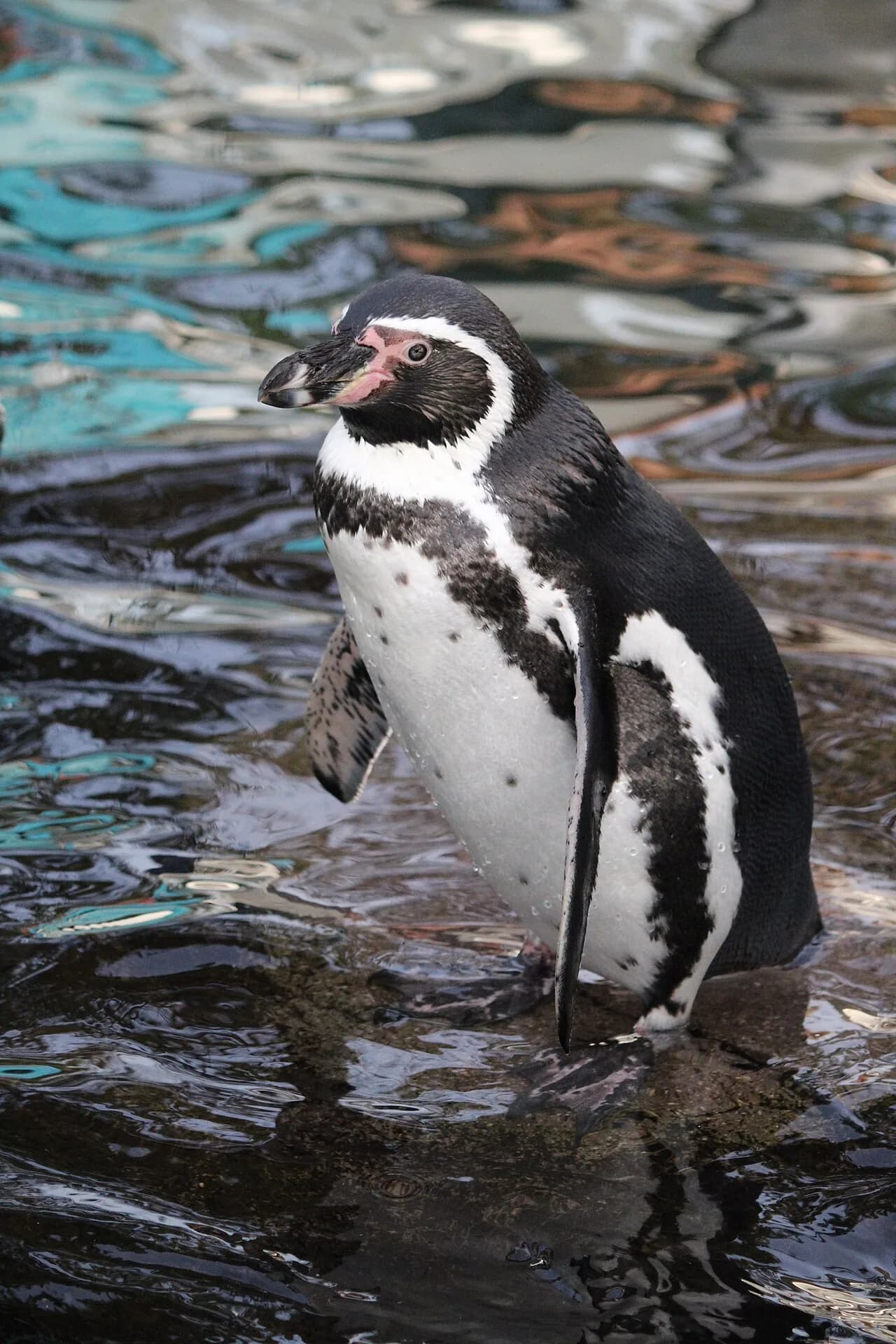
Humboldt Penguin
Spheniscus humboldti
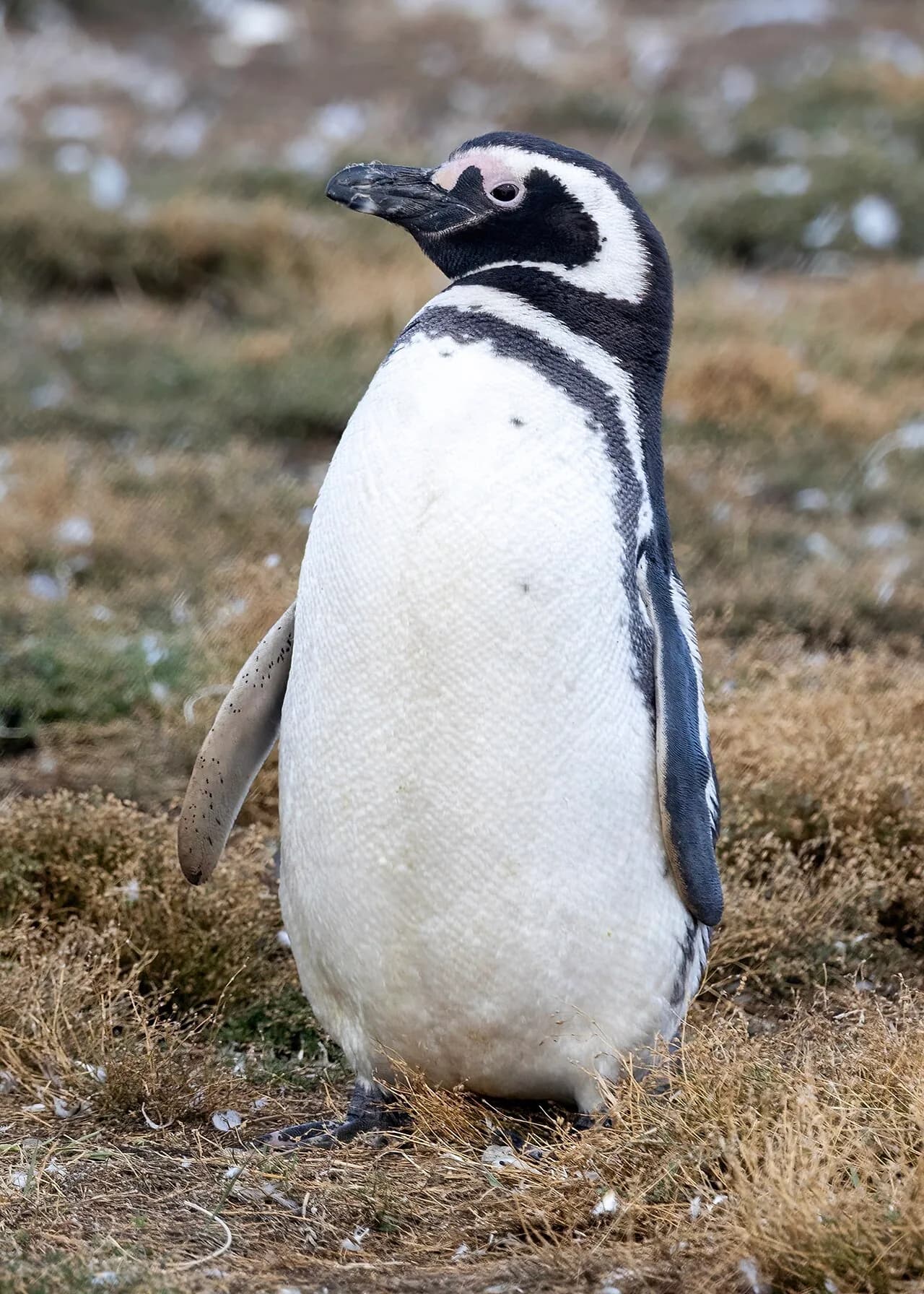
Magellanic Penguin
Spheniscus magellanicus
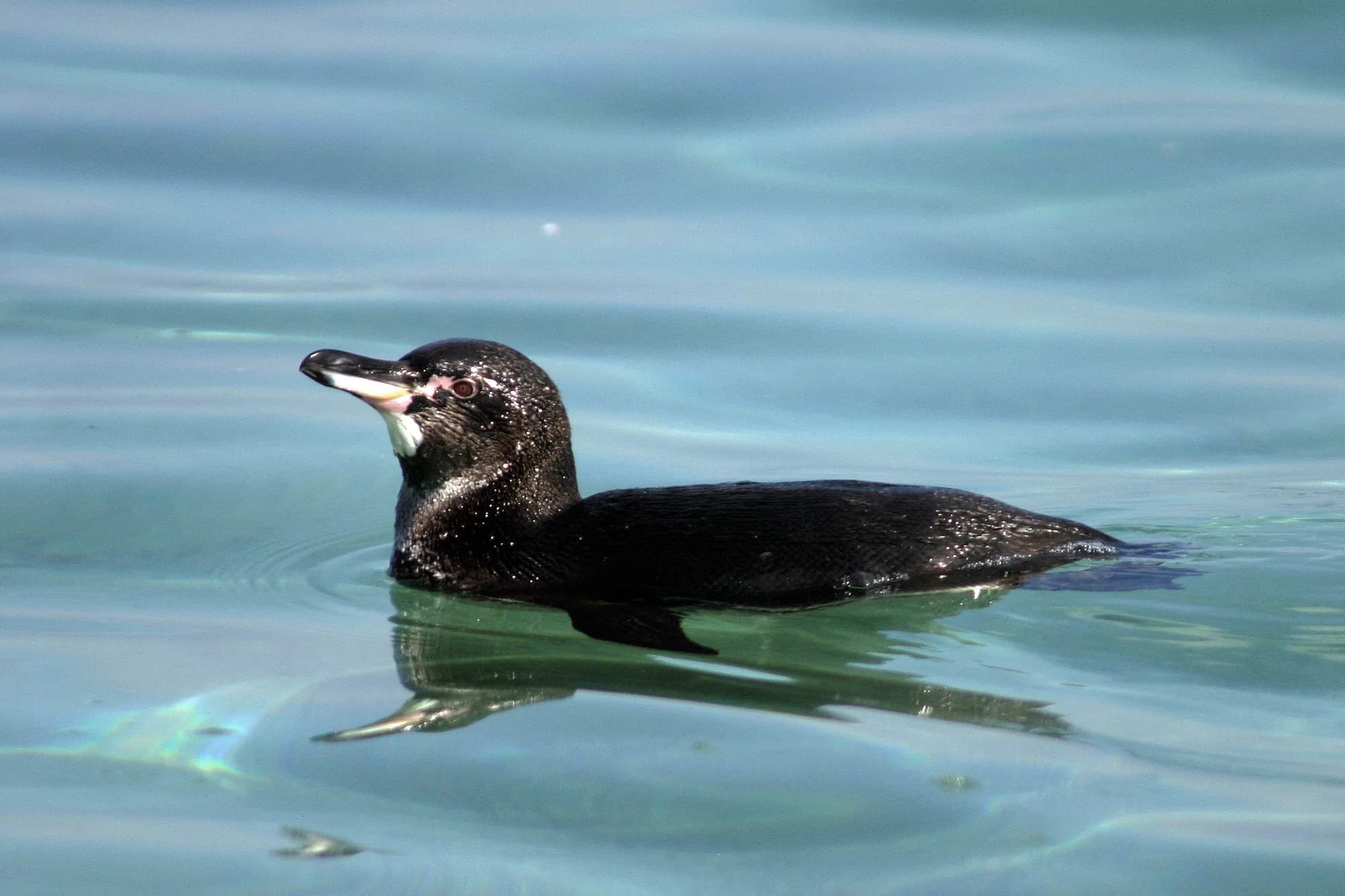
Galapagos Penguin
Spheniscus mendiculus
Yellow-eyed Penguin
Megadyptes antipodes