
Magellanic Penguin
Spheniscus magellanicus
Named after Ferdinand Magellan who first spotted them in 1520, these medium-sized South American penguins are among the most migratory penguin species, with distinctive two black bands between head and breast.
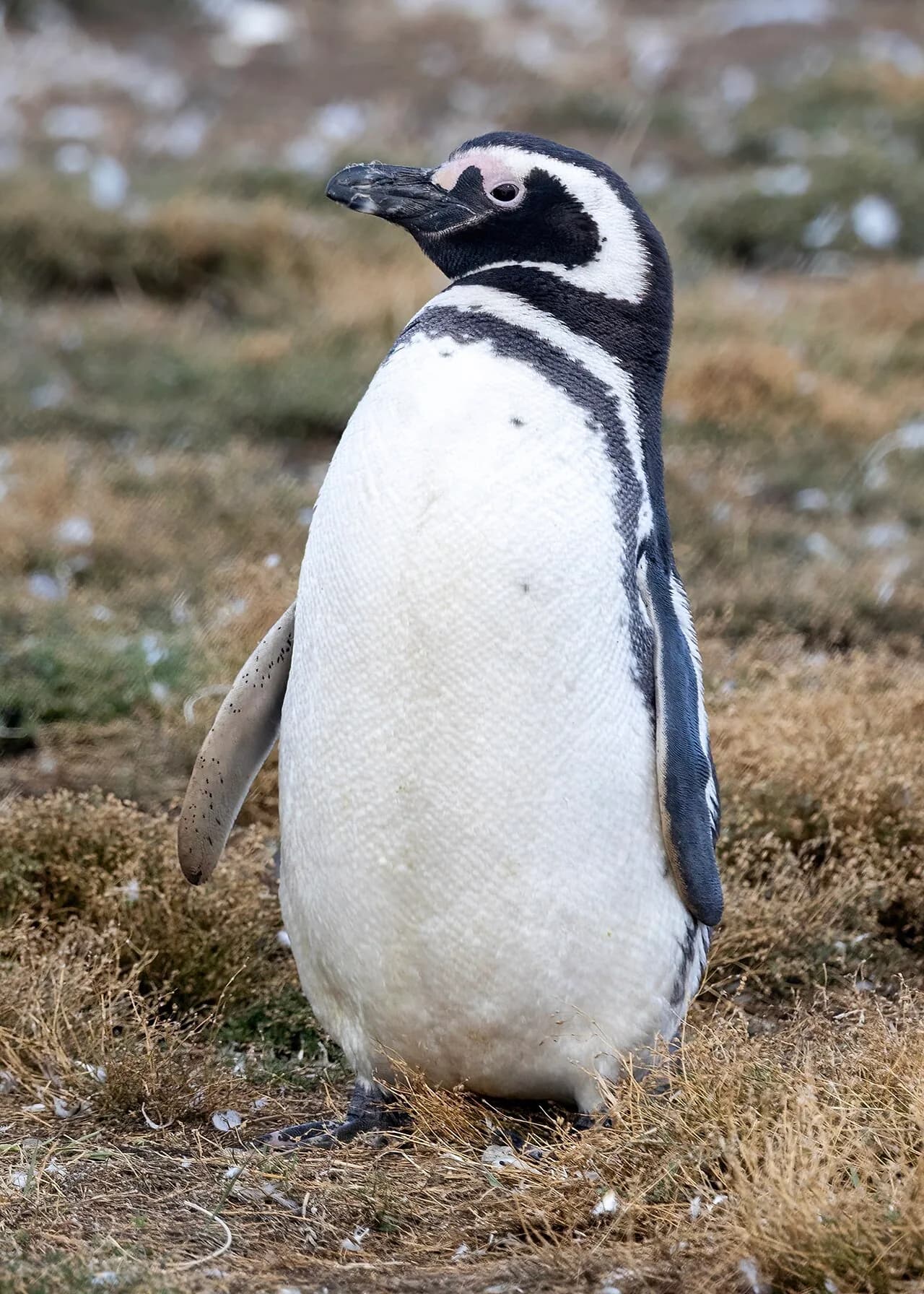
Magellanic penguin on a South American beach
IUCN Red List status
Classified as Least Concern with a large population of around 1.8 million pairs.
Red List history and threatsEstimated population
~1.8 million breeding pairs
Mixed trend
Estimate assessed 2020.
Magellanic penguins are medium-sized (around 4–5 kg and 70 cm tall) banded penguins with two black bands between the head and breast, the lower forming an inverted U across the chest. Named after Portuguese explorer Ferdinand Magellan, who first spotted them in 1520, they are native to South America and known for their loud braying call that earns them the nickname "jackass penguin."
They are among the most migratory penguins, spending about half the year at sea and half at breeding colonies in southern Argentina, southern Chile and the Falkland/Malvinas Islands, with some birds ranging along the Atlantic coast as far north as Brazil. Recent tracking work shows complex winter behavior, including partial migration where some individuals travel up to 2,000 km while others remain closer to colonies, exploiting different oceanographic zones and prey like anchovy and sprat.
If You Only Learn One Thing About This Penguin
Magellanic Penguins are burrow birds living in an exposed climate. Their problem is not just predators; it is trying to raise chicks while weather and human coastline pressure keep changing the rules.
The Survival Problem
A Magellanic colony has to hold together through heat, storms, oil pollution, and long foraging commutes, all while chicks remain trapped in burrows waiting on adult return trips.
What Makes This Species Weird
Magellanics are surprisingly mobile for a penguin that nests in scruffy shrubland and dirt burrows, with many populations making large seasonal movements after breeding.
Myth vs Reality
Myth
Mainland-breeding penguins are easier to protect than remote island birds.
Reality
Mainland colonies face roads, development, fisheries, oil, tourism, and heat waves. Accessibility cuts both ways.
Behavior & Traits
- Among the most migratory penguins, spending half the year at sea with some individuals traveling up to 2,000 km
- Mate for life and return to the same nesting burrow each year
- Show complex partial migration — some birds travel far while others stay near colonies, exploiting different prey zones
- Their loud braying call earns them the nickname 'jackass penguin'
Habitat & Range
Diet
Conservation
Classified as Least Concern with a large population of around 1.8 million pairs. Oil pollution from shipping lanes near their colonies has historically been a major threat, and climate-driven shifts in prey distribution are an emerging concern. Recent tracking studies reveal complex partial migration patterns, with some birds traveling up to 2,000 km from colonies during winter.
Red List history
The Magellanic Penguin is currently listed as Least Concern on the IUCN Red List, with an estimated population of ~1.8 million breeding pairs and a mixed trend. We have not recorded a category change for this species.
Check the current Red List assessmentMain threats
- Oil pollution
- Storms and heat stress during nesting
- Fishing pressure on prey stocks
Common predators
Breeding & Movement
Breeding
- Breeds in burrows or under shrubs on mainland and island colonies.
- Adults commute repeatedly between nesting areas and coastal feeding zones.
Movement
- Magellanic Penguins spend much of the year foraging at sea and return to established breeding colonies on land or ice.
Fun Facts
They were named after Ferdinand Magellan who first spotted them in 1520
Magellanic penguins mate for life and return to the same nesting burrow each year
They can travel up to 2,000 km from their colony during winter migration
Their two distinctive black chest bands distinguish them from similar species
Some birds range along the Atlantic coast as far north as Brazil during winter
Recent tracking work reveals complex partial migration where some individuals travel far while others stay close to colonies
They spend about half the year at sea and half at breeding colonies
Research Gap
Researchers are still piecing together how changing migration routes and coastal storm patterns are interacting at the colony level.
Frequently Asked Questions
How tall is a Magellanic Penguin?
Magellanic Penguins stand 61–76 cm tall and typically weigh 2.7–6.5 kg.
What do Magellanic Penguins eat?
Magellanic Penguins primarily eat fish, squid, crustaceans, and krill. Prey choice tracks ocean conditions and breeding season energy needs as much as preference.
Where do Magellanic Penguins live?
Magellanic Penguins are found in Argentina, Chile, Falkland Islands, and Southern Brazil. Habitats include Coastal burrows, Rocky shores, and Grasslands.
What is the main survival problem for Magellanic Penguins?
A Magellanic colony has to hold together through heat, storms, oil pollution, and long foraging commutes, all while chicks remain trapped in burrows waiting on adult return trips.
Are Magellanic Penguins endangered?
The Magellanic Penguin is classified as Least Concern on the IUCN Red List. Estimated population: ~1.8 million breeding pairs. Population trend: mixed. Classified as Least Concern with a large population of around 1.8 million pairs. Oil pollution from shipping lanes near their colonies has historically been a major threat, and climate-driven shifts in prey distribution are an emerging concern. Recent tracking studies reveal complex partial migration patterns, with some birds traveling up to 2,000 km from colonies during winter.
How long do Magellanic Penguins live?
Magellanic Penguins typically live 25–30 years in the wild, though food access, predation, and breeding success can cut that short.
What is a common myth about Magellanic Penguins?
Myth: Mainland-breeding penguins are easier to protect than remote island birds. Reality: Mainland colonies face roads, development, fisheries, oil, tourism, and heat waves. Accessibility cuts both ways.
What threatens Magellanic Penguins?
The main pressures include oil pollution, storms and heat stress during nesting, and fishing pressure on prey stocks. Natural predators include Sea lions, Sharks, and Skuas and gulls.
What is one surprising fact about Magellanic Penguins?
They were named after Ferdinand Magellan who first spotted them in 1520
Written for the Survival Lab series on Penguin Place
Penguin Place is written like a natural-history notebook, not a content mill. The job is to explain what each penguin is up against, what makes it strange, and where the evidence still runs thin.
Quick Facts
- Scientific Name
- Spheniscus magellanicus
- Height
- 61–76 cm
- Weight
- 2.7–6.5 kg
- Lifespan
- 25–30 years
- Status
- Least Concern
- Population
- ~1.8 million breeding pairs
- Genus
- Spheniscus
Explore by Topic
Status
Genus
Habitats
Compare
Start with the closest side-by-side matches by lineage, habitat, and size.
How we source claims
We start with conservation assessments, research institutions, and field guides that have to survive real scrutiny. Then we write only what still sounds true after the comparison.
- Use IUCN, BirdLife, museums, aquariums, conservation groups, and research institutions before broad explainers.
- Lead with a survival problem, not a keyword bucket.
- Say when the science is uncertain instead of sanding every gap into fake certainty.
Further reading
This profile was reviewed on January 31, 2026 using the sources listed below.
- IUCN Red List - Global conservation assessments and extinction-risk categories.
- BirdLife Data Zone - Species accounts, distribution, and population summaries.
- Penguins International - Species explainers and conservation context focused on penguins.
- NOAA Fisheries - Marine food webs, climate, and ocean ecosystem context.
Continue the trail
Broader Survival Lab reading on Penguin Place connected to Magellanic Penguin — survival, habitat, food, and conservation pressure.
Related to Magellanic Penguin
Nearby species by lineage, range, size, and conservation pressure — better next reads than a random list.
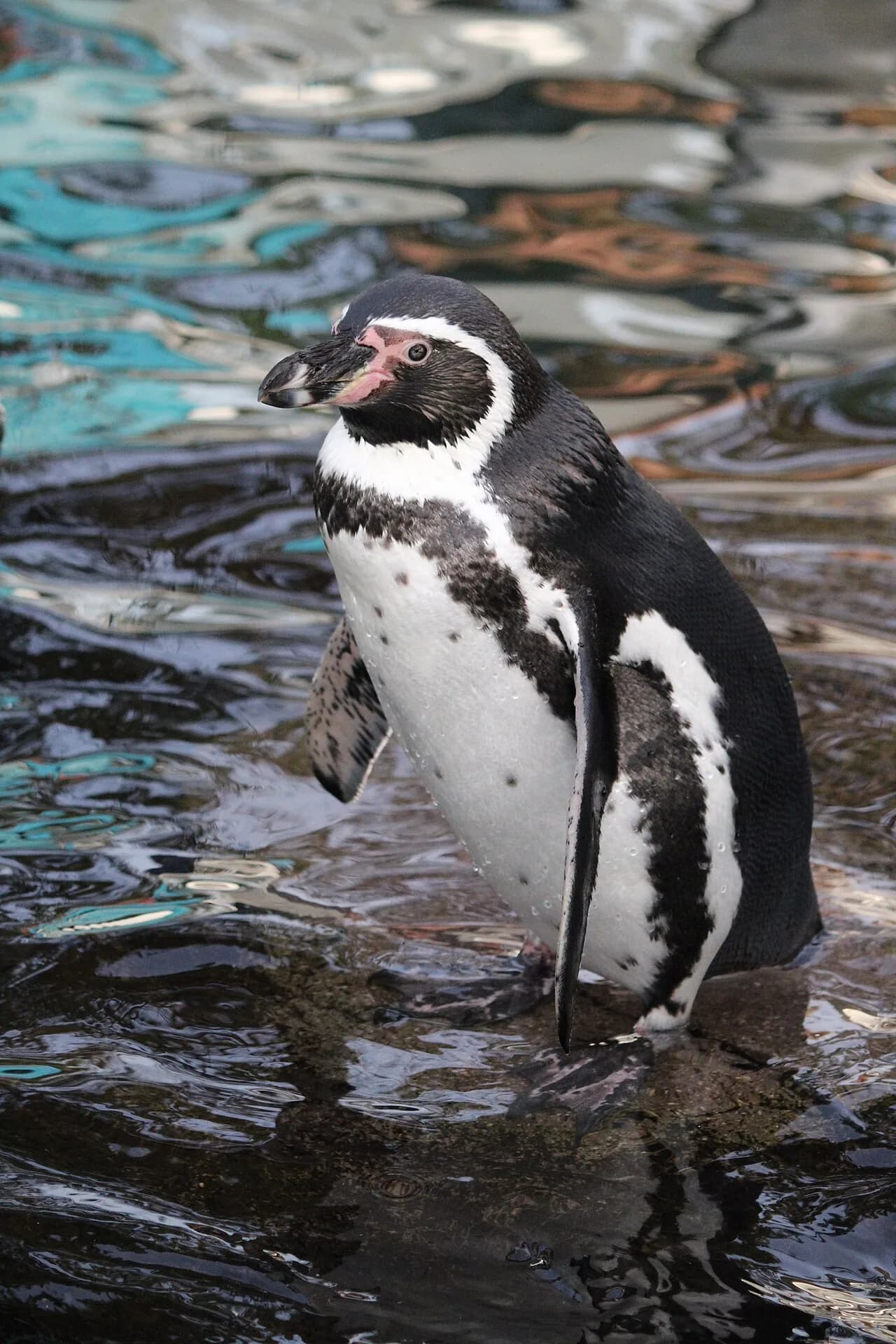
Humboldt Penguin
Spheniscus humboldti
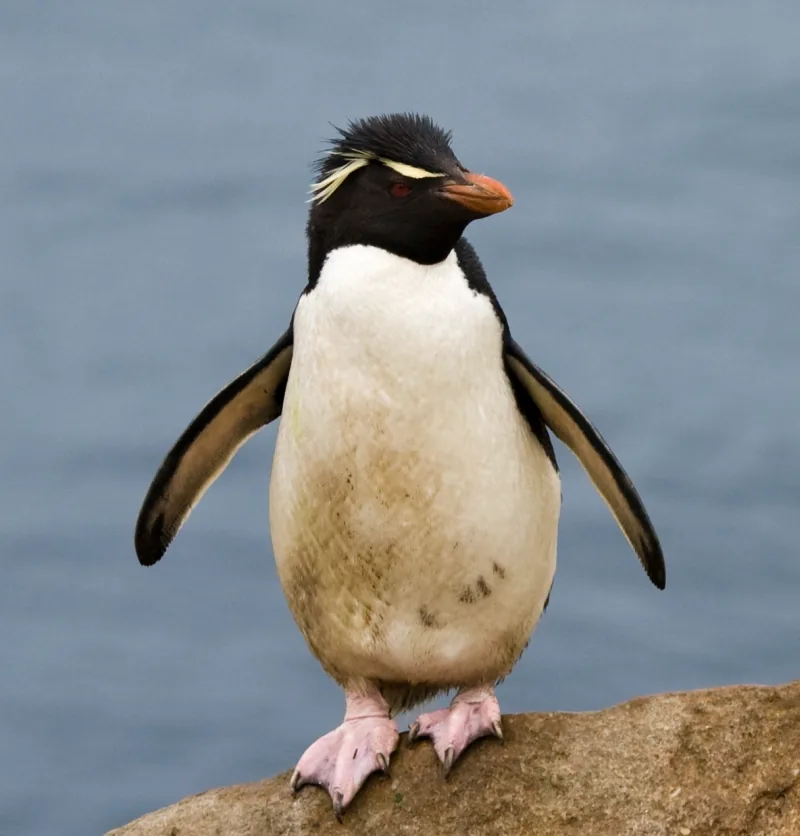
Western Rockhopper Penguin
Eudyptes chrysocome
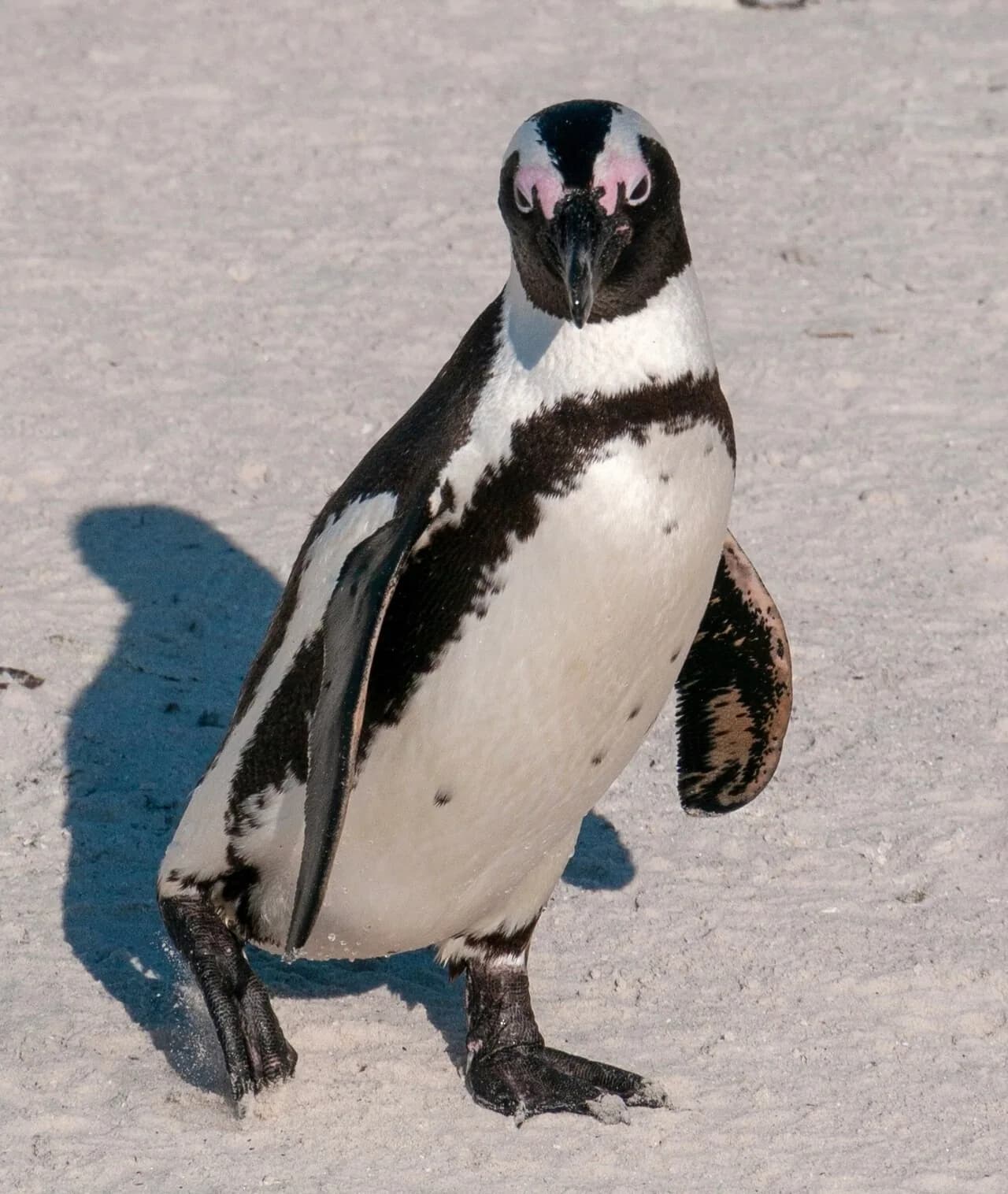
African Penguin
Spheniscus demersus
Galapagos Penguin
Spheniscus mendiculus