
Eastern Rockhopper Penguin
Eudyptes filholi
Recognized as a distinct species from the Western Rockhopper since 2006, Eastern Rockhoppers breed on sub-Antarctic islands in the Indian and Pacific Oceans and share the same bold yellow crest and red eyes as their relatives.
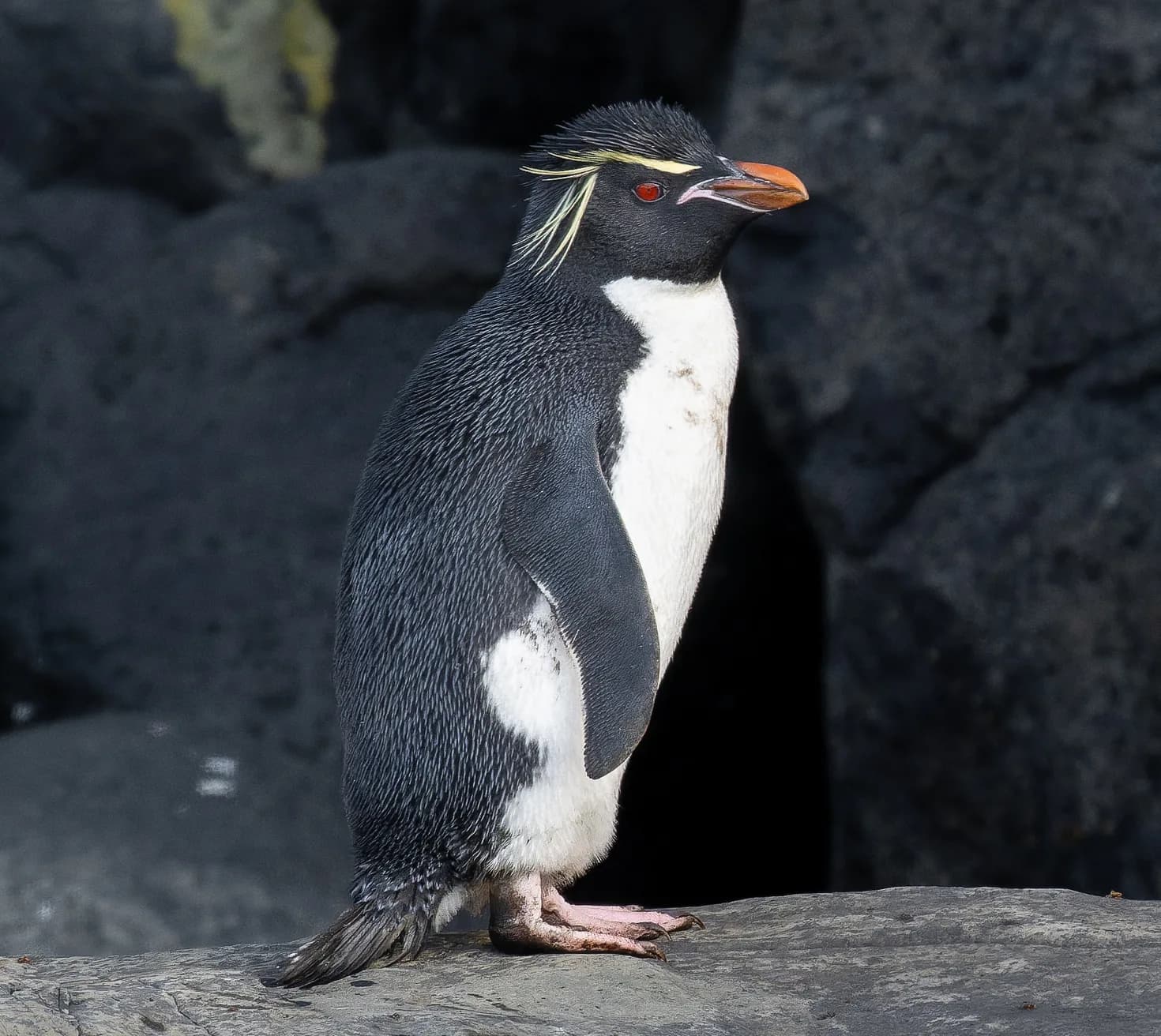
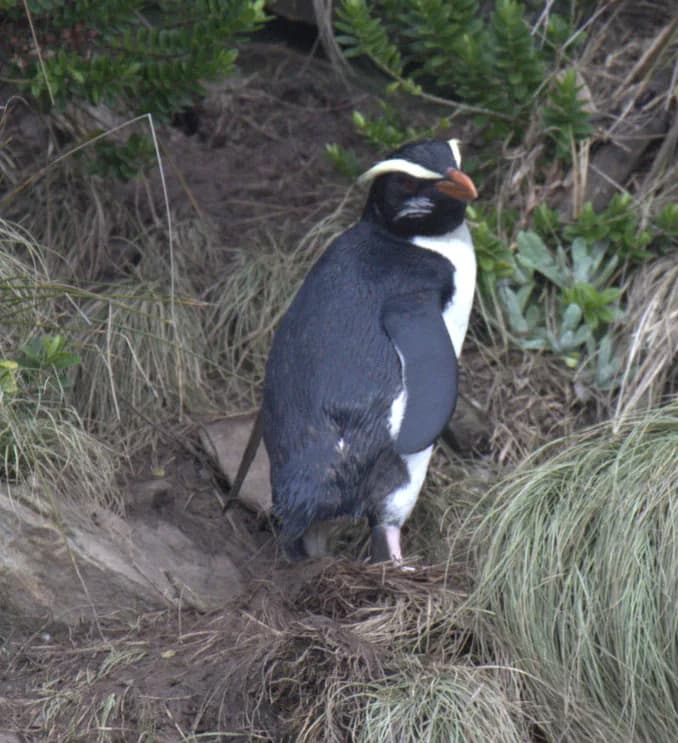
Eastern rockhopper penguin on sub-Antarctic rocky coastline
Estimated population
~1.6 million breeding pairs
Decreasing trend
Estimate assessed 2020.
Eastern Rockhopper penguins were split from the Southern Rockhopper as a separate species in 2006 based on genetic and morphological differences. They breed on sub-Antarctic islands in the Indian and Pacific Oceans, including Campbell Island, the Antipodes, Crozet, Kerguelen, Heard and Macquarie Islands, and are closely related to both the Western and Northern Rockhopper.
Like all rockhoppers, they navigate steep rocky coastlines by hopping with both feet together rather than tobogganing on their bellies. Their diet is heavily krill-based, tying their breeding success closely to Southern Ocean productivity. Population trends vary across their range, with some island groups showing declines linked to warming ocean temperatures and shifting prey availability.
If You Only Learn One Thing About This Penguin
Eastern Rockhoppers survive on remoteness and athleticism, but neither trait protects them from large ocean changes.
The Survival Problem
Their breeding system depends on steep island colonies remaining paired with nearby productive seas, a combination that is harder to trust when prey fields shift.
What Makes This Species Weird
They breed in places that look barely reasonable for standing, let alone raising chicks, which is exactly why the hopping body plan matters so much.
Myth vs Reality
Myth
Remote island penguins are insulated from modern decline.
Reality
Remote colonies can still crash if the surrounding marine food web changes and there is nowhere else close to go.
Behavior & Traits
- Navigate steep rocky coastlines by hopping with both feet together
- Recognized as a distinct species from the Western Rockhopper since 2006
- Breed across a wide range of sub-Antarctic islands in the Indian and Pacific Oceans
- Diet is heavily krill-based, tying breeding success to Southern Ocean productivity
Habitat & Range
Diet
Conservation
Classified as Vulnerable. Population trends vary across their range, with some island groups showing declines linked to warming ocean temperatures and shifting prey availability. Their dependence on krill makes them sensitive to changes in Southern Ocean productivity driven by climate change.
Red List history
The Eastern Rockhopper Penguin is currently listed as Vulnerable on the IUCN Red List, with an estimated population of ~1.6 million breeding pairs and a decreasing trend. We have not recorded a category change for this species.
Check the current Red List assessmentMain threats
- Climate-driven prey shifts
- Remote-island breeding vulnerability
- Long-term population decline
Common predators
Breeding & Movement
Breeding
- Breeds on rugged sub-Antarctic islands with steep coastal access.
- Uses hopping and climbing to reach high nesting ground.
Movement
- Eastern Rockhopper Penguins spend much of the year foraging at sea and return to established breeding colonies on land or ice.
Fun Facts
Only recognized as a separate species from the Southern Rockhopper in 2006
They breed on some of the most remote sub-Antarctic islands in the world
Like all rockhoppers, they hop with both feet together to scale steep rocky cliffs
Their bright red eyes and spiky yellow crests make them instantly recognizable
Their krill-heavy diet makes their breeding success tightly linked to ocean conditions
Population trends vary across their range — some island groups are declining while others remain stable
Closely related to both Western and Northern Rockhoppers, the three were once all considered one species
Research Gap
Population baselines remain patchy in parts of the range, which makes it harder to separate true recovery from gaps in monitoring.
Frequently Asked Questions
How tall is an Eastern Rockhopper Penguin?
Eastern Rockhopper Penguins stand 45–55 cm tall and typically weigh 2.1–3.5 kg.
What do Eastern Rockhopper Penguins eat?
Eastern Rockhopper Penguins primarily eat krill, squid, fish, and crustaceans. Prey choice tracks ocean conditions and breeding season energy needs as much as preference.
Where do Eastern Rockhopper Penguins live?
Eastern Rockhopper Penguins are found in Campbell Island, Antipodes Islands, Crozet Islands, Kerguelen Islands, Heard Island, and Macquarie Island. Habitats include Rocky coastlines, Cliff faces, and Tussock grass.
What is the main survival problem for Eastern Rockhopper Penguins?
Their breeding system depends on steep island colonies remaining paired with nearby productive seas, a combination that is harder to trust when prey fields shift.
Are Eastern Rockhopper Penguins endangered?
The Eastern Rockhopper Penguin is classified as Vulnerable on the IUCN Red List. Estimated population: ~1.6 million breeding pairs. Population trend: decreasing. Classified as Vulnerable. Population trends vary across their range, with some island groups showing declines linked to warming ocean temperatures and shifting prey availability. Their dependence on krill makes them sensitive to changes in Southern Ocean productivity driven by climate change.
How long do Eastern Rockhopper Penguins live?
Eastern Rockhopper Penguins typically live 10–30 years in the wild, though food access, predation, and breeding success can cut that short.
What is a common myth about Eastern Rockhopper Penguins?
Myth: Remote island penguins are insulated from modern decline. Reality: Remote colonies can still crash if the surrounding marine food web changes and there is nowhere else close to go.
What threatens Eastern Rockhopper Penguins?
The main pressures include climate-driven prey shifts, remote-island breeding vulnerability, and long-term population decline. Natural predators include Fur seals, Skuas, and Giant petrels.
What is one surprising fact about Eastern Rockhopper Penguins?
Only recognized as a separate species from the Southern Rockhopper in 2006
Written for the Survival Lab series on Penguin Place
Penguin Place is written like a natural-history notebook, not a content mill. The job is to explain what each penguin is up against, what makes it strange, and where the evidence still runs thin.
Quick Facts
- Scientific Name
- Eudyptes filholi
- Height
- 45–55 cm
- Weight
- 2.1–3.5 kg
- Lifespan
- 10–30 years
- Status
- Vulnerable
- Population
- ~1.6 million breeding pairs
- Genus
- Eudyptes
Explore by Topic
Status
Genus
Habitats
Compare
Start with the closest side-by-side matches by lineage, habitat, and size.
How we source claims
We start with conservation assessments, research institutions, and field guides that have to survive real scrutiny. Then we write only what still sounds true after the comparison.
- Use IUCN, BirdLife, museums, aquariums, conservation groups, and research institutions before broad explainers.
- Lead with a survival problem, not a keyword bucket.
- Say when the science is uncertain instead of sanding every gap into fake certainty.
Further reading
This profile was reviewed on February 16, 2026 using the sources listed below.
- IUCN Red List - Global conservation assessments and extinction-risk categories.
- BirdLife Data Zone - Species accounts, distribution, and population summaries.
- Penguins International - Species explainers and conservation context focused on penguins.
- New Zealand Department of Conservation Penguins Hub - New Zealand penguin species, threats, and habitat guidance.
Continue the trail
Broader Survival Lab reading on Penguin Place connected to Eastern Rockhopper Penguin — survival, habitat, food, and conservation pressure.
Related to Eastern Rockhopper Penguin
Nearby species by lineage, range, size, and conservation pressure — better next reads than a random list.
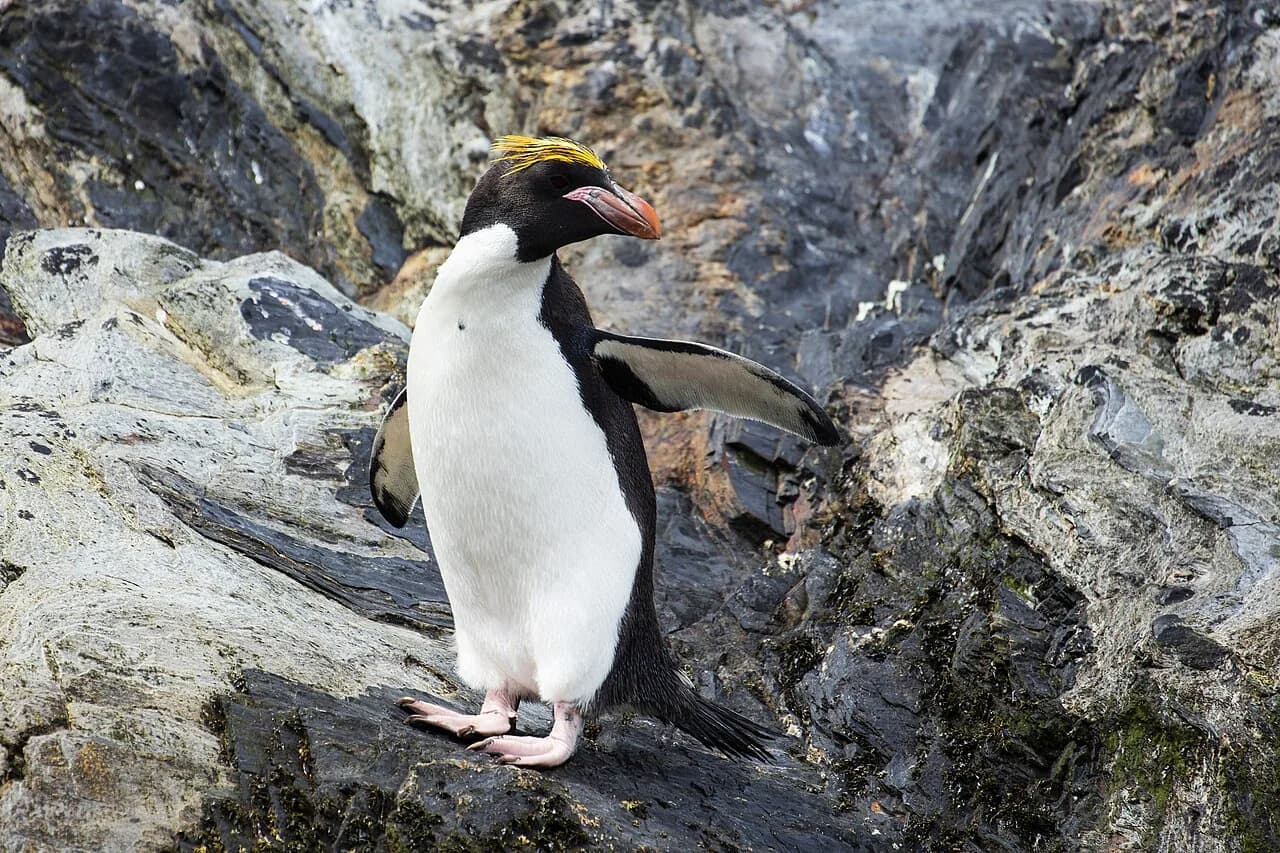
Macaroni Penguin
Eudyptes chrysolophus
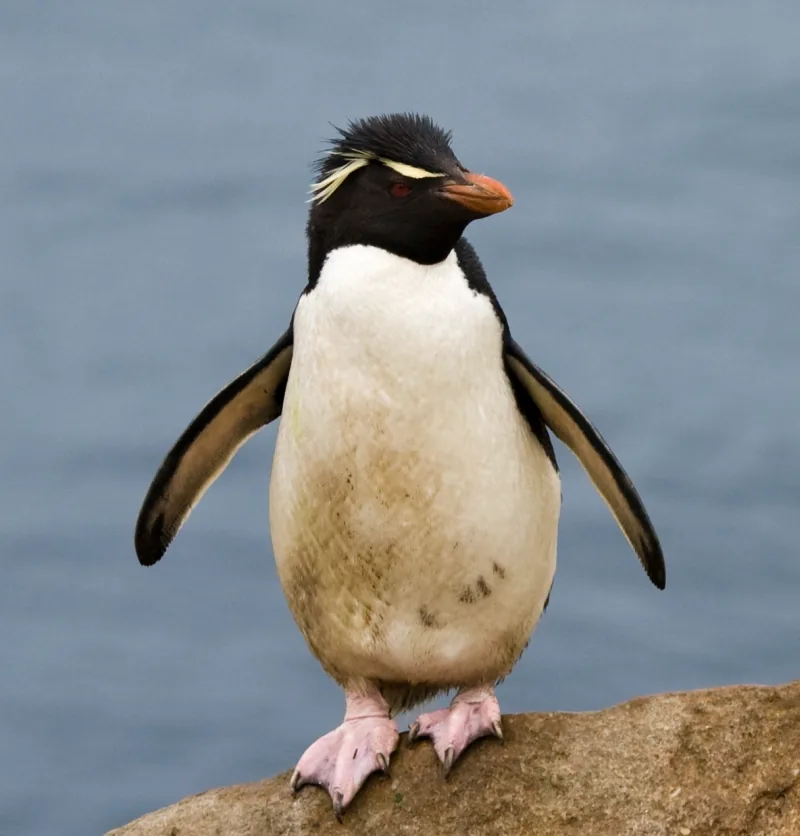
Western Rockhopper Penguin
Eudyptes chrysocome
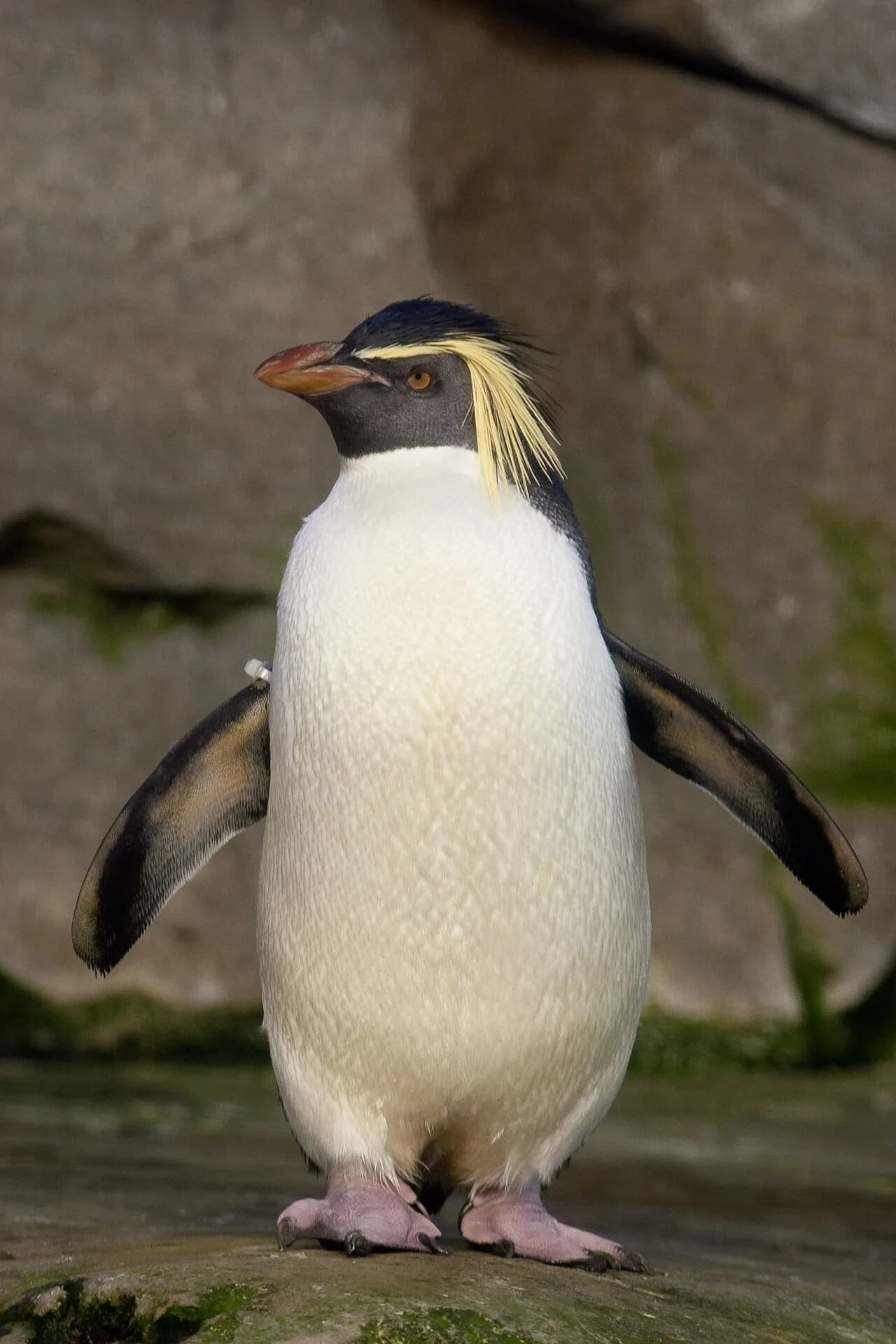
Northern Rockhopper Penguin
Eudyptes moseleyi
Fiordland Penguin
Eudyptes pachyrhynchus