
Snares Penguin
Eudyptes robustus
Endemic to the tiny Snares Islands south of New Zealand, this yellow-crested penguin has the most restricted range of any penguin species, yet maintains a healthy population thanks to the absence of introduced predators.
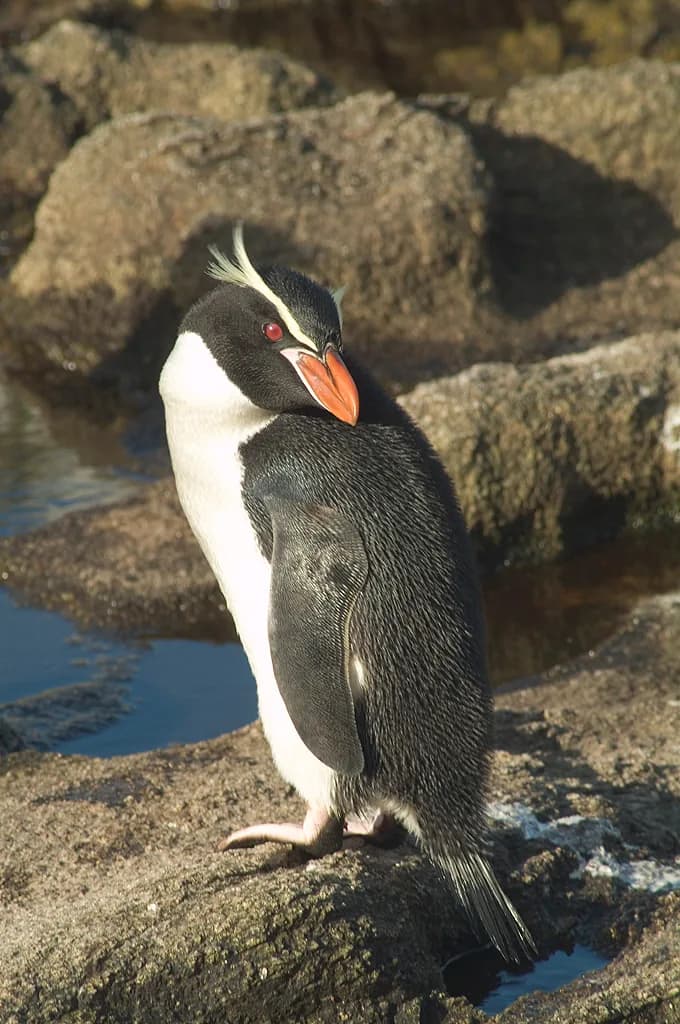
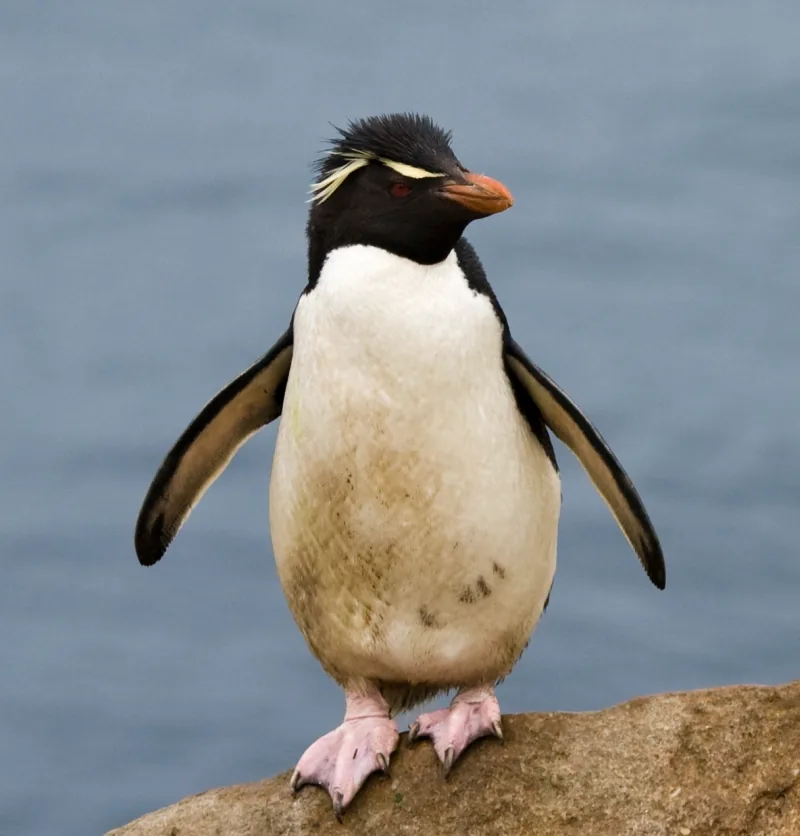
Snares penguin on sub-Antarctic rocky shore
IUCN Red List status
Listed as Vulnerable because their entire breeding population is confined to a single small island group.
Red List history and threatsEstimated population
~25,000 breeding pairs
Stable trend
Estimate assessed 2020.
Snares penguins are endemic to New Zealand and breed only on the Snares Islands south of the South Island, giving them one of the most restricted ranges of any penguin. They are yellow-crested penguins about 50–70 cm tall with a distinctive patch of bare pink skin at the base of the large red-brown bill, which helps distinguish them from similar Fiordland crested penguins.
Colonies nest in dense vegetation and often shift to "fresh" sites so that trampled plants at old sites can recover. Despite their restricted range, they have a relatively healthy population of around 25,000 pairs due to the islands being free of introduced predators. The Snares Islands are strictly protected and closed to the public, providing an undisturbed sanctuary for this species.
If You Only Learn One Thing About This Penguin
The Snares Penguin is what happens when an entire species bets on one remote island group staying dependable for a very long time.
The Survival Problem
Its breeding range is tiny, so any sustained change in nearby food supply, disease, or island conditions matters at species scale almost immediately.
What Makes This Species Weird
Snares Penguins can form dense, loud colonies under vegetation on a place many people will never see, which makes them both well protected and strangely vulnerable.
Myth vs Reality
Myth
Remote island endemics are safe because humans rarely visit them.
Reality
Isolation removes some threats, but it also means there is no fallback range when one island system changes.
Behavior & Traits
- Colonies shift to 'fresh' nesting sites so that trampled vegetation at old sites can recover
- Distinguished from similar Fiordland crested penguins by bare pink skin at the base of their bill
- Breed only on the Snares Islands — the most geographically restricted range of any penguin
- Benefit from the complete absence of introduced predators on their island home
Habitat & Range
Diet
Conservation
Listed as Vulnerable because their entire breeding population is confined to a single small island group. However, the Snares Islands are free of introduced predators and strictly protected, giving the species a relatively healthy population of around 25,000 pairs. The main risk is their extreme geographic concentration — any catastrophic event affecting the islands could threaten the entire species.
Red List history
The Snares Penguin is currently listed as Vulnerable on the IUCN Red List, with an estimated population of ~25,000 breeding pairs and a stable trend. We have not recorded a category change for this species.
Check the current Red List assessmentMain threats
- Restricted breeding range
- Storm exposure
- Future ocean productivity change
Common predators
Breeding & Movement
Breeding
- Breeds only on the Snares Islands in dense colonies under vegetation.
- Relies on predator-free nesting habitat and productive nearby waters.
Movement
- Snares Penguins spend much of the year foraging at sea and return to established breeding colonies on land or ice.
Fun Facts
Found only on the Snares Islands — the most restricted range of any penguin
The Snares Islands are strictly protected and closed to the public
They have no introduced predators on their islands, helping maintain their population
Distinguished from similar crested penguins by bare pink skin at the base of their bill
Colonies shift to fresh nesting sites so trampled vegetation at old sites can recover
Their entire species depends on a single small island group south of New Zealand
About 50–70 cm tall with a large red-brown bill that helps identify them
Research Gap
Scientists still need better long-term tracking of food availability and adult survival around the Snares to know how much hidden volatility the species faces.
Frequently Asked Questions
How tall is a Snares Penguin?
Snares Penguins stand 51–61 cm tall and typically weigh 2.5–4 kg.
What do Snares Penguins eat?
Snares Penguins primarily eat krill, squid, and small fish. Prey choice tracks ocean conditions and breeding season energy needs as much as preference.
Where do Snares Penguins live?
Snares Penguins are found in Snares Islands (New Zealand). Habitats include Sub-Antarctic islands, Rocky shores, and Olearia forest.
What is the main survival problem for Snares Penguins?
Its breeding range is tiny, so any sustained change in nearby food supply, disease, or island conditions matters at species scale almost immediately.
Are Snares Penguins endangered?
The Snares Penguin is classified as Vulnerable on the IUCN Red List. Estimated population: ~25,000 breeding pairs. Population trend: stable. Listed as Vulnerable because their entire breeding population is confined to a single small island group. However, the Snares Islands are free of introduced predators and strictly protected, giving the species a relatively healthy population of around 25,000 pairs. The main risk is their extreme geographic concentration — any catastrophic event affecting the islands could threaten the entire species.
How long do Snares Penguins live?
Snares Penguins typically live 15–20 years in the wild, though food access, predation, and breeding success can cut that short.
What is a common myth about Snares Penguins?
Myth: Remote island endemics are safe because humans rarely visit them. Reality: Isolation removes some threats, but it also means there is no fallback range when one island system changes.
What threatens Snares Penguins?
The main pressures include restricted breeding range, storm exposure, and future ocean productivity change. Natural predators include Skuas, Giant petrels, and Fur seals at sea.
What is one surprising fact about Snares Penguins?
Found only on the Snares Islands — the most restricted range of any penguin
Written for the Survival Lab series on Penguin Place
Penguin Place is written like a natural-history notebook, not a content mill. The job is to explain what each penguin is up against, what makes it strange, and where the evidence still runs thin.
Quick Facts
- Scientific Name
- Eudyptes robustus
- Height
- 51–61 cm
- Weight
- 2.5–4 kg
- Lifespan
- 15–20 years
- Status
- Vulnerable
- Population
- ~25,000 breeding pairs
- Genus
- Eudyptes
Explore by Topic
Status
Genus
Regions
Compare
Start with the closest side-by-side matches by lineage, habitat, and size.
How we source claims
We start with conservation assessments, research institutions, and field guides that have to survive real scrutiny. Then we write only what still sounds true after the comparison.
- Use IUCN, BirdLife, museums, aquariums, conservation groups, and research institutions before broad explainers.
- Lead with a survival problem, not a keyword bucket.
- Say when the science is uncertain instead of sanding every gap into fake certainty.
Further reading
This profile was reviewed on February 1, 2026 using the sources listed below.
- IUCN Red List - Global conservation assessments and extinction-risk categories.
- BirdLife Data Zone - Species accounts, distribution, and population summaries.
- New Zealand Department of Conservation Penguins Hub - New Zealand penguin species, threats, and habitat guidance.
- Penguins International - Species explainers and conservation context focused on penguins.
Related to Snares Penguin
Nearby species by lineage, range, size, and conservation pressure — better next reads than a random list.
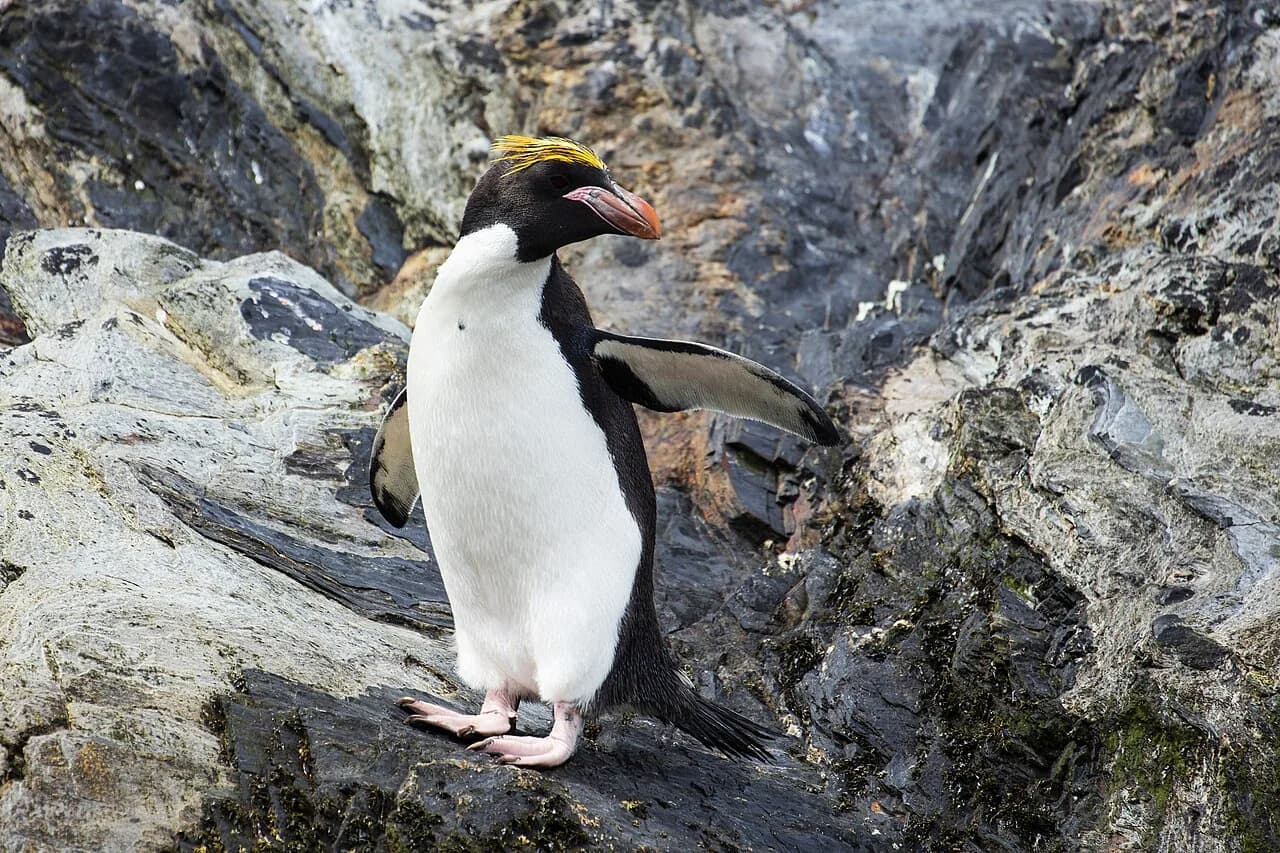
Macaroni Penguin
Eudyptes chrysolophus
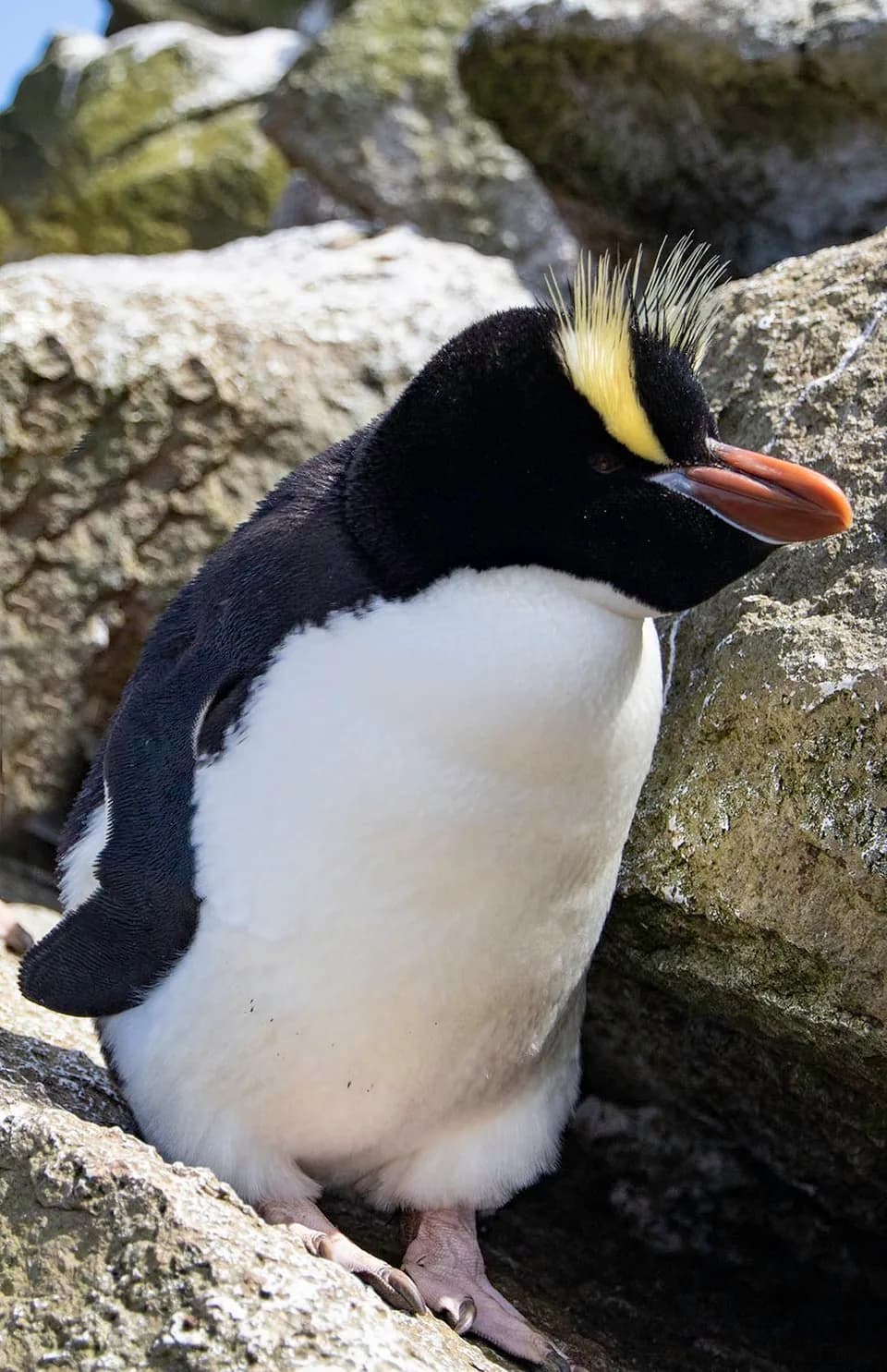
Erect-crested Penguin
Eudyptes sclateri
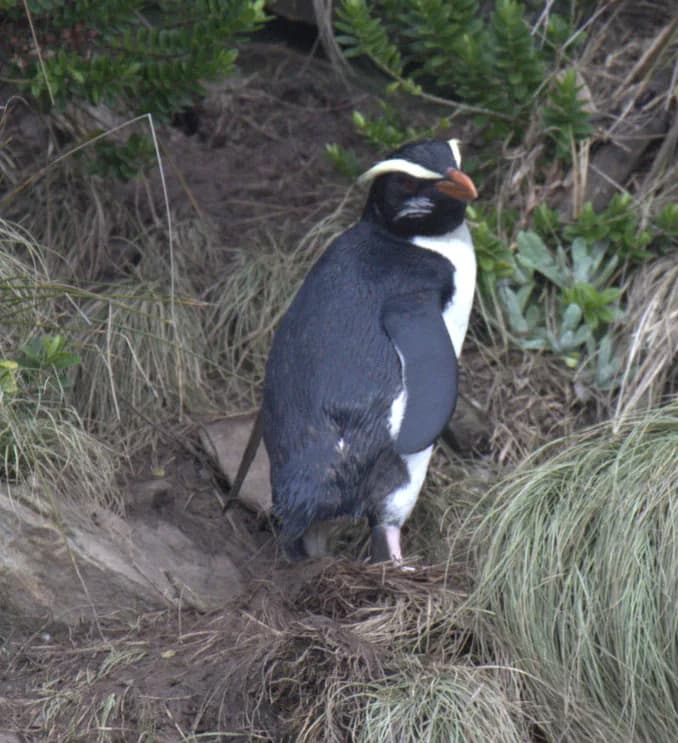
Fiordland Penguin
Eudyptes pachyrhynchus
Western Rockhopper Penguin
Eudyptes chrysocome