
Western Rockhopper Penguin
Eudyptes chrysocome
Among the smallest crested penguins, Western Rockhoppers navigate steep rocky terrain by hopping with both feet together. Their spiky black and yellow crest feathers and bright red eyes give them a punk-rock appearance.
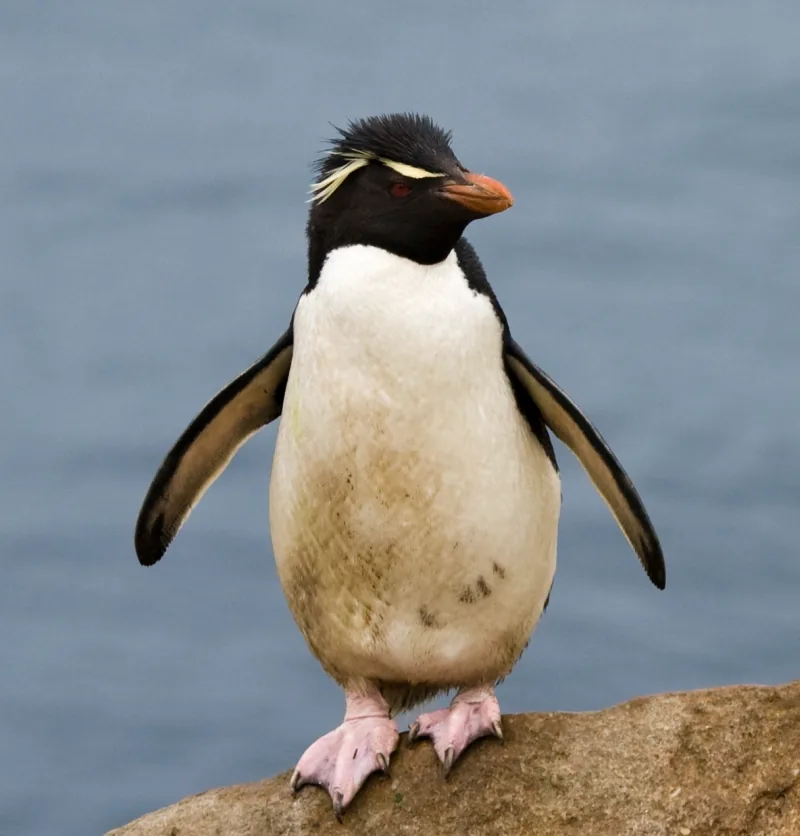
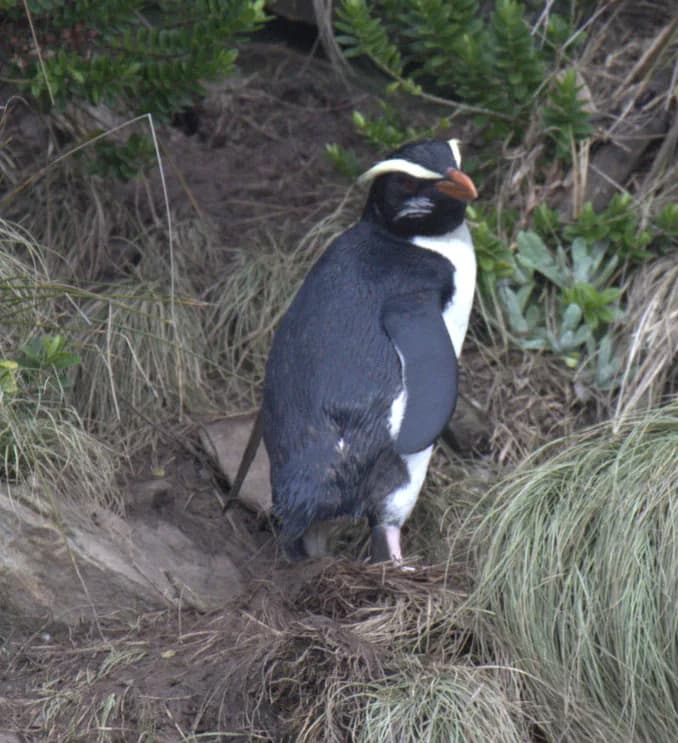
Western rockhopper penguin with spiky yellow crest and red eyes
IUCN Red List status
Classified as Vulnerable with around 1.5 million breeding pairs.
Red List history and threatsEstimated population
~1.5 million breeding pairs
Decreasing trend
Estimate assessed 2020.
Western Rockhopper penguins are among the smallest penguins and are renowned for scrambling up cliffs and boulder fields in a quick, two-footed hopping gait instead of sliding over ice like many Antarctic species. Their spiky black and yellow crest feathers and bright red eyes give them a distinctive punk-rock appearance that makes them one of the most recognizable penguins.
Their diet is unusually dominated by krill and other small invertebrates rather than fish, which makes their breeding success tightly linked to oceanographic conditions such as temperature and plankton productivity. During breeding, males and females alternate long fasting spells on the nest and intense foraging trips; for males, the first trip during incubation is especially critical and can determine whether they survive the season.
If You Only Learn One Thing About This Penguin
Western Rockhoppers are not waddling comedians. They are cliff birds built to turn ugly coastlines into breeding habitat.
The Survival Problem
They have to climb, hop, and breed on exposed islands while marine food webs stay reliable enough to feed adults returning from difficult shorelines.
What Makes This Species Weird
Their swaggering hops, crest display, and willingness to use brutal rocky terrain make them look absurd until you realize every part of it is practical.
Myth vs Reality
Myth
Rockhoppers are just one species with funny eyebrows.
Reality
Western Rockhoppers belong to a split lineage with their own population history, geography, and decline story.
Behavior & Traits
- Navigate steep rocky terrain by hopping with both feet together rather than waddling or tobogganing
- Diet is unusually dominated by krill and small invertebrates rather than fish
- Males and females alternate long fasting spells on the nest with intense foraging trips
- The male's first foraging trip during incubation is especially critical and can determine survival
Habitat & Range
Diet
Conservation
Classified as Vulnerable with around 1.5 million breeding pairs. Their breeding success is tightly linked to oceanographic conditions because their diet is dominated by krill rather than fish. Climate-driven changes in ocean temperature and plankton productivity directly affect their food supply. Some colonies have experienced significant declines, particularly in the Falkland Islands.
Red List history
The Western Rockhopper Penguin is currently listed as Vulnerable on the IUCN Red List, with an estimated population of ~1.5 million breeding pairs and a decreasing trend. We have not recorded a category change for this species.
Check the current Red List assessmentMain threats
- Marine food-web change
- Long-term regional population losses
- Severe weather on exposed colonies
Common predators
Breeding & Movement
Breeding
- Breeds on windy islands with rocky slopes and cliff-bound coasts.
- Colonies depend on reliable access to nearby productive foraging zones.
Movement
- Western Rockhopper Penguins spend much of the year foraging at sea and return to established breeding colonies on land or ice.
Fun Facts
They hop with both feet together to navigate steep, rocky terrain — hence the name
Their punk-rock appearance makes them one of the most recognizable penguins
They have bright red eyes, unlike most other penguin species
Rockhopper penguins can jump up to 1.8 meters in a single bound
Their diet is unusually dominated by krill rather than fish, tying their success to ocean conditions
For males, the first foraging trip during incubation is especially critical and can determine whether they survive the season
They scramble up cliffs and boulder fields rather than sliding over ice like many Antarctic species
Research Gap
A key unresolved problem is why some western rockhopper island groups recover so slowly even when overt disturbance seems limited.
Frequently Asked Questions
How tall is a Western Rockhopper Penguin?
Western Rockhopper Penguins stand 45–55 cm tall and typically weigh 2–3.4 kg.
What do Western Rockhopper Penguins eat?
Western Rockhopper Penguins primarily eat krill, squid, octopus, fish, and crustaceans. Prey choice tracks ocean conditions and breeding season energy needs as much as preference.
Where do Western Rockhopper Penguins live?
Western Rockhopper Penguins are found in Falkland Islands, Chile, Argentina, and New Zealand sub-Antarctic islands. Habitats include Rocky coastlines, Cliff faces, and Tussock grass.
What is the main survival problem for Western Rockhopper Penguins?
They have to climb, hop, and breed on exposed islands while marine food webs stay reliable enough to feed adults returning from difficult shorelines.
Are Western Rockhopper Penguins endangered?
The Western Rockhopper Penguin is classified as Vulnerable on the IUCN Red List. Estimated population: ~1.5 million breeding pairs. Population trend: decreasing. Classified as Vulnerable with around 1.5 million breeding pairs. Their breeding success is tightly linked to oceanographic conditions because their diet is dominated by krill rather than fish. Climate-driven changes in ocean temperature and plankton productivity directly affect their food supply. Some colonies have experienced significant declines, particularly in the Falkland Islands.
How long do Western Rockhopper Penguins live?
Western Rockhopper Penguins typically live 10–30 years in the wild, though food access, predation, and breeding success can cut that short.
What is a common myth about Western Rockhopper Penguins?
Myth: Rockhoppers are just one species with funny eyebrows. Reality: Western Rockhoppers belong to a split lineage with their own population history, geography, and decline story.
What threatens Western Rockhopper Penguins?
The main pressures include marine food-web change, long-term regional population losses, and severe weather on exposed colonies. Natural predators include Fur seals, Skuas, and Giant petrels.
What is one surprising fact about Western Rockhopper Penguins?
They hop with both feet together to navigate steep, rocky terrain — hence the name
Written for the Survival Lab series on Penguin Place
Penguin Place is written like a natural-history notebook, not a content mill. The job is to explain what each penguin is up against, what makes it strange, and where the evidence still runs thin.
Quick Facts
- Scientific Name
- Eudyptes chrysocome
- Height
- 45–55 cm
- Weight
- 2–3.4 kg
- Lifespan
- 10–30 years
- Status
- Vulnerable
- Population
- ~1.5 million breeding pairs
- Genus
- Eudyptes
Explore by Topic
Status
Genus
Regions
Habitats
Compare
Start with the closest side-by-side matches by lineage, habitat, and size.
How we source claims
We start with conservation assessments, research institutions, and field guides that have to survive real scrutiny. Then we write only what still sounds true after the comparison.
- Use IUCN, BirdLife, museums, aquariums, conservation groups, and research institutions before broad explainers.
- Lead with a survival problem, not a keyword bucket.
- Say when the science is uncertain instead of sanding every gap into fake certainty.
Further reading
This profile was reviewed on January 25, 2026 using the sources listed below.
- IUCN Red List - Global conservation assessments and extinction-risk categories.
- BirdLife Data Zone - Species accounts, distribution, and population summaries.
- Penguins International - Species explainers and conservation context focused on penguins.
- New Zealand Department of Conservation Penguins Hub - New Zealand penguin species, threats, and habitat guidance.
Continue the trail
Broader Survival Lab reading on Penguin Place connected to Western Rockhopper Penguin — survival, habitat, food, and conservation pressure.
Why Rockhopper Penguins Hop
The survival logic behind the most ridiculous-looking penguin gait, and why hopping is exactly right for cliffs, boulders, and surf-cut colonies.
Why Penguin Chicks Die in Bad Years
What actually kills penguin chicks when a breeding season turns ugly: hunger, weather, timing failures, and parental bottlenecks.
Related to Western Rockhopper Penguin
Nearby species by lineage, range, size, and conservation pressure — better next reads than a random list.
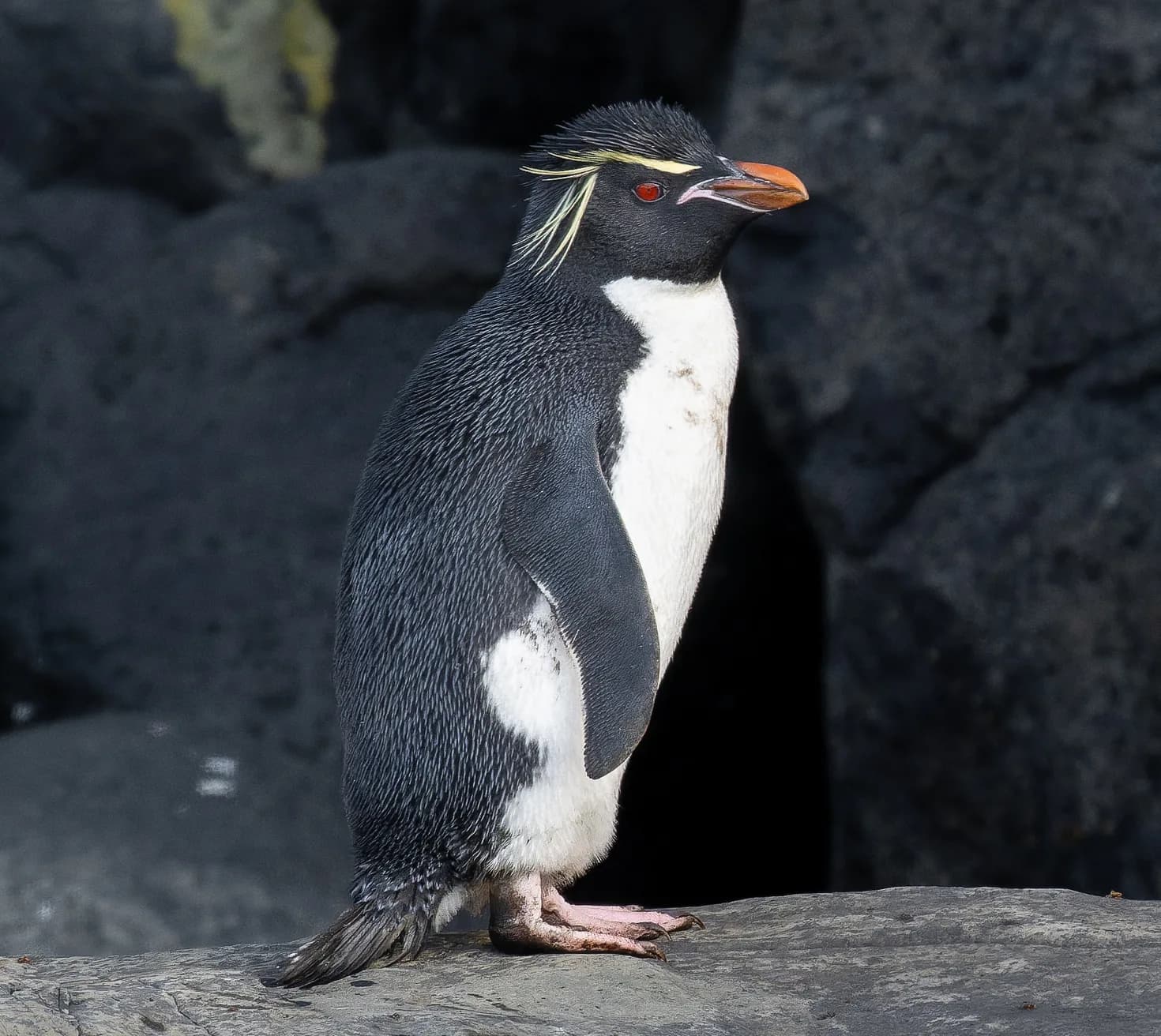
Eastern Rockhopper Penguin
Eudyptes filholi
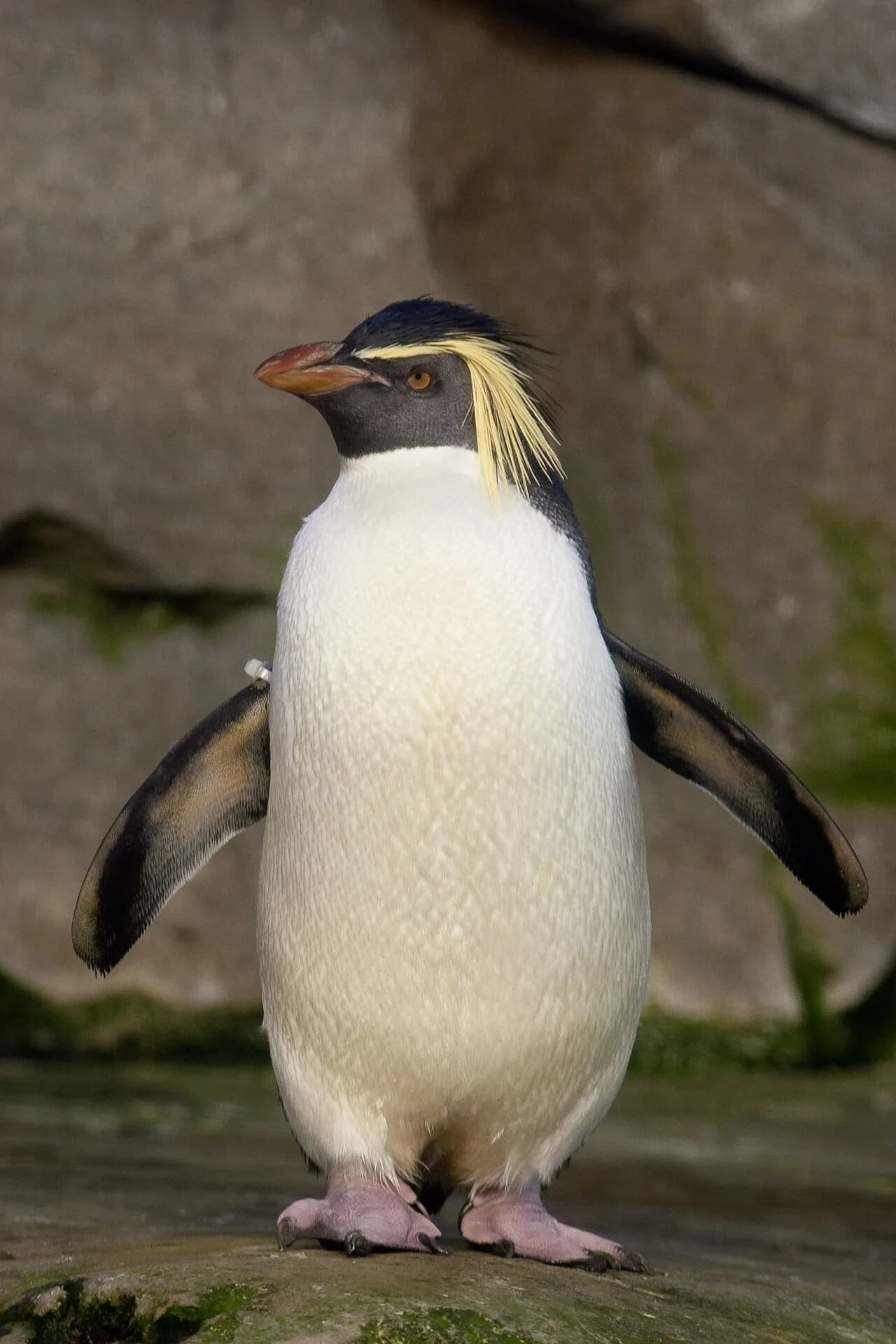
Northern Rockhopper Penguin
Eudyptes moseleyi
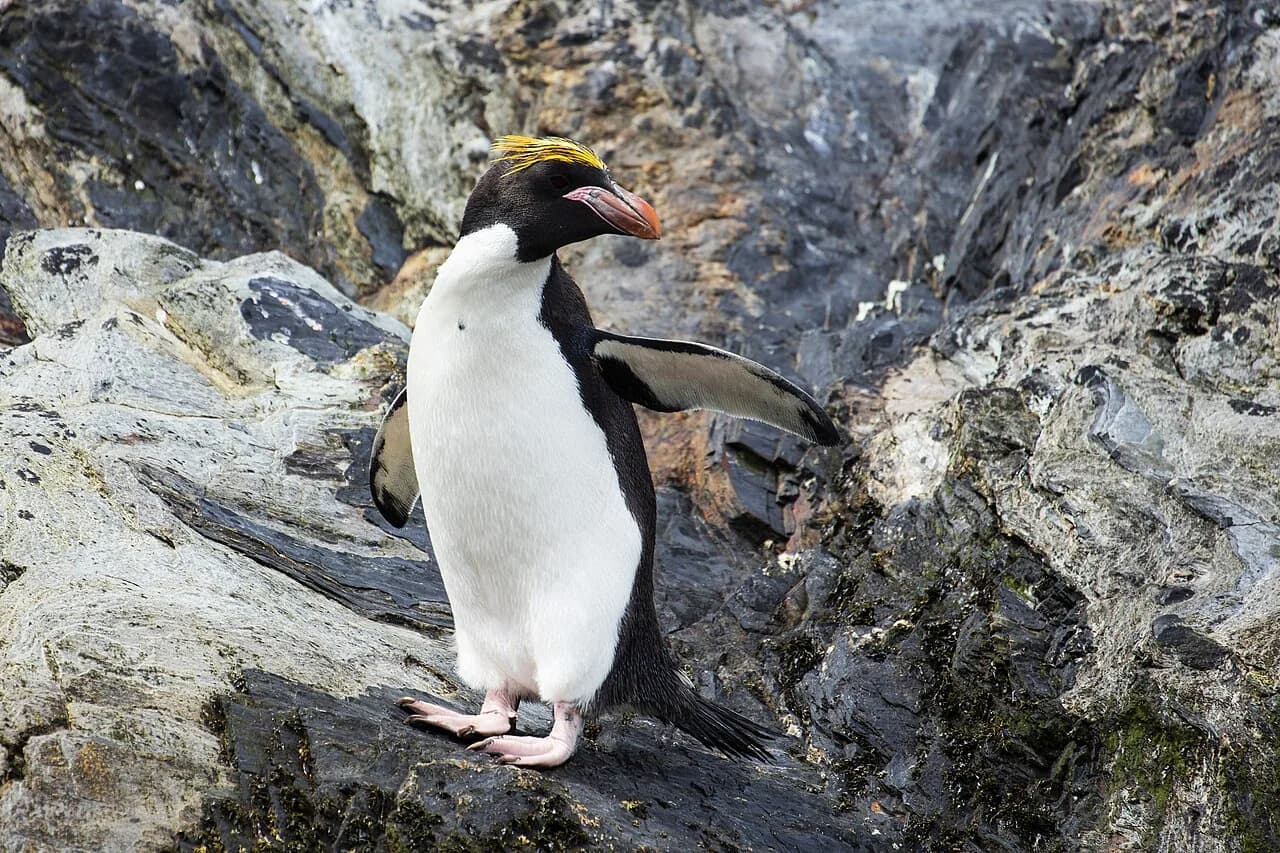
Macaroni Penguin
Eudyptes chrysolophus
Fiordland Penguin
Eudyptes pachyrhynchus