
King Penguin vs Northern Rockhopper Penguin
Put a King Penguin (95 cm) beside a Northern Rockhopper Penguin (62 cm) and the penguin family stops looking like one interchangeable bird. King Penguin: King Penguins win by stretching parenthood almost absurdly long. Their chicks survive because the species is built around endurance, not speed. Northern Rockhopper Penguin: Northern Rockhoppers are the clearest case for why a charismatic bird can still disappear in plain sight. Bright crests do not stop a slow food-web collapse. The comparison table is the raw material; the sections under it are the reading.
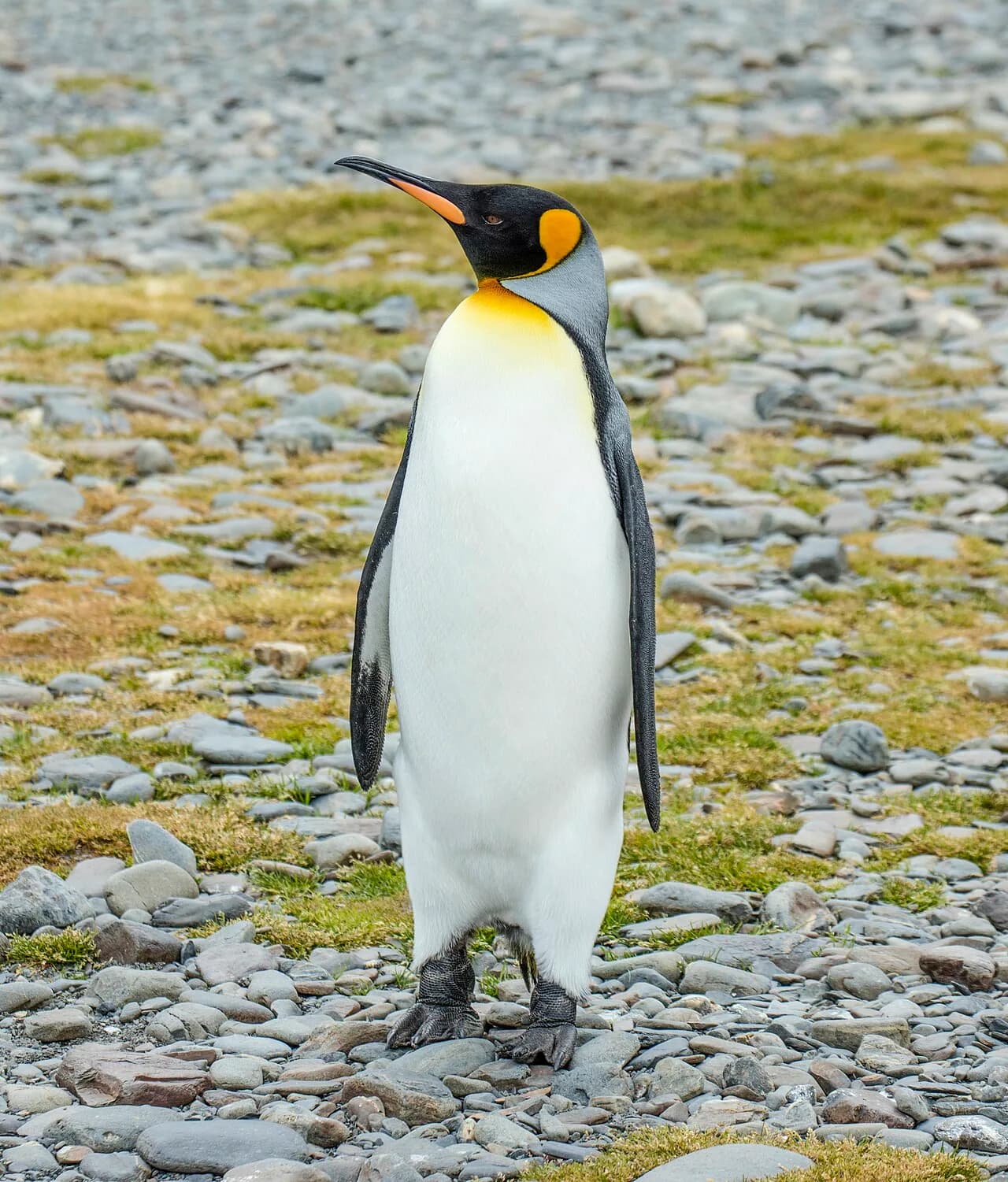
King Penguin
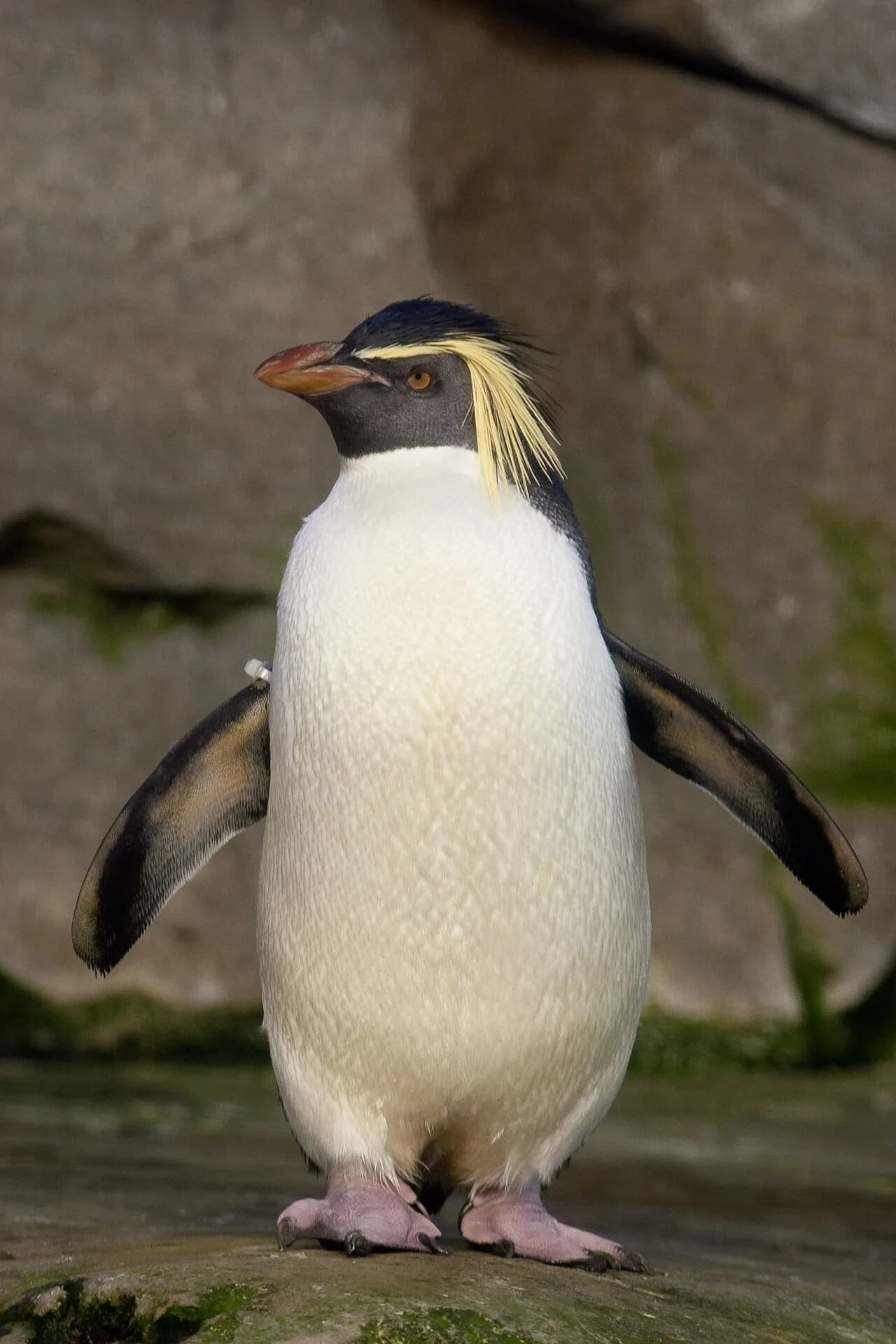
Northern Rockhopper Penguin
Size Comparison
King Penguin
85-95 cm
11-16 kg
Northern Rockhopper Penguin
52-62 cm
2.5-4.3 kg
| Feature | King Penguin | Northern Rockhopper Penguin |
|---|---|---|
| Conservation | Least Concern | Endangered |
| Scientific Name | Aptenodytes patagonicus | Eudyptes moseleyi |
| Height | 85-95 cm | 52-62 cm |
| Weight | 11-16 kg | 2.5-4.3 kg |
| Lifespan | 25-30 years | 10-25 years |
| Population | ~2.2 million breeding pairs | ~240,300 breeding pairs |
| Diet | Lanternfish, Squid, Small crustaceans | Krill, Squid, Fish, Crustaceans |
| Habitat | Sub-Antarctic islands, Rocky coastlines | Rocky coastlines, Cliff faces, Tussock grass |
| Regions | South Georgia, Falkland Islands, Crozet Islands, Kerguelen Islands, Macquarie Island | Tristan da Cunha, Gough Island, Amsterdam Island, St. Paul Island |
| Genus | Aptenodytes | Eudyptes |
Conservation Status
King Penguin
Least ConcernNorthern Rockhopper Penguin
EndangeredScientific Name
King Penguin
Aptenodytes patagonicus
Northern Rockhopper Penguin
Eudyptes moseleyi
Height
King Penguin
85-95 cm
Northern Rockhopper Penguin
52-62 cm
Weight
King Penguin
11-16 kg
Northern Rockhopper Penguin
2.5-4.3 kg
Lifespan
King Penguin
25-30 years
Northern Rockhopper Penguin
10-25 years
Population
King Penguin
~2.2 million breeding pairs
Northern Rockhopper Penguin
~240,300 breeding pairs
Diet
King Penguin
Lanternfish, Squid, Small crustaceans
Northern Rockhopper Penguin
Krill, Squid, Fish, Crustaceans
Habitat
King Penguin
Sub-Antarctic islands, Rocky coastlines
Northern Rockhopper Penguin
Rocky coastlines, Cliff faces, Tussock grass
Regions
King Penguin
South Georgia, Falkland Islands, Crozet Islands, Kerguelen Islands, Macquarie Island
Northern Rockhopper Penguin
Tristan da Cunha, Gough Island, Amsterdam Island, St. Paul Island
Genus
King Penguin
Aptenodytes
Northern Rockhopper Penguin
Eudyptes
Key Differences
Not a second table — the reasons the numbers diverge.
Survival problem
King Penguin: A king penguin chick has to make it through a long winter bottleneck while parents commute far offshore for lanternfish, sometimes returning after painfully long gaps. Northern Rockhopper Penguin: This species needs remote island breeding sites plus reliable warm-temperate foraging systems, and its historical decline suggests that combination has been failing for decades. Those two sentences are the comparison’s spine — stats only make sense if they map back to the problem each bird is actually solving.
Size and mass
The King Penguin is substantially taller on average — up to 95 cm and 16 kg against the Northern Rockhopper Penguin's 62 cm and 4.3 kg. That gap changes dive physics, fasting capacity, and how each bird spends energy on land and at sea.
Habitat logic
King Penguins use sub-antarctic islands and rocky coastlines; Northern Rockhopper Penguins use rocky coastlines, cliff faces, and tussock grass. They do share some ground — rocky coastlines — but the remaining habitat split still forces different nesting and commute solutions. Habitat here is architecture, not scenery: shelter, predators, and access to prey decide who can breed successfully.
Separate ranges
King Penguins live in South Georgia, Falkland Islands, Crozet Islands, Kerguelen Islands, and Macquarie Island; Northern Rockhopper Penguins live in Tristan da Cunha, Gough Island, Amsterdam Island, and St. Paul Island. Non-overlapping ranges usually mean different currents, predator guilds, and fisheries pressure — which is why conservation headlines for one rarely transfer cleanly to the other.
What they hunt
King Penguins eat lanternfish, squid, and small crustaceans; Northern Rockhopper Penguins eat krill, squid, fish, and crustaceans. Distinct items on each list (lanternfish and small crustaceans versus krill, fish, and crustaceans) hint at different dive depths and foraging schedules. Both still lean on squid, so ocean productivity swings can hit them together.
Dive depth
The King Penguin reaches 343 m — nearly twice the Northern Rockhopper Penguin's 168 m. Depth buys access to prey that shallower divers never reach, and it is paid for in oxygen storage, muscle chemistry, and the time each foraging trip takes.
Clutch size
The King Penguin lays 1 egg per season; the Northern Rockhopper Penguin lays 2. A single-egg strategy concentrates everything into one chick and leaves no margin if it fails, which is why single-egg species tend to invest far longer in incubation — here 52–56 days against 32–34.
Abundance
There are roughly 9.3 times as many King Penguins as Northern Rockhopper Penguins — ~2.2 million breeding pairs against ~240,300 breeding pairs. Rarity is not the same as risk, but it sets how little has to go wrong before a decline becomes irreversible.
Conservation pressure
The Northern Rockhopper Penguin carries the sharper label (Endangered, population ~240,300 breeding pairs) against the King Penguin's Least Concern (~2.2 million breeding pairs). Classified as Endangered, with populations having fallen by almost 90% since the 1950s. The lower-risk bird is not “safe”; it simply has a wider margin before the same kinds of ocean or land failure become terminal.
Lifespan window
King Penguins are built for a longer adult career (25–30 years) than Northern Rockhopper Penguins (10–25 years). Longer lives amplify the cost of a bad breeding decade; shorter lives put more pressure on every successful chick year.
Key Similarities
Same family, different genera
Both are penguins in Spheniscidae, yet they sit in different genera (Aptenodytes vs Eudyptes). That distance usually shows up as different colony style, crest or band patterns, and how hard each bird depends on a single prey or ice type.
Overlapping prey
They both take squid. Shared prey is a coupling: a krill or forage-fish crash can stress both populations even when colonies sit far apart.
Shared habitat type
Both use rocky coastlines. That common stage rewards the same basics — dense waterproofing, heat control, and a reliable commute between nest and productive water — while still leaving room for different nest architecture.
How to read this matchup
Read this pair as distant solutions to “how to be a penguin.” Size, genus, and risk already point different ways: King Penguin versus Northern Rockhopper Penguin, Aptenodytes versus Eudyptes, Least Concern versus Endangered. Use the profiles for depth — this page is the decision tree for which difference matters first.
About Each Species
King Penguin
King Penguins win by stretching parenthood almost absurdly long. Their chicks survive because the species is built around endurance, not speed.
The second-largest penguin species, King Penguins form some of the largest and densest seabird colonies on Earth, with striking orange and yellow markings and an unusually long 14–16 month breeding cycle.
Full King Penguin profileNorthern Rockhopper Penguin
Northern Rockhoppers are the clearest case for why a charismatic bird can still disappear in plain sight. Bright crests do not stop a slow food-web collapse.
Only recognized as a separate species from the Southern Rockhopper in 2006, Northern Rockhoppers have longer, more luxuriant crest feathers and have suffered a devastating ~90% population decline over the past century.
Full Northern Rockhopper Penguin profileFrequently Asked Questions
Which is bigger, the King Penguin or the Northern Rockhopper Penguin?
The King Penguin is larger — up to 95 cm and 16 kg — while the Northern Rockhopper Penguin reaches about 62 cm and 4.3 kg.
Which is more endangered, the King Penguin or the Northern Rockhopper Penguin?
The Northern Rockhopper Penguin sits higher on the IUCN ladder (Endangered, ~240,300 breeding pairs) than the King Penguin (Least Concern, ~2.2 million breeding pairs). Classified as Endangered, with populations having fallen by almost 90% since the 1950s.
Do King Penguins and Northern Rockhopper Penguins live in the same place?
No meaningful range overlap. King Penguins: South Georgia, Falkland Islands, Crozet Islands, Kerguelen Islands, and Macquarie Island. Northern Rockhopper Penguins: Tristan da Cunha, Gough Island, Amsterdam Island, and St. Paul Island.
What do King Penguins and Northern Rockhopper Penguins eat?
Both take squid. Full lists: lanternfish, squid, and small crustaceans for the King Penguin; krill, squid, fish, and crustaceans for the Northern Rockhopper Penguin.
What is the biggest survival difference between King Penguins and Northern Rockhopper Penguins?
King Penguin: A king penguin chick has to make it through a long winter bottleneck while parents commute far offshore for lanternfish, sometimes returning after painfully long gaps. Northern Rockhopper Penguin: This species needs remote island breeding sites plus reliable warm-temperate foraging systems, and its historical decline suggests that combination has been failing for decades.
Are King Penguins and Northern Rockhopper Penguins closely related?
They are both penguins (Spheniscidae) but sit in different genera: Aptenodytes (King Penguin) and Eudyptes (Northern Rockhopper Penguin). That is family-level relatedness, not a close sister-species pair.
Which lives longer, the King Penguin or the Northern Rockhopper Penguin?
The King Penguin generally has the longer window (25–30 years) versus 10–25 years for the Northern Rockhopper Penguin.