
Penguins in New Zealand sub-Antarctic islands
New Zealand sub-Antarctic islands are linked here mainly with Western Rockhopper Penguin. Regional hubs with one species are still useful: they show the place-specific trap that bird is in.
New Zealand sub-Antarctic islands are part of the penguin world because the surrounding seas, nesting ground, and climate make life possible there. On this page that means one bird first: Western Rockhopper Penguin. They have to climb, hop, and breed on exposed islands while marine food webs stay reliable enough to feed adults returning from difficult shorelines.
Species in lens
1
Singleton hub — depth over breadth
Profile focus
Western Rockhopper Penguin
Up to 55 cm
Highest risk in view
Western Rockhopper Penguin
Vulnerable
Species profile entry
New Zealand sub-Antarctic islands are part of the penguin world because the surrounding seas, nesting ground, and climate make life possible there.
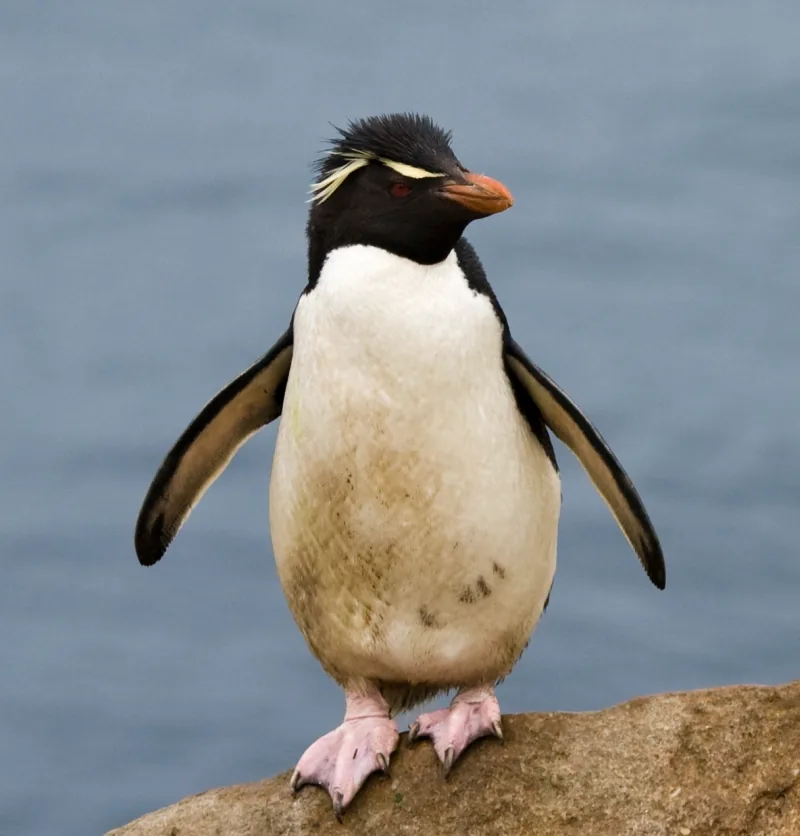
Signature insight
Western Rockhoppers are not waddling comedians. They are cliff birds built to turn ugly coastlines into breeding habitat.
Open full Western Rockhopper Penguin profileWhat this view reveals
- Western Rockhopper Penguin is the only species in this region view right now.
- They have to climb, hop, and breed on exposed islands while marine food webs stay reliable enough to feed adults returning from difficult shorelines.
- Conservation: Vulnerable · ~1.5 million breeding pairs.
Understanding Penguins in New Zealand sub-Antarctic islands
New Zealand sub-Antarctic islands currently highlights one species in this catalogue: Western Rockhopper Penguin (Eudyptes chrysocome). Western Rockhoppers are not waddling comedians.
Survival brief: They have to climb, hop, and breed on exposed islands while marine food webs stay reliable enough to feed adults returning from difficult shorelines. Myth people still carry: Rockhoppers are just one species with funny eyebrows. What the evidence supports instead: Western Rockhoppers belong to a split lineage with their own population history, geography, and decline story.
Field numbers: 45–55 cm, 2–3.4 kg, lifespan about 10–30 years. Status Vulnerable; population ~1.5 million breeding pairs; trend decreasing.
Where and what: ranges include Falkland Islands, Chile, Argentina, and New Zealand sub-Antarctic islands; habitats Rocky coastlines, Cliff faces, and Tussock grass; diet krill, squid, octopus, fish, and crustaceans. Classified as Vulnerable with around 1.5 million breeding pairs. Open the full profile for sources, research gaps, and related species.
Frequently asked questions
Which penguins live in New Zealand sub-Antarctic islands?
In this catalogue, Western Rockhopper Penguin is the species tied to this region page. Among the smallest crested penguins, Western Rockhoppers navigate steep rocky terrain by hopping with both feet together.
What is the main survival problem for Western Rockhopper Penguin?
They have to climb, hop, and breed on exposed islands while marine food webs stay reliable enough to feed adults returning from difficult shorelines.
What is the conservation status of Western Rockhopper Penguin?
Western Rockhopper Penguin is listed as Vulnerable, with an estimated population of ~1.5 million breeding pairs. Trend: decreasing. Classified as Vulnerable with around 1.5 million breeding pairs.