
Penguins in Southern Brazil
Southern Brazil is linked here mainly with Magellanic Penguin. Regional hubs with one species are still useful: they show the place-specific trap that bird is in.
Southern Brazil is part of the penguin world because the surrounding seas, nesting ground, and climate make life possible there. On this page that means one bird first: Magellanic Penguin. A Magellanic colony has to hold together through heat, storms, oil pollution, and long foraging commutes, all while chicks remain trapped in burrows waiting on adult return trips.
Species in lens
1
Singleton hub — depth over breadth
Profile focus
Magellanic Penguin
Up to 76 cm
Highest risk in view
Magellanic Penguin
Least Concern
Species profile entry
Southern Brazil is part of the penguin world because the surrounding seas, nesting ground, and climate make life possible there.
Signature insight
Magellanic Penguins are burrow birds living in an exposed climate. Their problem is not just predators; it is trying to raise chicks while weather and human coastline pressure keep changing the rules.
Open full Magellanic Penguin profileWhat this view reveals
- Magellanic Penguin is the only species in this region view right now.
- A Magellanic colony has to hold together through heat, storms, oil pollution, and long foraging commutes, all while chicks remain trapped in burrows waiting on adult return trips.
- Conservation: Least Concern · ~1.8 million breeding pairs.
Understanding Penguins in Southern Brazil
Southern Brazil currently highlights one species in this catalogue: Magellanic Penguin (Spheniscus magellanicus). Magellanic Penguins are burrow birds living in an exposed climate.
Survival brief: A Magellanic colony has to hold together through heat, storms, oil pollution, and long foraging commutes, all while chicks remain trapped in burrows waiting on adult return trips. Myth people still carry: Mainland-breeding penguins are easier to protect than remote island birds. What the evidence supports instead: Mainland colonies face roads, development, fisheries, oil, tourism, and heat waves. Accessibility cuts both ways.
Field numbers: 61–76 cm, 2.7–6.5 kg, lifespan about 25–30 years. Status Least Concern; population ~1.8 million breeding pairs; trend mixed.
Where and what: ranges include Argentina, Chile, Falkland Islands, and Southern Brazil; habitats Coastal burrows, Rocky shores, and Grasslands; diet fish, squid, crustaceans, and krill. Classified as Least Concern with a large population of around 1.8 million pairs. Open the full profile for sources, research gaps, and related species.
Frequently asked questions
Which penguins live in Southern Brazil?
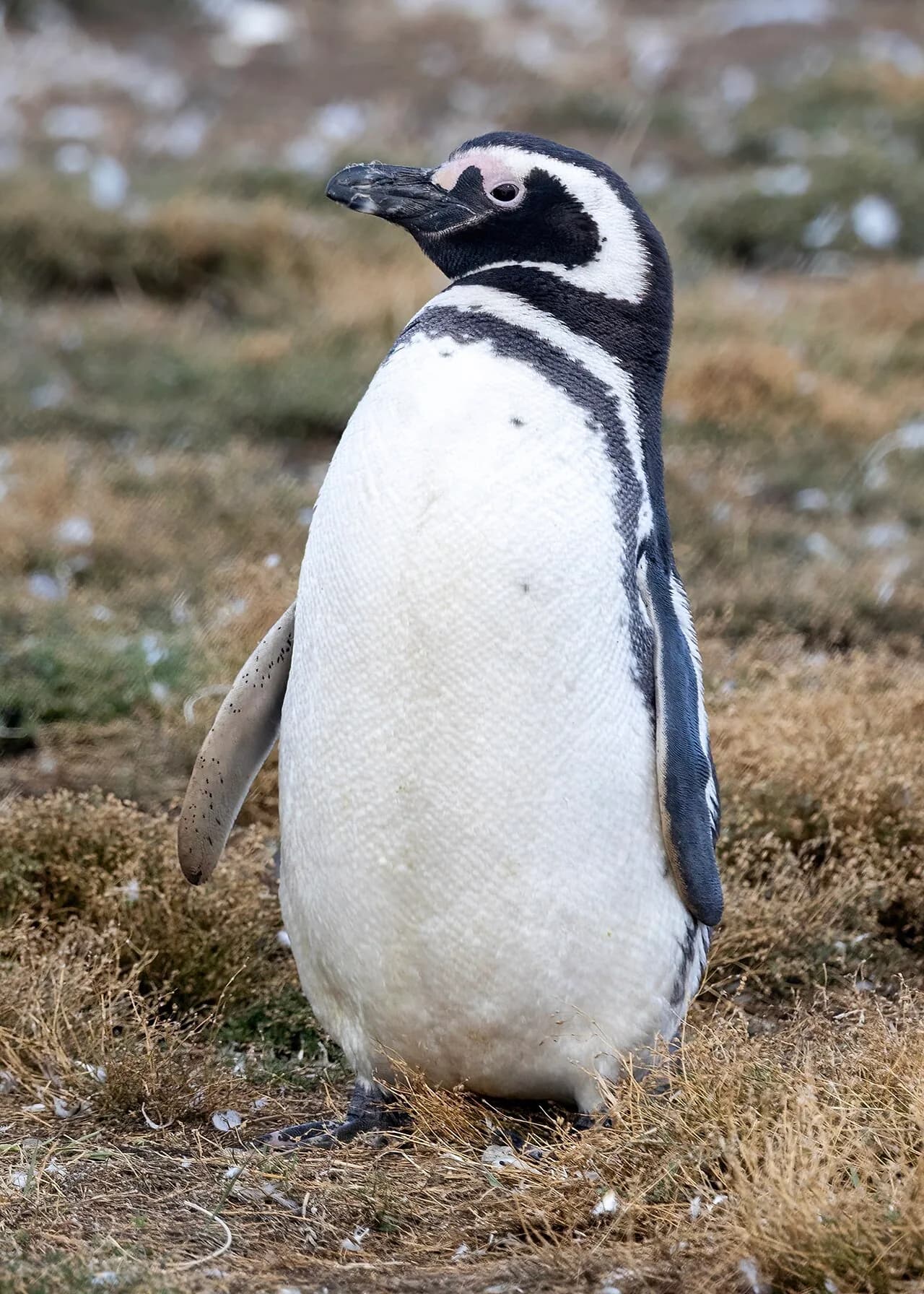
In this catalogue, Magellanic Penguin is the species tied to this region page. Named after Ferdinand Magellan who first spotted them in 1520, these medium-sized South American penguins are among the most migratory penguin species, with distinctive two black bands between head and breast.
What is the main survival problem for Magellanic Penguin?
A Magellanic colony has to hold together through heat, storms, oil pollution, and long foraging commutes, all while chicks remain trapped in burrows waiting on adult return trips.
What is the conservation status of Magellanic Penguin?
Magellanic Penguin is listed as Least Concern, with an estimated population of ~1.8 million breeding pairs. Trend: mixed. Classified as Least Concern with a large population of around 1.8 million pairs.