
Erect-crested Penguin vs Fiordland Penguin
Erect-crested Penguins and Fiordland Penguins are both Eudyptes, and on size they are near enough to identical — 70 cm against 71 cm. What separates them is where they breed and how much room for error each one has left. Erect-crested Penguin: Erect-crested Penguins are the awkward question in penguin reproduction: why lay a first egg you almost never raise?. Fiordland Penguin: Fiordland Penguins look like crested rock specialists until they vanish into wet forest. Tawaki survive by being hard to reach and harder to read. Start with the table, then read what the gaps between those rows actually cost.
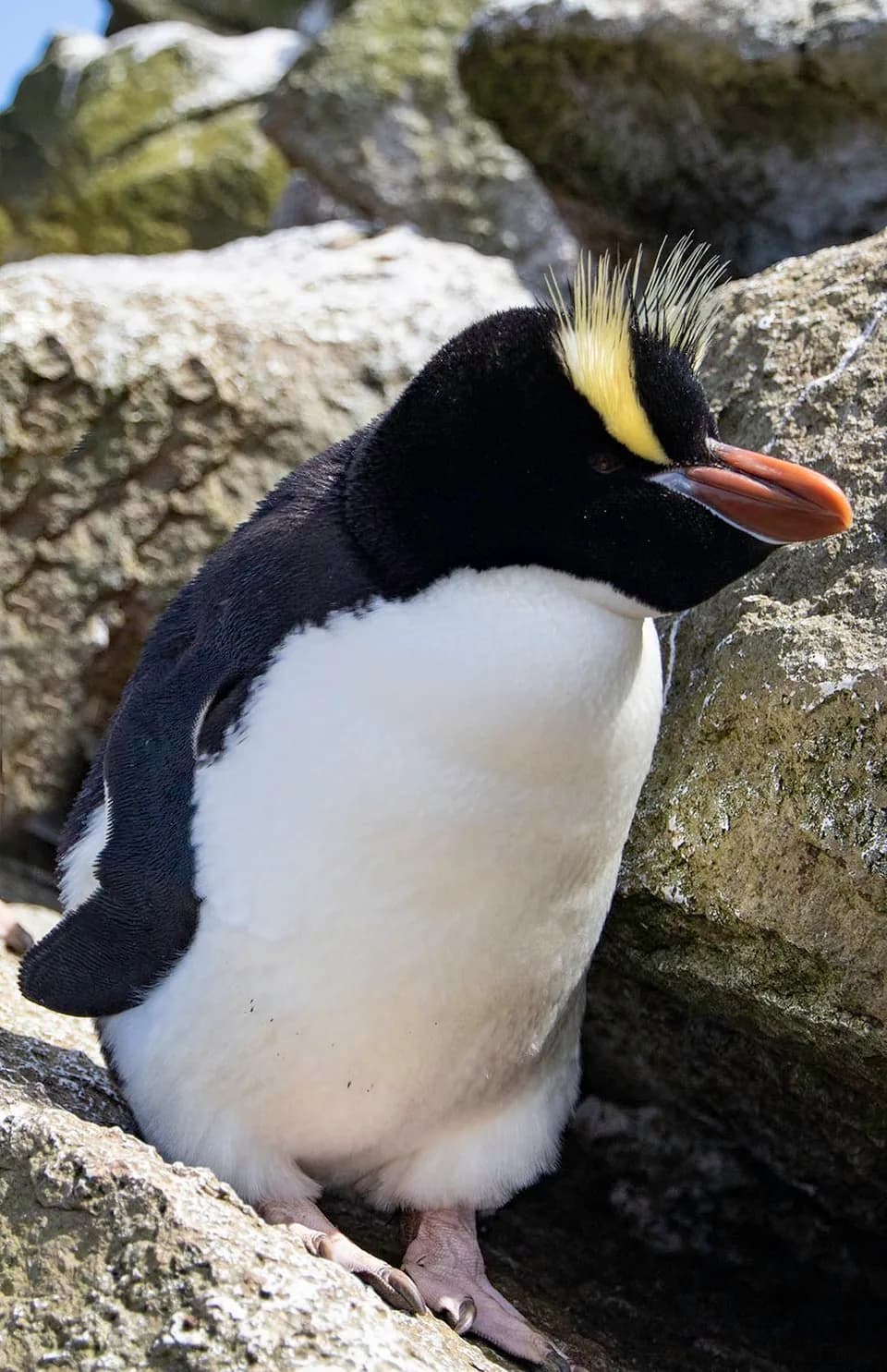
Erect-crested Penguin
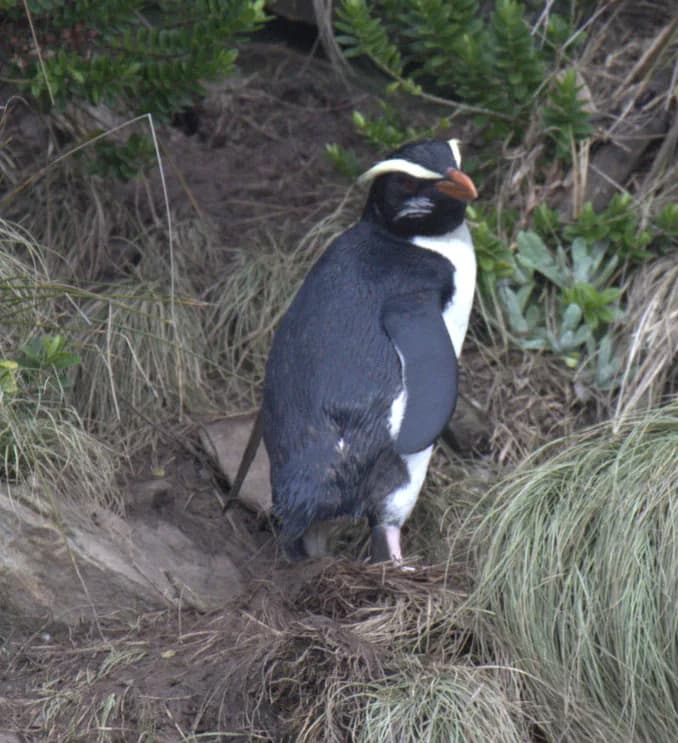
Fiordland Penguin
Size Comparison
Erect-crested Penguin
50-70 cm
2.5-6 kg
Fiordland Penguin
51-71 cm
2.7-5.9 kg
| Feature | Erect-crested Penguin | Fiordland Penguin |
|---|---|---|
| Conservation | Endangered | Vulnerable |
| Scientific Name | Eudyptes sclateri | Eudyptes pachyrhynchus |
| Height | 50-70 cm | 51-71 cm |
| Weight | 2.5-6 kg | 2.7-5.9 kg |
| Lifespan | 15-20 years | 10-20 years |
| Population | ~150,000 breeding pairs | ~6,250 mature individuals |
| Diet | Krill, Squid, Small fish | Squid, Crustaceans, Small fish |
| Habitat | Rocky coastlines, Sub-Antarctic islands | Temperate rainforest, Rocky coastlines, Dense vegetation |
| Regions | Bounty Islands, Antipodes Islands (New Zealand) | New Zealand (South Island), Stewart Island |
| Genus | Eudyptes | Eudyptes |
Conservation Status
Erect-crested Penguin
EndangeredFiordland Penguin
VulnerableScientific Name
Erect-crested Penguin
Eudyptes sclateri
Fiordland Penguin
Eudyptes pachyrhynchus
Height
Erect-crested Penguin
50-70 cm
Fiordland Penguin
51-71 cm
Weight
Erect-crested Penguin
2.5-6 kg
Fiordland Penguin
2.7-5.9 kg
Lifespan
Erect-crested Penguin
15-20 years
Fiordland Penguin
10-20 years
Population
Erect-crested Penguin
~150,000 breeding pairs
Fiordland Penguin
~6,250 mature individuals
Diet
Erect-crested Penguin
Krill, Squid, Small fish
Fiordland Penguin
Squid, Crustaceans, Small fish
Habitat
Erect-crested Penguin
Rocky coastlines, Sub-Antarctic islands
Fiordland Penguin
Temperate rainforest, Rocky coastlines, Dense vegetation
Regions
Erect-crested Penguin
Bounty Islands, Antipodes Islands (New Zealand)
Fiordland Penguin
New Zealand (South Island), Stewart Island
Genus
Erect-crested Penguin
Eudyptes
Fiordland Penguin
Eudyptes
Key Differences
Not a second table — the reasons the numbers diverge.
Survival problem
Erect-crested Penguin: With an extremely restricted breeding range and low reproductive flexibility, this species has very little buffer when conditions turn poor. Fiordland Penguin: They must move between rough surf and concealed forest nests while staying hidden from predators and human disturbance in a very narrow breeding window. Those two sentences are the comparison’s spine — stats only make sense if they map back to the problem each bird is actually solving.
Size is close
Erect-crested Penguins and Fiordland Penguins sit in a similar size class: 50–70 cm and 2.5–6 kg versus 51–71 cm and 2.7–5.9 kg. When stature barely separates them, behaviour, range, and food access usually matter more than the ruler.
Habitat logic
Erect-crested Penguins use rocky coastlines and sub-antarctic islands; Fiordland Penguins use temperate rainforest, rocky coastlines, and dense vegetation. They do share some ground — rocky coastlines — but the remaining habitat split still forces different nesting and commute solutions. Habitat here is architecture, not scenery: shelter, predators, and access to prey decide who can breed successfully.
Separate ranges
Erect-crested Penguins live in Bounty Islands and Antipodes Islands (New Zealand); Fiordland Penguins live in New Zealand (South Island) and Stewart Island. Non-overlapping ranges usually mean different currents, predator guilds, and fisheries pressure — which is why conservation headlines for one rarely transfer cleanly to the other.
What they hunt
Erect-crested Penguins eat krill, squid, and small fish; Fiordland Penguins eat squid, crustaceans, and small fish. Distinct items on each list (krill versus crustaceans) hint at different dive depths and foraging schedules. Both still lean on squid and small fish, so ocean productivity swings can hit them together.
Dive depth
The Erect-crested Penguin reaches 120 m — nearly twice the Fiordland Penguin's 60 m. Depth buys access to prey that shallower divers never reach, and it is paid for in oxygen storage, muscle chemistry, and the time each foraging trip takes.
Abundance
There are roughly 48 times as many Erect-crested Penguins as Fiordland Penguins — ~150,000 breeding pairs against ~6,250 mature individuals. Rarity is not the same as risk, but it sets how little has to go wrong before a decline becomes irreversible.
Conservation pressure
The Erect-crested Penguin carries the sharper label (Endangered, population ~150,000 breeding pairs) against the Fiordland Penguin's Vulnerable (~6,250 mature individuals). Classified as Endangered, with significant population declines over the past several decades. The lower-risk bird is not “safe”; it simply has a wider margin before the same kinds of ocean or land failure become terminal.
Key Similarities
Shared genus: Eudyptes
Both belong to Eudyptes, so they inherit a related body plan and many of the same physiological constraints. Related does not mean interchangeable — size, range, and breeding rules still split them — but it explains why field marks and moult timing can look related even when habitats diverge.
Overlapping prey
They both take squid and small fish. Shared prey is a coupling: a krill or forage-fish crash can stress both populations even when colonies sit far apart.
Shared habitat type
Both use rocky coastlines. That common stage rewards the same basics — dense waterproofing, heat control, and a reliable commute between nest and productive water — while still leaving room for different nest architecture.
How to read this matchup
Read this pair as one lineage under two constraints. The Fiordland Penguin shows the bigger expression of the Eudyptes plan; the Erect-crested Penguin shows how far that plan can shrink or specialise. When risk differs, follow the Erect-crested Penguin for pressure and the Fiordland Penguin for what a related bird still manages with more margin.
About Each Species
Erect-crested Penguin
Erect-crested Penguins are the awkward question in penguin reproduction: why lay a first egg you almost never raise?
One of the least-known penguin species, named for distinctive upward-pointing yellow crest feathers they can raise and lower at will. They breed on two remote island groups south of New Zealand.
Full Erect-crested Penguin profileFiordland Penguin
Fiordland Penguins look like crested rock specialists until they vanish into wet forest. Tawaki survive by being hard to reach and harder to read.
Also known as Tawaki, this elusive yellow-crested penguin nests in dense temperate rainforests along New Zealand's Fiordland coast — one of the few penguins to breed in forest environments.
Full Fiordland Penguin profileFrequently Asked Questions
Which is bigger, the Erect-crested Penguin or the Fiordland Penguin?
They are close in stature: 50–70 cm and 2.5–6 kg for the Erect-crested Penguin, versus 51–71 cm and 2.7–5.9 kg for the Fiordland Penguin.
Which is more endangered, the Erect-crested Penguin or the Fiordland Penguin?
The Erect-crested Penguin sits higher on the IUCN ladder (Endangered, ~150,000 breeding pairs) than the Fiordland Penguin (Vulnerable, ~6,250 mature individuals). Classified as Endangered, with significant population declines over the past several decades.
Do Erect-crested Penguins and Fiordland Penguins live in the same place?
No meaningful range overlap. Erect-crested Penguins: Bounty Islands and Antipodes Islands (New Zealand). Fiordland Penguins: New Zealand (South Island) and Stewart Island.
What do Erect-crested Penguins and Fiordland Penguins eat?
Both take squid and small fish. Full lists: krill, squid, and small fish for the Erect-crested Penguin; squid, crustaceans, and small fish for the Fiordland Penguin.
What is the biggest survival difference between Erect-crested Penguins and Fiordland Penguins?
Erect-crested Penguin: With an extremely restricted breeding range and low reproductive flexibility, this species has very little buffer when conditions turn poor. Fiordland Penguin: They must move between rough surf and concealed forest nests while staying hidden from predators and human disturbance in a very narrow breeding window.
Are Erect-crested Penguins and Fiordland Penguins closely related?
Yes — both are genus Eudyptes within Spheniscidae, so they share a relatively recent common ancestor and related anatomy, even when range and size diverge.