
Penguins in South Africa
South Africa is linked here mainly with African Penguin. Regional hubs with one species are still useful: they show the place-specific trap that bird is in.
South Africa is part of the penguin world because the surrounding seas, nesting ground, and climate make life possible there. On this page that means one bird first: African Penguin. Adults have to find enough sardines and anchovies near colonies to feed chicks, while hotter breeding conditions, disturbance, and historical habitat loss keep nesting success brittle.
Species in lens
1
Singleton hub — depth over breadth
Profile focus
African Penguin
Up to 70 cm
Highest risk in view
African Penguin
Critically Endangered
Species profile entry
South Africa is part of the penguin world because the surrounding seas, nesting ground, and climate make life possible there.
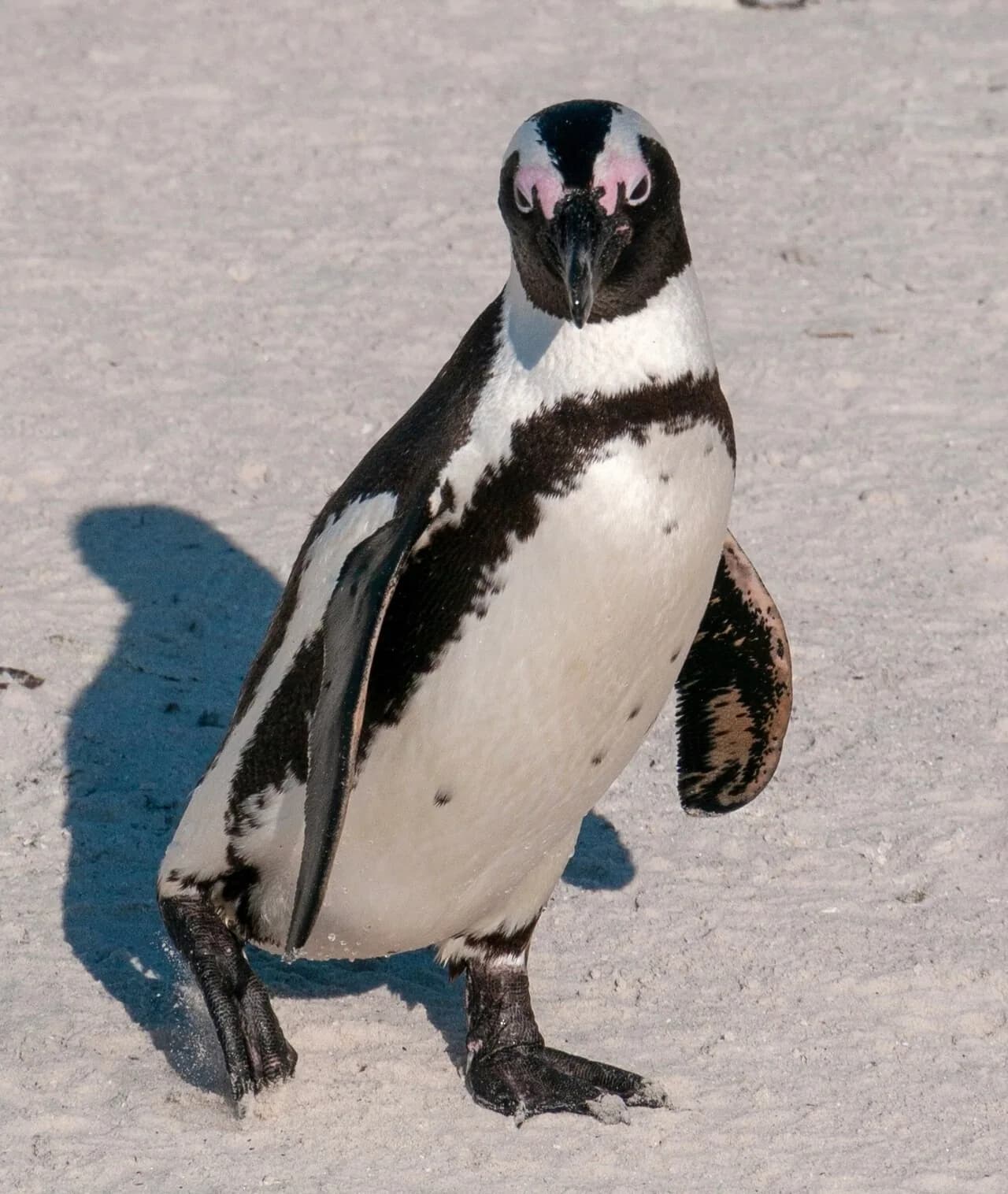
Signature insight
African Penguins are not running out of charm. They are running out of fish in the wrong places at the wrong times.
Open full African Penguin profileWhat this view reveals
- African Penguin is the only species in this region view right now.
- Adults have to find enough sardines and anchovies near colonies to feed chicks, while hotter breeding conditions, disturbance, and historical habitat loss keep nesting success brittle.
- Conservation: Critically Endangered · ~9,900 breeding pairs.
Read next
All guidesUnderstanding Penguins in South Africa
South Africa currently highlights one species in this catalogue: African Penguin (Spheniscus demersus). African Penguins are not running out of charm.
Survival brief: Adults have to find enough sardines and anchovies near colonies to feed chicks, while hotter breeding conditions, disturbance, and historical habitat loss keep nesting success brittle. Myth people still carry: Tourist disturbance is the main reason African Penguins are in trouble. What the evidence supports instead: Disturbance matters, but prey shortage near colonies is one of the central reasons the species is collapsing.
Field numbers: 60–70 cm, 2.2–3.5 kg, lifespan about 10–27 years. Status Critically Endangered; population ~9,900 breeding pairs; trend decreasing.
Where and what: ranges include South Africa and Namibia; habitats Rocky islands, Sandy beaches, and Coastal mainland; diet anchovies, sardines, squid, and crustaceans. Uplisted to Critically Endangered in 2024 after losing about 97% of their historical population. Open the full profile for sources, research gaps, and related species.
Frequently asked questions
Which penguins live in South Africa?
In this catalogue, African Penguin is the species tied to this region page. The only penguin species that breeds in Africa, now Critically Endangered after losing about 97% of their historical population.
What is the main survival problem for African Penguin?
Adults have to find enough sardines and anchovies near colonies to feed chicks, while hotter breeding conditions, disturbance, and historical habitat loss keep nesting success brittle.
What is the conservation status of African Penguin?
African Penguin is listed as Critically Endangered, with an estimated population of ~9,900 breeding pairs. Trend: decreasing. Uplisted to Critically Endangered in 2024 after losing about 97% of their historical population.