
Near Threatened Penguins
Only Royal Penguin sits at IUCN Near Threatened among the living penguins we list. Population: ~850,000 breeding pairs. Royal Penguins are a reminder that a species can look numerically strong while still being geographically narrow.
Near Threatened penguins sit just outside the threatened categories and often act as an early warning signal for climate or fishery pressure. On this page that means one bird first: Royal Penguin. Because breeding is concentrated almost entirely on one island, any big shift in local marine productivity or colony conditions scales up very quickly.
Species in lens
1
Singleton hub — depth over breadth
Profile focus
Royal Penguin
Up to 76 cm
Highest risk in view
Royal Penguin
Near Threatened
Species profile entry
Near Threatened penguins sit just outside the threatened categories and often act as an early warning signal for climate or fishery pressure.
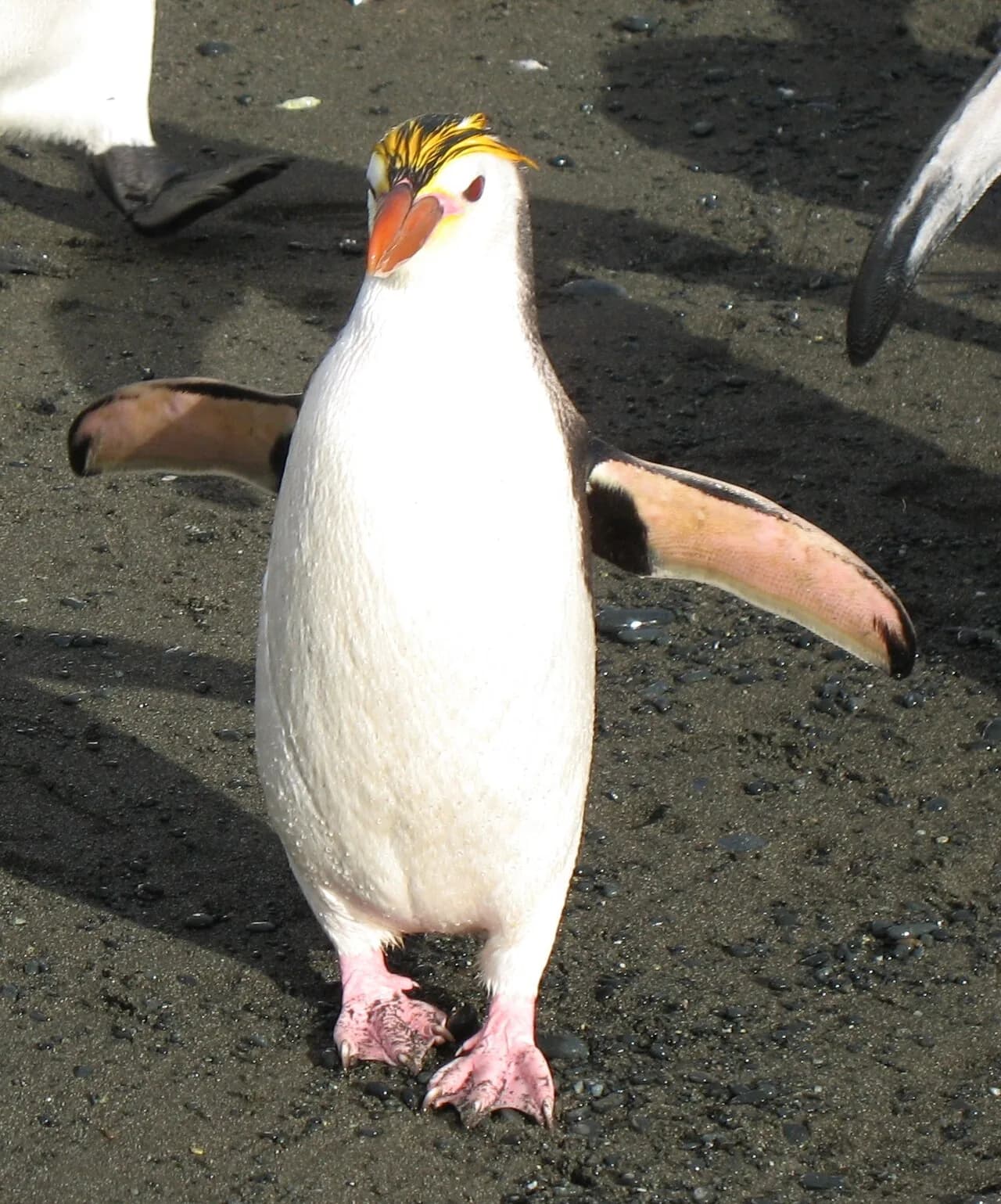
Signature insight
Royal Penguins are a reminder that a species can look numerically strong while still being geographically narrow. Most of the story leads back to Macquarie Island.
Open full Royal Penguin profileWhat this view reveals
- Royal Penguin is the only species in this status view right now.
- Because breeding is concentrated almost entirely on one island, any big shift in local marine productivity or colony conditions scales up very quickly.
- Conservation: Near Threatened · ~850,000 breeding pairs.
Read next
All guidesUnderstanding Near Threatened Penguins
The Near Threatened risk band currently highlights one species in this catalogue: Royal Penguin (Eudyptes schlegeli). Royal Penguins are a reminder that a species can look numerically strong while still being geographically narrow.
Survival brief: Because breeding is concentrated almost entirely on one island, any big shift in local marine productivity or colony conditions scales up very quickly. Myth people still carry: A giant colony on one island is a sign of safety. What the evidence supports instead: Concentration is efficiency until it becomes a bottleneck. For Royal Penguins, Macquarie is both fortress and vulnerability.
Field numbers: 65–76 cm, 3–8 kg, lifespan about 15–20 years. Status Near Threatened; population ~850,000 breeding pairs; trend stable.
Where and what: ranges include Macquarie Island (Australia); habitats Sandy and rocky beaches and Vegetation-covered slopes; diet krill, small fish, and squid. Listed as Near Threatened. Open the full profile for sources, research gaps, and related species.
Frequently asked questions
Which penguins are listed as near Threatened?
In this catalogue, Royal Penguin is the species tied to this status page. Found exclusively on Macquarie Island, Royal Penguins are closely related to Macaroni Penguins but distinguished by their white or pale grey face.
What is the main survival problem for Royal Penguin?
Because breeding is concentrated almost entirely on one island, any big shift in local marine productivity or colony conditions scales up very quickly.
What is the conservation status of Royal Penguin?
Royal Penguin is listed as Near Threatened, with an estimated population of ~850,000 breeding pairs. Trend: stable. Listed as Near Threatened.