A penguin nest can lie beneath rainforest roots, inside a Patagonian burrow or on a volcanic island far from the Antarctic ice sheet. These ten species from the penguin catalogue occupy very different stretches of coast. Their nesting places explain much about how they live—and what puts them at risk.
1. Fiordland Penguin
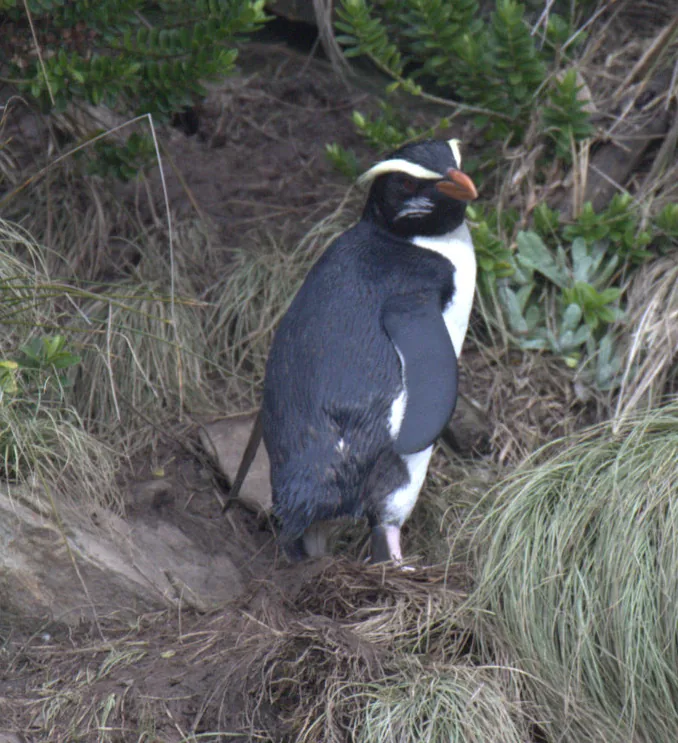
Tree roots, ferns and mossy boulders shelter Fiordland Penguin nests in the wet coastal forests of New Zealand's South Island and nearby offshore islands. Because they move under heavy canopy cover and spend much of the year at sea, they are difficult for researchers to count. The New Zealand Department of Conservation's 2024–25 medium-term research plan reports the species' global IUCN status as Near Threatened. Unlike some crested penguins that rarely fledge more than one chick, Fiordland Penguins lay two eggs and can occasionally raise both chicks in favourable years.
2. Snares Penguin
Every Snares Penguin breeding colony lies in one small archipelago south of New Zealand: the Snares Islands. Having the entire global breeding population in a single island group leaves the species exposed to localized marine shifts or disease, even though the islands themselves remain uninhabited and free of introduced mammalian predators.
3. Yellow-eyed Penguin
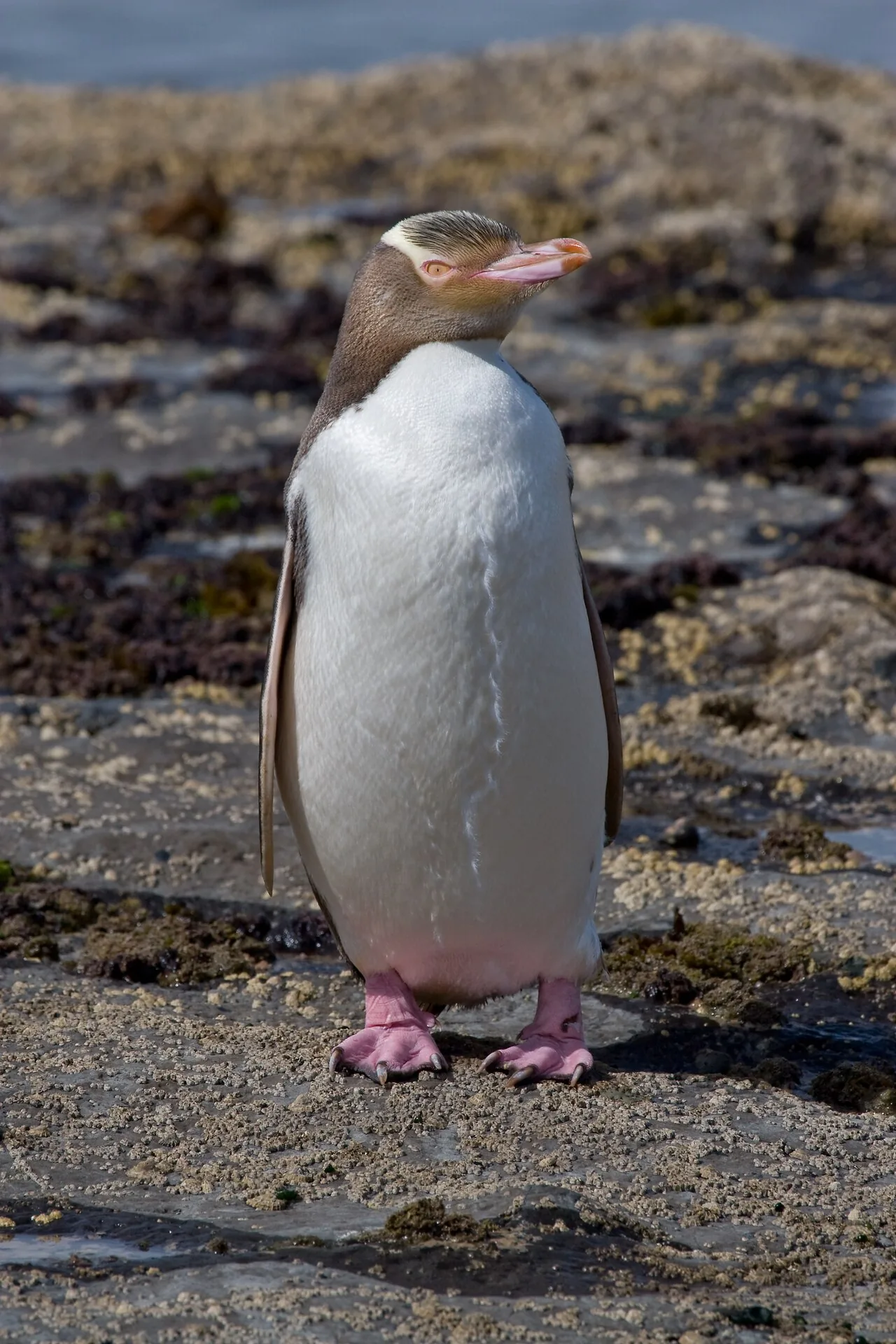
Known in Māori as hoiho, the Yellow-eyed Penguin breeds along the southeastern coast of New Zealand and on subantarctic islands to the south. Pairs conceal their nests from their neighbours among coastal forest and scrub. BirdLife’s assessment cites an estimate of 2,600–3,000 mature individuals from 2020, mostly on the subantarctic islands.
4. Royal Penguin
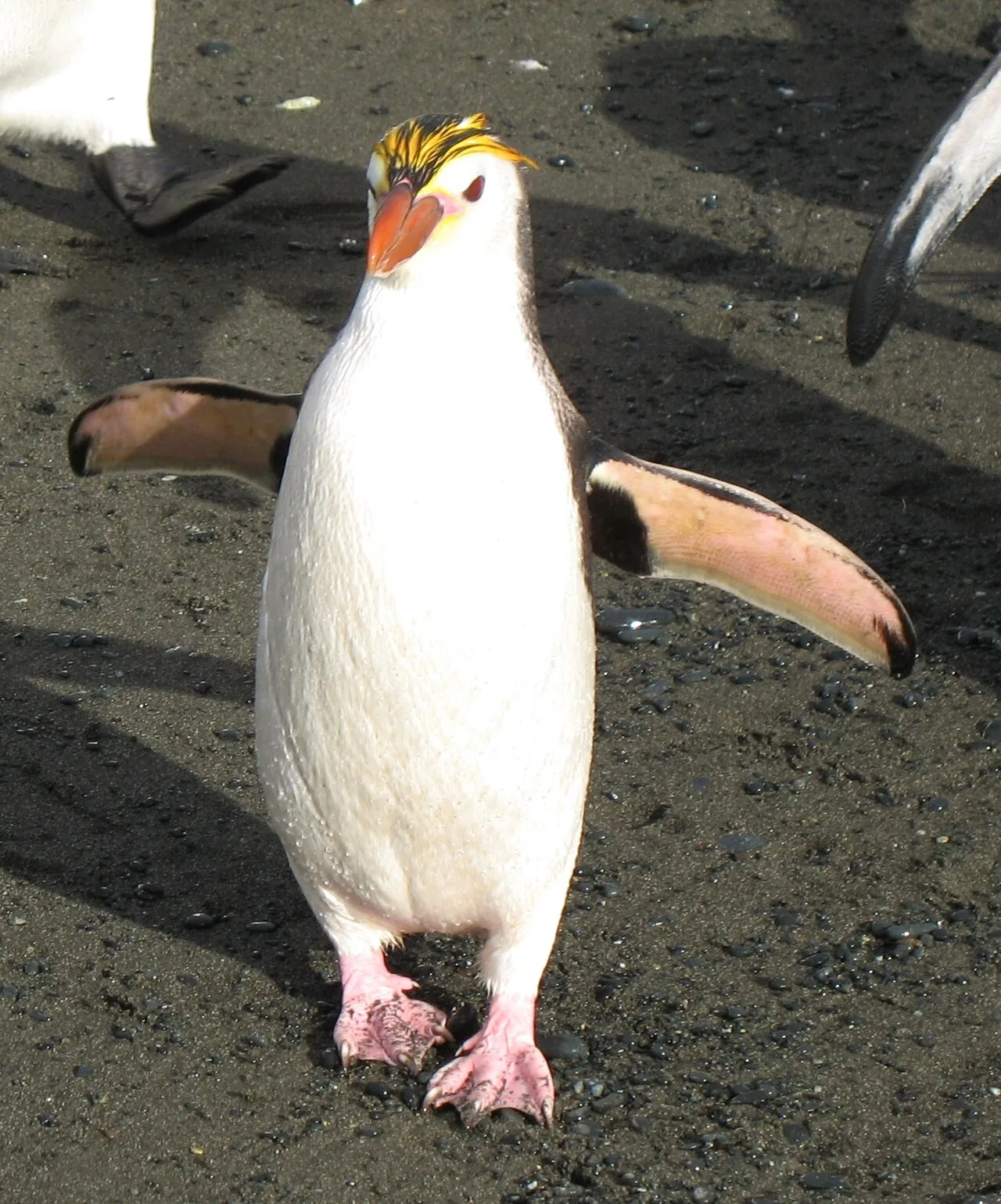
A white face and chin usually distinguish the Royal Penguin from its dark-faced relative, the Macaroni Penguin. Both have golden head plumes and heavy bills. Royals breed almost exclusively on Macquarie Island, roughly halfway between Australia and Antarctica.
5. Erect-crested Penguin
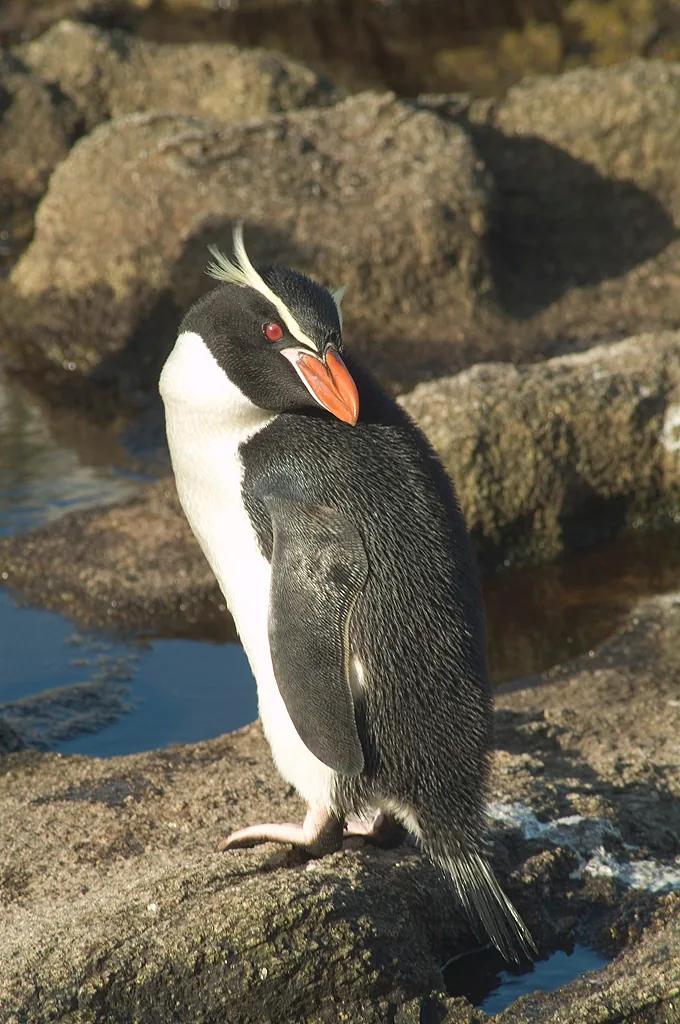
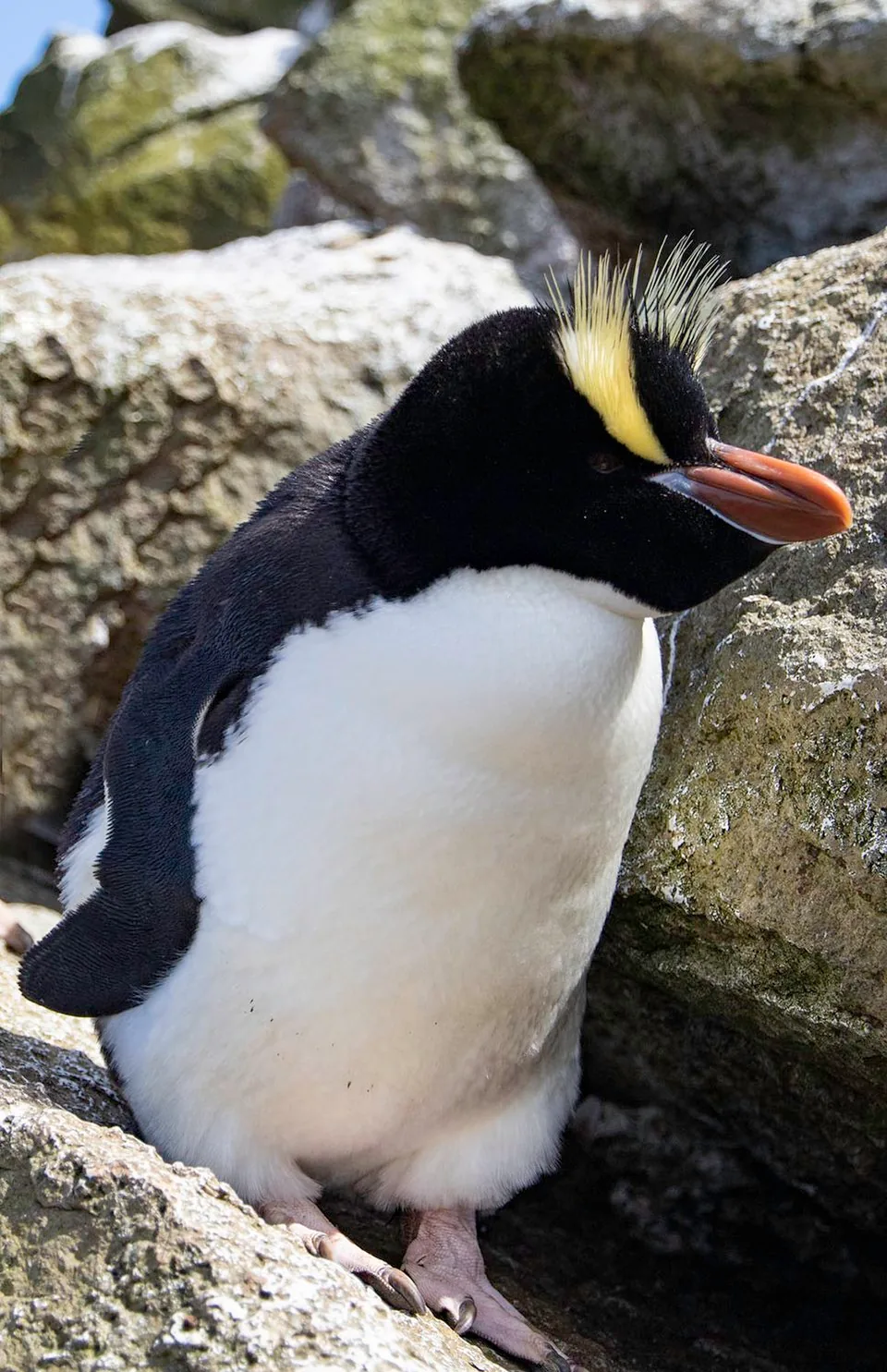
Stiff yellow plumes rise above the eyes of the Erect-crested Penguin, which breeds primarily on the remote Bounty and Antipodes Islands south of New Zealand. The species has a pronounced egg-size difference: females lay two eggs, and the second egg is much larger than the first. Parents almost always fledge a single chick, usually from that larger second egg.
6. Chinstrap Penguin
Named for the narrow black band running beneath its chin, the Chinstrap Penguin breeds across the Antarctic Peninsula and subantarctic islands. It forms large colonies on ice-free slopes. Even with millions of birds globally, several regional colonies have declined as warming waters and sea-ice changes alter the availability of Antarctic krill.
7. Magellanic Penguin
The Magellanic Penguin digs nesting burrows or shelters under bushes along the coasts of Argentina, Chile, and the Falkland Islands. While its global status is Least Concern according to BirdLife International, breeding colonies still face localized hazards from commercial fishing, shipping traffic, and shifting prey distributions. Outside the breeding season, migrating birds swim north along the South American coast and sometimes reach Brazil.
8. Humboldt Penguin
Along the dry Pacific coast of Peru and Chile, the Humboldt Penguin nests in rocky crevices, coastal caves, and burrows dug into historic layers of guano. Its survival in such an arid climate depends on the cold, nutrient-rich Humboldt Current, which supports dense schools of anchoveta and sardines. Strong El Niño events can disrupt that food supply and reduce breeding success. The species is classified as Vulnerable.
9. Northern Rockhopper Penguin
The Northern Rockhopper Penguin breeds on remote islands in the South Atlantic and Indian Oceans, including Tristan da Cunha and Gough Island. Easily recognized by its long, wispy yellow-and-black eyebrow plumes, it moves across steep volcanic shorelines by hopping with both feet together. It is globally Endangered. Declines have differed between islands, so a percentage from one population should not be applied to the whole species.
10. Macaroni Penguin
Numbering millions of birds, the Macaroni Penguin forms massive, noisy colonies on subantarctic islands from the South Atlantic to the Indian Ocean. Its orange-yellow crest feathers grow from a single patch in the center of the forehead and sweep back over red eyes.
Research and sources
Yellow-eyed penguin (New Zealand Birds Online); erect-crested penguin breeding; northern rockhopper biology (Australian Antarctic Program); BirdLife yellow-eyed assessment.