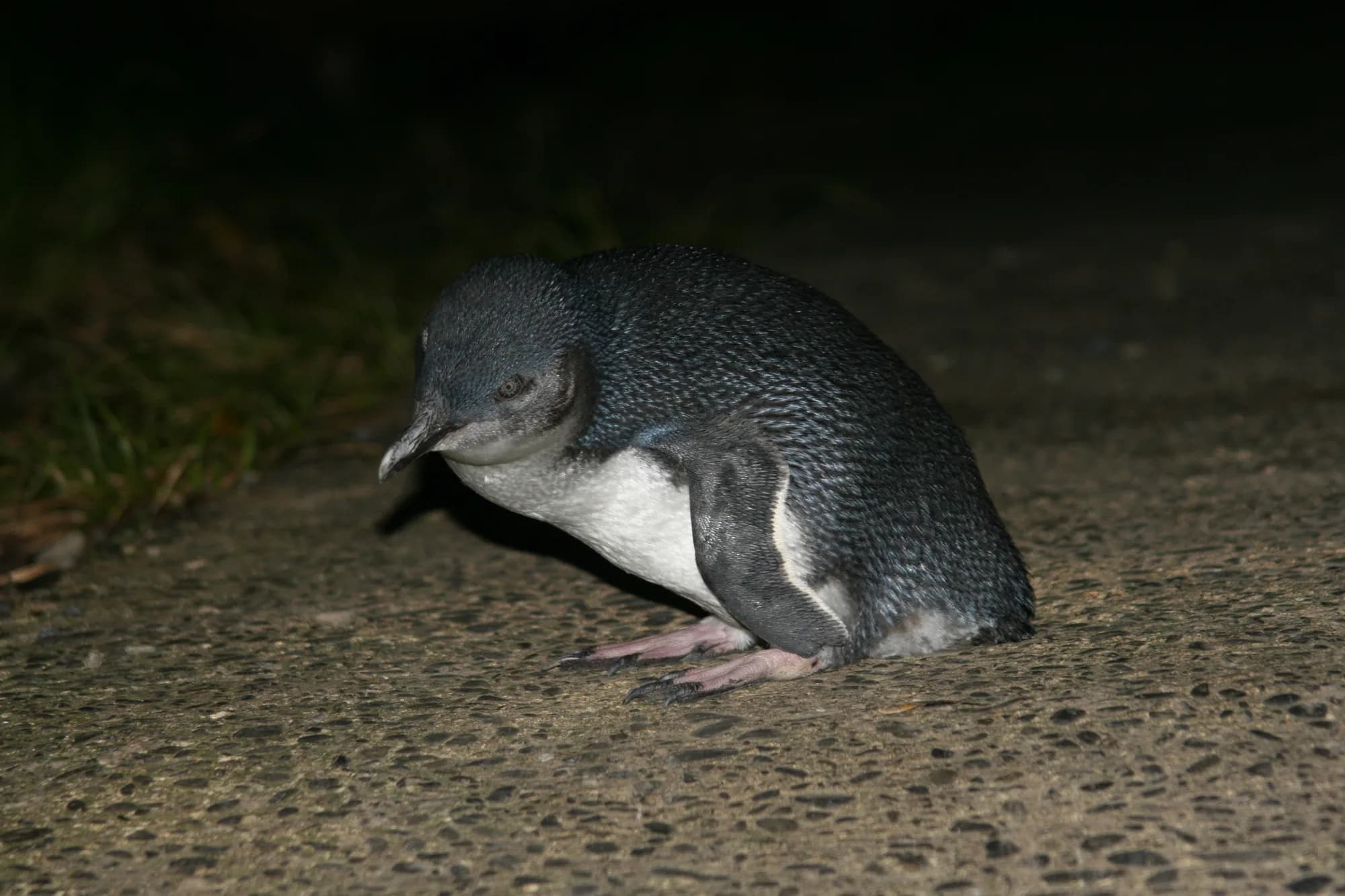
The Little Blue Penguin, also called the fairy penguin or korora in Maori, holds the title of smallest penguin in the world. Standing just 30 to 33 centimeters tall and weighing roughly one kilogram, it looks nothing like the towering Emperor Penguins that dominate most penguin imagery. But this tiny bird is a fully functional marine predator with a life strategy perfectly tuned to coastal waters.
Where Little Blue Penguins Live
Little Blue Penguins are found along the coastlines of New Zealand and southern Australia. They breed on both main islands of New Zealand, various offshore islands, and across much of the southern Australian coast from Western Australia to New South Wales.
Unlike Antarctic penguins, Little Blues live in temperate environments where temperatures rarely drop below freezing. Their habitat includes rocky shorelines, coastal scrub, sand dunes, and even urban areas. Colonies have established themselves under boardwalks, in drainage pipes, and alongside coastal roads. This proximity to humans creates both opportunities and threats.
What Makes Small Size Different
Being the smallest penguin changes almost everything about how the species operates.
Heat Loss
Small bodies lose heat faster than large ones. Little Blue Penguins compensate by staying in relatively warm waters and by returning to land every night rather than spending extended periods at sea. Most foraging trips are day trips, rarely extending more than 20 to 25 kilometers from the colony.
Diving Depth
While Emperor Penguins dive beyond 500 meters, Little Blue Penguins typically forage at depths of 5 to 30 meters. They do not need extreme depth because their prey, small schooling fish and marine invertebrates, concentrates in shallow coastal waters.
Predator Vulnerability
Small size makes Little Blue Penguins vulnerable to a wider range of predators than larger species face. On land, dogs, cats, foxes, ferrets, stoats, and rats all pose threats. At sea, fur seals, large fish, and sea eagles take individuals. Many colonies now depend on predator control programs to survive.
Nocturnal Land Behavior
One of the most distinctive behaviors of Little Blue Penguins is their nocturnal return to the colony. Each evening after a day of foraging at sea, the birds come ashore after dark in small groups. They waddle up the beach and through coastal vegetation to reach their burrows. This timing reduces predation risk from visual predators like raptors and gulls.
The nightly penguin parade at places like Phillip Island in Australia has become a major tourist attraction, drawing hundreds of thousands of visitors annually. This tourism generates funding for conservation but also requires careful management to avoid disturbing the birds.
Nesting and Breeding
Little Blue Penguins nest in burrows, rock crevices, dense vegetation, and artificial nest boxes. They typically lay two eggs and both parents share incubation duties over a period of about 35 days. Chicks are brooded and fed by both parents and usually fledge at around eight weeks.
Breeding success depends heavily on local food availability. In good years with abundant prey near the colony, both chicks may survive. In poor years, one or both may starve. The short foraging range of Little Blues means they are especially sensitive to local changes in prey distribution.
Conservation Status
Little Blue Penguins are currently classified as Least Concern by the IUCN, reflecting their relatively wide range and substantial population. However, individual colonies face serious threats from introduced predators, habitat loss, vehicle strikes, dog attacks, and marine pollution.
In New Zealand, community-led conservation projects have installed predator-proof fences around some colonies and provided hundreds of artificial nest boxes. These local interventions have produced measurable improvements in breeding success and colony survival.
Key Takeaways
- The Little Blue Penguin is the smallest penguin species at 30 to 33 cm tall, found in New Zealand and southern Australia.
- Small size means short foraging range, shallow diving, high heat loss, and vulnerability to a wider set of predators.
- Nocturnal land behavior reduces predation risk from visual hunters.
- Local conservation efforts including predator fencing and nest boxes are effective where implemented.
- The species is not globally threatened but faces serious pressures at the colony level from introduced predators and human activity.
Where to Go Next
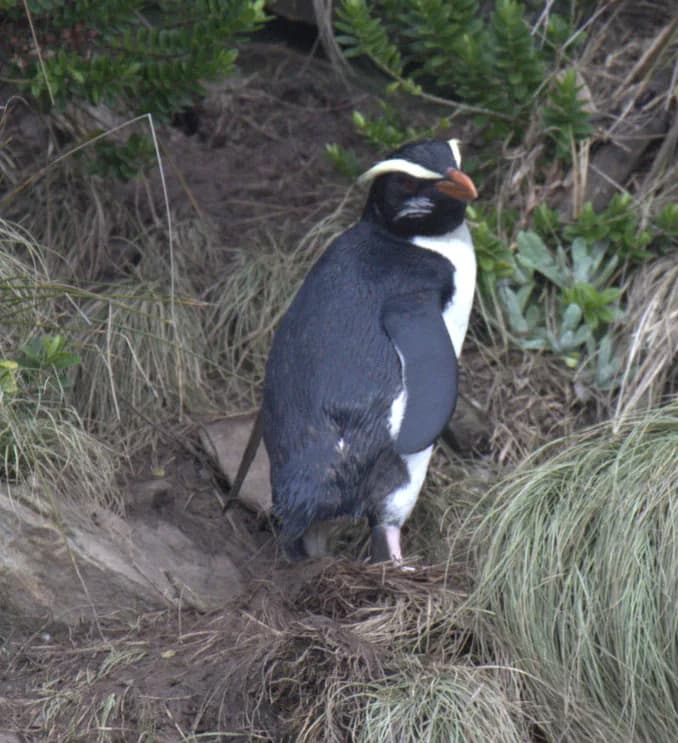
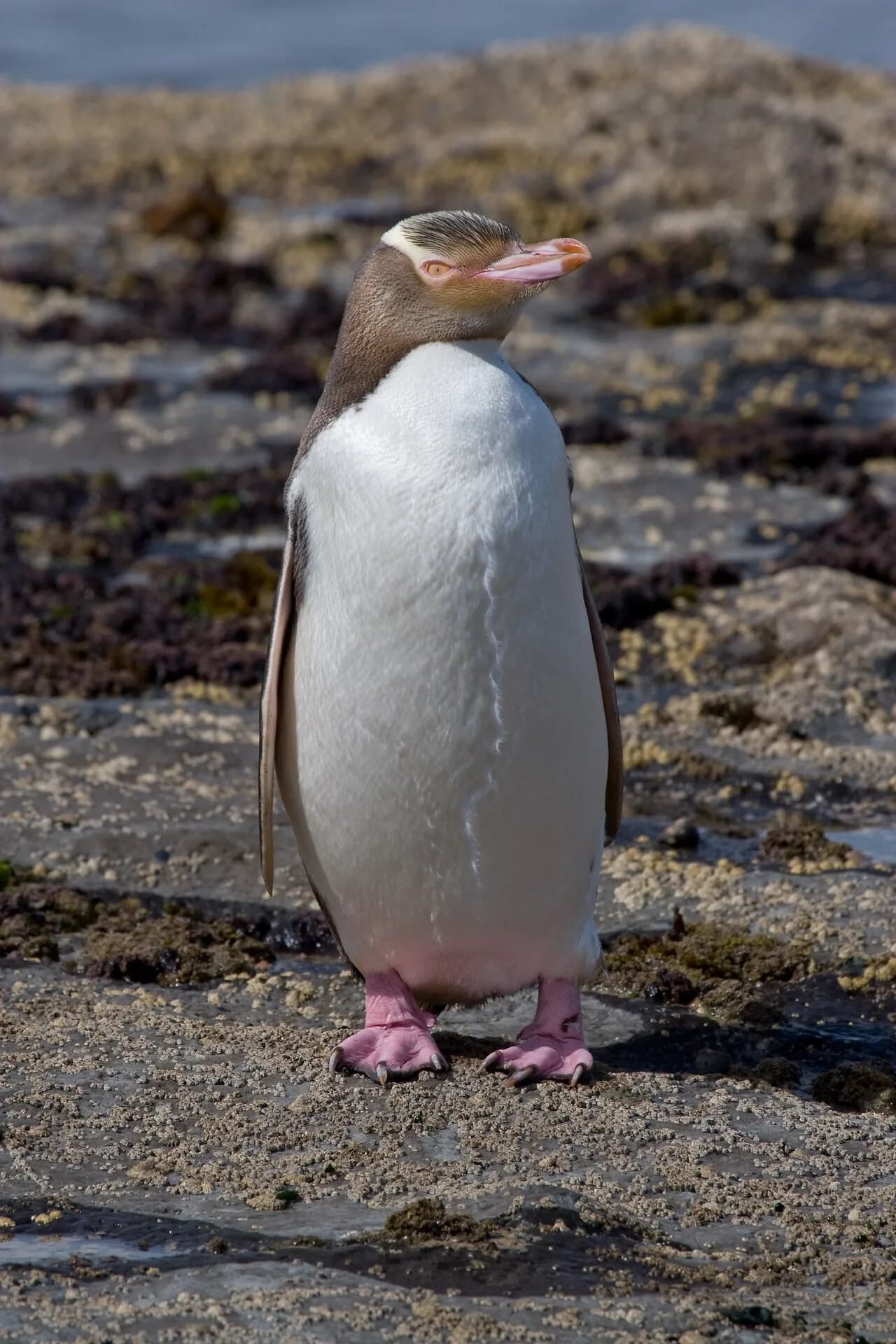
Read the full Little Blue Penguin species profile for detailed data on height, weight, diet, and range. For a comparison with the largest species, see the Emperor Penguin profile. To explore other New Zealand penguins, check the Yellow-eyed Penguin and Fiordland Penguin pages.