
Adelie Penguin vs Galapagos Penguin
Adelie Penguin (Least Concern) and Galapagos Penguin (Endangered) sit on different rungs of extinction risk, which makes this matchup a conservation comparison as much as a field-guide one. Adelie Penguin: Adelies look like the default penguin in a field guide, but they are really a climate instrument with feathers. They show you when sea ice and krill stop lining up. Galapagos Penguin: Galapagos Penguins are the cleanest proof that penguins do not worship latitude. They worship cold, productive water, even on equatorial islands. The comparison table is the raw material; the sections under it are the reading.
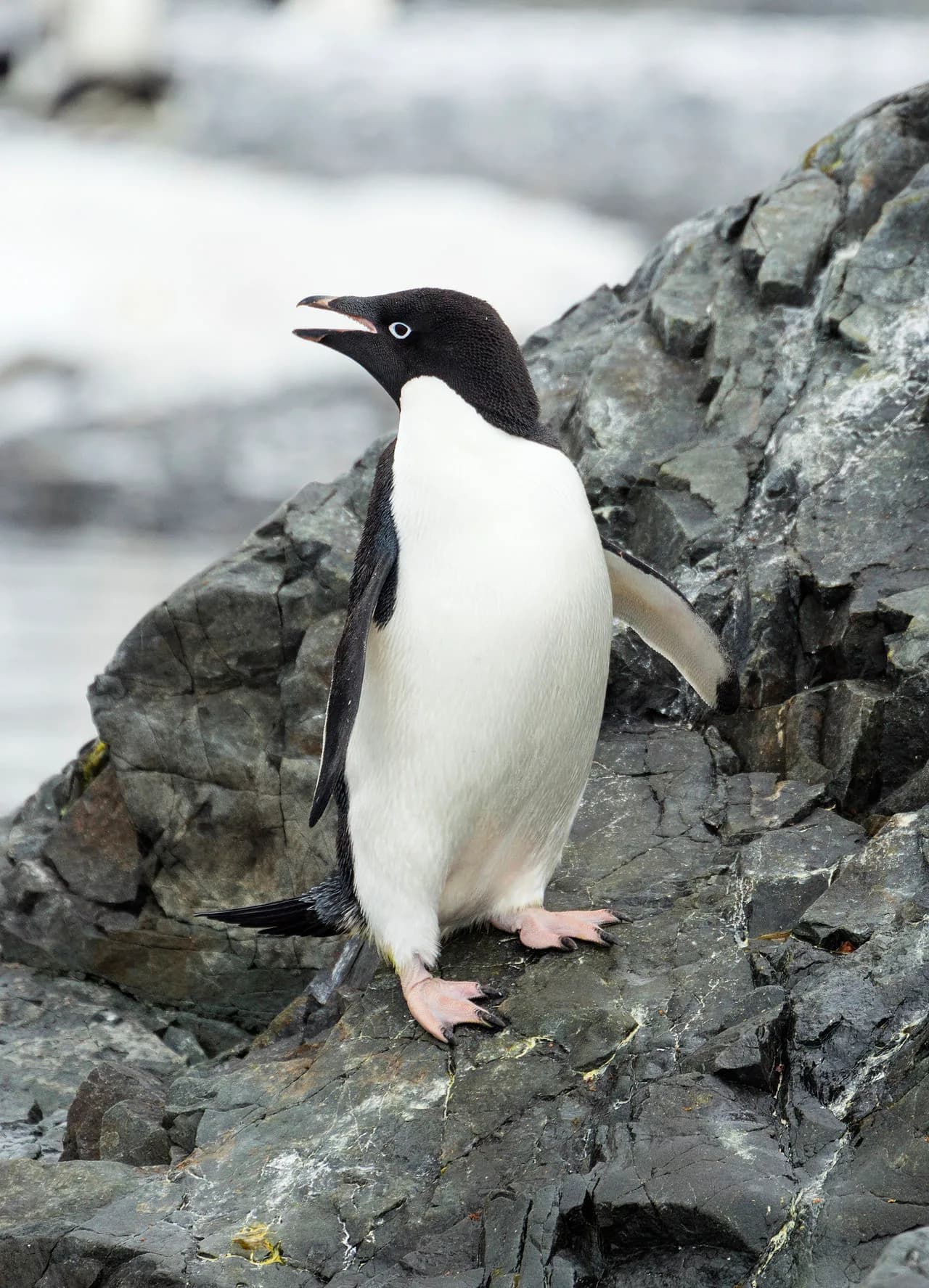
Adelie Penguin
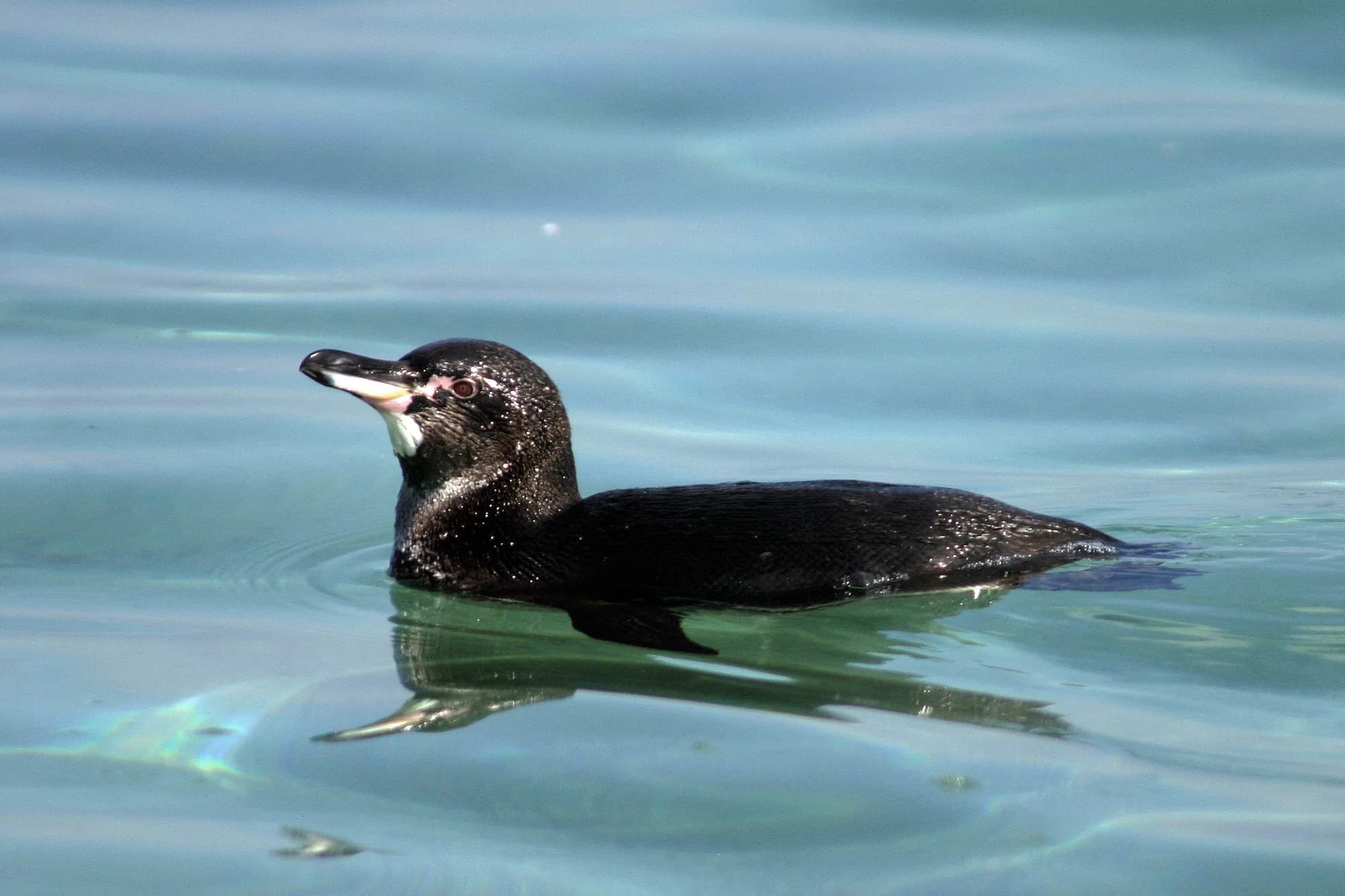
Galapagos Penguin
Size Comparison
Adelie Penguin
46-71 cm
3.6-6 kg
Galapagos Penguin
49-53 cm
1.7-2.6 kg
| Feature | Adelie Penguin | Galapagos Penguin |
|---|---|---|
| Conservation | Least Concern | Endangered |
| Scientific Name | Pygoscelis adeliae | Spheniscus mendiculus |
| Height | 46-71 cm | 49-53 cm |
| Weight | 3.6-6 kg | 1.7-2.6 kg |
| Lifespan | 10-20 years | 15-20 years |
| Population | ~7.6 million breeding pairs | ~1,200 mature individuals |
| Diet | Krill, Fish, Squid | Small fish, Mullet, Sardines |
| Habitat | Antarctic coastline, Rocky shores | Volcanic coastlines, Rocky shores |
| Regions | Antarctica, South Shetland Islands, South Orkney Islands | Galapagos Islands (Ecuador) |
| Genus | Pygoscelis | Spheniscus |
Conservation Status
Adelie Penguin
Least ConcernGalapagos Penguin
EndangeredScientific Name
Adelie Penguin
Pygoscelis adeliae
Galapagos Penguin
Spheniscus mendiculus
Height
Adelie Penguin
46-71 cm
Galapagos Penguin
49-53 cm
Weight
Adelie Penguin
3.6-6 kg
Galapagos Penguin
1.7-2.6 kg
Lifespan
Adelie Penguin
10-20 years
Galapagos Penguin
15-20 years
Population
Adelie Penguin
~7.6 million breeding pairs
Galapagos Penguin
~1,200 mature individuals
Diet
Adelie Penguin
Krill, Fish, Squid
Galapagos Penguin
Small fish, Mullet, Sardines
Habitat
Adelie Penguin
Antarctic coastline, Rocky shores
Galapagos Penguin
Volcanic coastlines, Rocky shores
Regions
Adelie Penguin
Antarctica, South Shetland Islands, South Orkney Islands
Galapagos Penguin
Galapagos Islands (Ecuador)
Genus
Adelie Penguin
Pygoscelis
Galapagos Penguin
Spheniscus
Key Differences
Not a second table — the reasons the numbers diverge.
Survival problem
Adelie Penguin: Adelies have to time breeding around snow melt, open water access, and krill-rich feeding conditions. Miss the window and chicks pay for it immediately. Galapagos Penguin: This species survives only while cool upwelling keeps fish available around a tiny range. When strong El Nino events flatten productivity, the margin disappears fast. Those two sentences are the comparison’s spine — stats only make sense if they map back to the problem each bird is actually solving.
Size and mass
The Adelie Penguin is only slightly taller on average — up to 71 cm and 6 kg against the Galapagos Penguin's 53 cm and 2.6 kg. That gap changes dive physics, fasting capacity, and how each bird spends energy on land and at sea.
Habitat logic
Adelie Penguins use antarctic coastline and rocky shores; Galapagos Penguins use volcanic coastlines and rocky shores. They do share some ground — rocky shores — but the remaining habitat split still forces different nesting and commute solutions. Habitat here is architecture, not scenery: shelter, predators, and access to prey decide who can breed successfully.
Separate ranges
Adelie Penguins live in Antarctica, South Shetland Islands, and South Orkney Islands; Galapagos Penguins live in Galapagos Islands (Ecuador). Non-overlapping ranges usually mean different currents, predator guilds, and fisheries pressure — which is why conservation headlines for one rarely transfer cleanly to the other.
What they hunt
Adelie Penguins eat krill, fish, and squid; Galapagos Penguins eat small fish, mullet, and sardines. Distinct items on each list (krill, fish, and squid versus small fish, mullet, and sardines) hint at different dive depths and foraging schedules. Their prey lists barely overlap, so food crises may strike on different clocks.
Dive depth
The Adelie Penguin reaches 180 m — more than twice the Galapagos Penguin's 52 m. Depth buys access to prey that shallower divers never reach, and it is paid for in oxygen storage, muscle chemistry, and the time each foraging trip takes.
Incubation length
Both lay 2 eggs, but the Galapagos Penguin incubates for 38–40 days against the Adelie Penguin's 32–34. Every extra day on the nest is a day of fasting for one partner and a day the egg is exposed to whatever the season does next.
Abundance
There are roughly 12630 times as many Adelie Penguins as Galapagos Penguins — ~7.6 million breeding pairs against ~1,200 mature individuals. Rarity is not the same as risk, but it sets how little has to go wrong before a decline becomes irreversible.
Conservation pressure
The Galapagos Penguin carries the sharper label (Endangered, population ~1,200 mature individuals) against the Adelie Penguin's Least Concern (~7.6 million breeding pairs). Classified as Endangered with only about 1,200 individuals. The lower-risk bird is not “safe”; it simply has a wider margin before the same kinds of ocean or land failure become terminal.
Key Similarities
Same family, different genera
Both are penguins in Spheniscidae, yet they sit in different genera (Pygoscelis vs Spheniscus). That distance usually shows up as different colony style, crest or band patterns, and how hard each bird depends on a single prey or ice type.
Shared habitat type
Both use rocky shores. That common stage rewards the same basics — dense waterproofing, heat control, and a reliable commute between nest and productive water — while still leaving room for different nest architecture.
Why both still feel like penguins
They are stone thieves, cliff-launchers, and one of the few penguins that can look cartoon-simple while living in a brutally narrow seasonal window. They nest in lava cracks, breed near the equator, and still operate like penguins that are negotiating constantly with heat stress and food collapse rather than just tropical sunshine. Underneath those quirks sit the same flightless, flipper-driven design that makes every living penguin a swimming specialist rather than an aerial one.
How to read this matchup
Read this pair as distant solutions to “how to be a penguin.” Size, genus, and risk already point different ways: Adelie Penguin versus Galapagos Penguin, Pygoscelis versus Spheniscus, Least Concern versus Endangered. Use the profiles for depth — this page is the decision tree for which difference matters first.
About Each Species
Adelie Penguin
Adelies look like the default penguin in a field guide, but they are really a climate instrument with feathers. They show you when sea ice and krill stop lining up.
Small, highly abundant Antarctic penguins recognized by their distinctive white eye rings. Adélies are one of only two penguin species on the Antarctic mainland and serve as key indicator species for ecosystem health.
Full Adelie Penguin profileGalapagos Penguin
Galapagos Penguins are the cleanest proof that penguins do not worship latitude. They worship cold, productive water, even on equatorial islands.
The only penguin species found north of the equator in the wild and the smallest South American penguin, Galápagos Penguins survive in a tropical setting thanks to cool upwelling from the Humboldt and Cromwell Currents.
Full Galapagos Penguin profileFrequently Asked Questions
Which is bigger, the Adelie Penguin or the Galapagos Penguin?
The Adelie Penguin is larger — up to 71 cm and 6 kg — while the Galapagos Penguin reaches about 53 cm and 2.6 kg.
Which is more endangered, the Adelie Penguin or the Galapagos Penguin?
The Galapagos Penguin sits higher on the IUCN ladder (Endangered, ~1,200 mature individuals) than the Adelie Penguin (Least Concern, ~7.6 million breeding pairs). Classified as Endangered with only about 1,200 individuals.
Do Adelie Penguins and Galapagos Penguins live in the same place?
No meaningful range overlap. Adelie Penguins: Antarctica, South Shetland Islands, and South Orkney Islands. Galapagos Penguins: Galapagos Islands (Ecuador).
What do Adelie Penguins and Galapagos Penguins eat?
Adelie Penguins eat krill, fish, and squid; Galapagos Penguins eat small fish, mullet, and sardines.
What is the biggest survival difference between Adelie Penguins and Galapagos Penguins?
Adelie Penguin: Adelies have to time breeding around snow melt, open water access, and krill-rich feeding conditions. Miss the window and chicks pay for it immediately. Galapagos Penguin: This species survives only while cool upwelling keeps fish available around a tiny range. When strong El Nino events flatten productivity, the margin disappears fast.
Are Adelie Penguins and Galapagos Penguins closely related?
They are both penguins (Spheniscidae) but sit in different genera: Pygoscelis (Adelie Penguin) and Spheniscus (Galapagos Penguin). That is family-level relatedness, not a close sister-species pair.