
Emperor Penguin vs Western Rockhopper Penguin
Put an Emperor Penguin (130 cm) beside a Western Rockhopper Penguin (55 cm) and the penguin family stops looking like one interchangeable bird. Emperor Penguin: The Emperor Penguin is not built to defeat Antarctic winter. It survives by turning a breeding pair into a relay team, with the male becoming a walking incubator on sea ice. Western Rockhopper Penguin: Western Rockhoppers are not waddling comedians. They are cliff birds built to turn ugly coastlines into breeding habitat. Everything below is measurable. The part worth arguing about is what it implies.
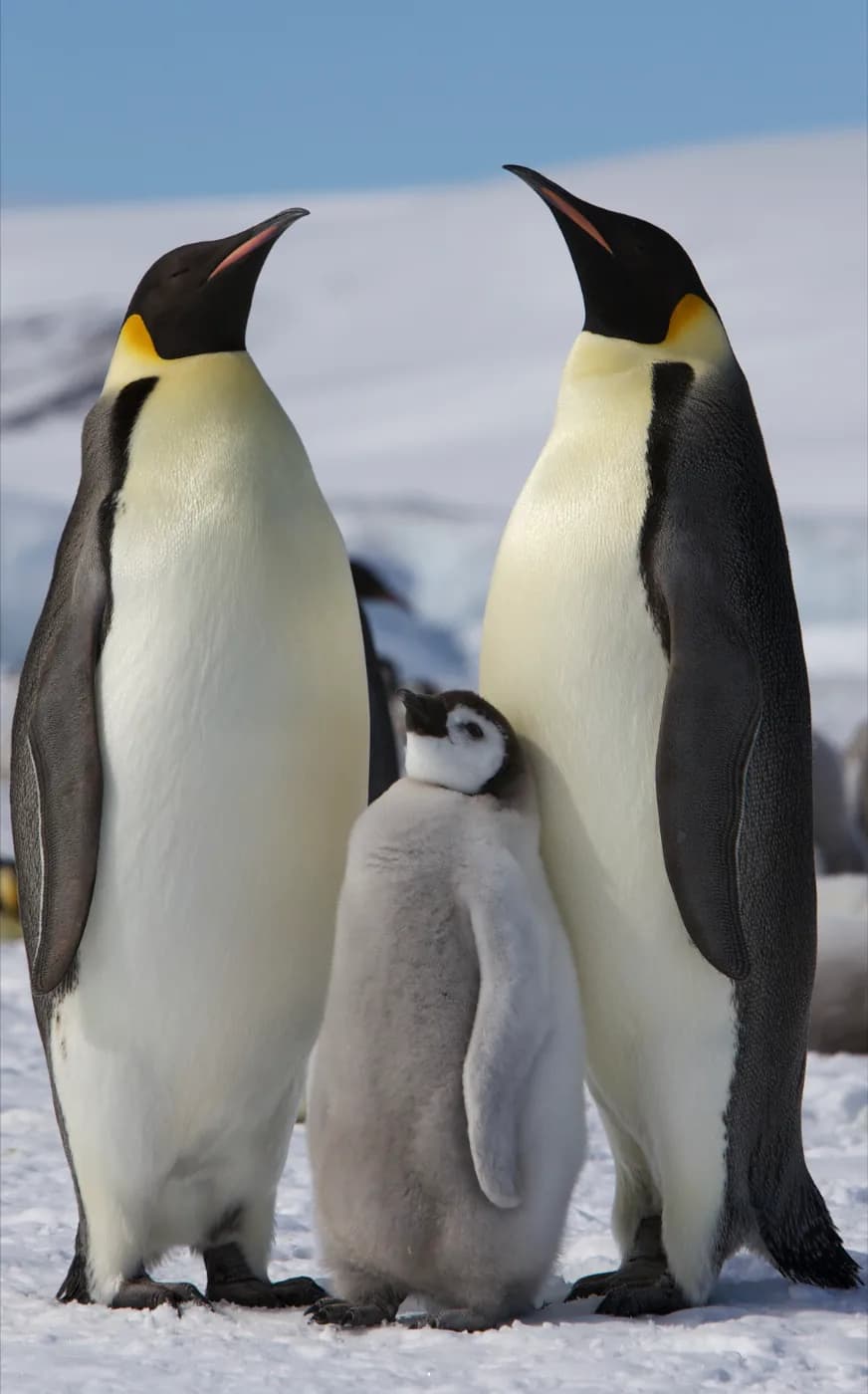
Emperor Penguin
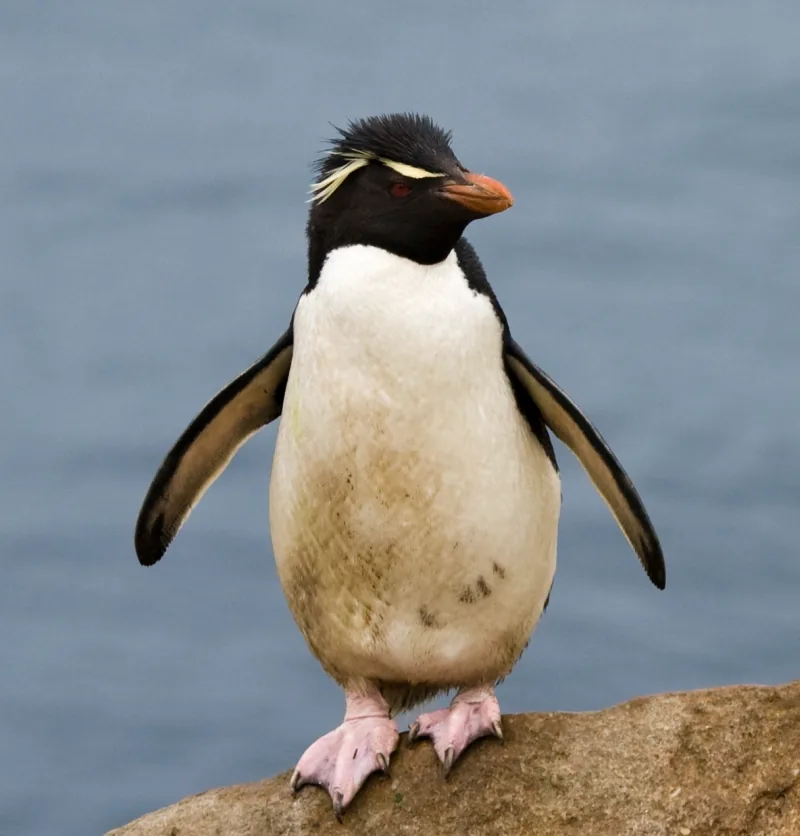
Western Rockhopper Penguin
Size Comparison
Emperor Penguin
100-130 cm
22-45 kg
Western Rockhopper Penguin
45-55 cm
2-3.4 kg
| Feature | Emperor Penguin | Western Rockhopper Penguin |
|---|---|---|
| Conservation | Endangered | Vulnerable |
| Scientific Name | Aptenodytes forsteri | Eudyptes chrysocome |
| Height | 100-130 cm | 45-55 cm |
| Weight | 22-45 kg | 2-3.4 kg |
| Lifespan | 15-20 years | 10-30 years |
| Population | ~595,000 individuals | ~1.5 million breeding pairs |
| Diet | Fish, Squid, Krill | Krill, Squid, Octopus, Fish, Crustaceans |
| Habitat | Antarctic sea ice, Antarctic coastline | Rocky coastlines, Cliff faces, Tussock grass |
| Regions | Antarctica | Falkland Islands, Chile, Argentina, New Zealand sub-Antarctic islands |
| Genus | Aptenodytes | Eudyptes |
Conservation Status
Emperor Penguin
EndangeredWestern Rockhopper Penguin
VulnerableScientific Name
Emperor Penguin
Aptenodytes forsteri
Western Rockhopper Penguin
Eudyptes chrysocome
Height
Emperor Penguin
100-130 cm
Western Rockhopper Penguin
45-55 cm
Weight
Emperor Penguin
22-45 kg
Western Rockhopper Penguin
2-3.4 kg
Lifespan
Emperor Penguin
15-20 years
Western Rockhopper Penguin
10-30 years
Population
Emperor Penguin
~595,000 individuals
Western Rockhopper Penguin
~1.5 million breeding pairs
Diet
Emperor Penguin
Fish, Squid, Krill
Western Rockhopper Penguin
Krill, Squid, Octopus, Fish, Crustaceans
Habitat
Emperor Penguin
Antarctic sea ice, Antarctic coastline
Western Rockhopper Penguin
Rocky coastlines, Cliff faces, Tussock grass
Regions
Emperor Penguin
Antarctica
Western Rockhopper Penguin
Falkland Islands, Chile, Argentina, New Zealand sub-Antarctic islands
Genus
Emperor Penguin
Aptenodytes
Western Rockhopper Penguin
Eudyptes
Key Differences
Not a second table — the reasons the numbers diverge.
Survival problem
Emperor Penguin: Everything about an emperor colony depends on stable sea ice lasting long enough for one chick to hatch, survive the coldest weeks of the year, and meet open water again before the platform breaks apart. Western Rockhopper Penguin: They have to climb, hop, and breed on exposed islands while marine food webs stay reliable enough to feed adults returning from difficult shorelines. Those two sentences are the comparison’s spine — stats only make sense if they map back to the problem each bird is actually solving.
Size and mass
The Emperor Penguin is nearly twice as tall on average — up to 130 cm and 45 kg against the Western Rockhopper Penguin's 55 cm and 3.4 kg. That gap changes dive physics, fasting capacity, and how each bird spends energy on land and at sea.
Habitat logic
Emperor Penguins use antarctic sea ice and antarctic coastline; Western Rockhopper Penguins use rocky coastlines, cliff faces, and tussock grass. There is little shared nesting or haul-out habitat between them. Habitat here is architecture, not scenery: shelter, predators, and access to prey decide who can breed successfully.
Separate ranges
Emperor Penguins live in Antarctica; Western Rockhopper Penguins live in Falkland Islands, Chile, Argentina, and New Zealand sub-Antarctic islands. Non-overlapping ranges usually mean different currents, predator guilds, and fisheries pressure — which is why conservation headlines for one rarely transfer cleanly to the other.
What they hunt
Emperor Penguins eat fish, squid, and krill; Western Rockhopper Penguins eat krill, squid, octopus, fish, and crustaceans. Both still lean on fish, squid, and krill, so ocean productivity swings can hit them together.
Dive depth
The Emperor Penguin reaches 565 m — 5 times the Western Rockhopper Penguin's 113 m. Depth buys access to prey that shallower divers never reach, and it is paid for in oxygen storage, muscle chemistry, and the time each foraging trip takes.
Clutch size
The Emperor Penguin lays 1 egg per season; the Western Rockhopper Penguin lays 2. A single-egg strategy concentrates everything into one chick and leaves no margin if it fails, which is why single-egg species tend to invest far longer in incubation — here 64–67 days against 32–34.
Abundance
There are roughly 5.0 times as many Western Rockhopper Penguins as Emperor Penguins — ~1.5 million breeding pairs against ~595,000 individuals. Rarity is not the same as risk, but it sets how little has to go wrong before a decline becomes irreversible.
Conservation pressure
The Emperor Penguin carries the sharper label (Endangered, population ~595,000 individuals) against the Western Rockhopper Penguin's Vulnerable (~1.5 million breeding pairs). Uplisted from Near Threatened to Endangered on the IUCN Red List in April 2026, in an assessment coordinated by BirdLife International. The lower-risk bird is not “safe”; it simply has a wider margin before the same kinds of ocean or land failure become terminal.
Lifespan window
Western Rockhopper Penguins are built for a longer adult career (10–30 years) than Emperor Penguins (15–20 years). Longer lives amplify the cost of a bad breeding decade; shorter lives put more pressure on every successful chick year.
Key Similarities
Same family, different genera
Both are penguins in Spheniscidae, yet they sit in different genera (Aptenodytes vs Eudyptes). That distance usually shows up as different colony style, crest or band patterns, and how hard each bird depends on a single prey or ice type.
Overlapping prey
They both take fish, squid, and krill. Shared prey is a coupling: a krill or forage-fish crash can stress both populations even when colonies sit far apart.
Why both still feel like penguins
Most birds solve incubation by sitting on a nest. Their swaggering hops, crest display, and willingness to use brutal rocky terrain make them look absurd until you realize every part of it is practical. Underneath those quirks sit the same flightless, flipper-driven design that makes every living penguin a swimming specialist rather than an aerial one.
How to read this matchup
Read this pair as distant solutions to “how to be a penguin.” Size, genus, and risk already point different ways: Emperor Penguin versus Western Rockhopper Penguin, Aptenodytes versus Eudyptes, Endangered versus Vulnerable. Use the profiles for depth — this page is the decision tree for which difference matters first.
About Each Species
Emperor Penguin
The Emperor Penguin is not built to defeat Antarctic winter. It survives by turning a breeding pair into a relay team, with the male becoming a walking incubator on sea ice.
The largest penguin species, Emperor Penguins are the only animal to breed during the Antarctic winter, trekking up to 120 km over sea ice to reach their colonies and enduring temperatures below −40 °C.
Full Emperor Penguin profileWestern Rockhopper Penguin
Western Rockhoppers are not waddling comedians. They are cliff birds built to turn ugly coastlines into breeding habitat.
Among the smallest crested penguins, Western Rockhoppers navigate steep rocky terrain by hopping with both feet together. Their spiky black and yellow crest feathers and bright red eyes give them a punk-rock appearance.
Full Western Rockhopper Penguin profileFrequently Asked Questions
Which is bigger, the Emperor Penguin or the Western Rockhopper Penguin?
The Emperor Penguin is larger — up to 130 cm and 45 kg — while the Western Rockhopper Penguin reaches about 55 cm and 3.4 kg.
Which is more endangered, the Emperor Penguin or the Western Rockhopper Penguin?
The Emperor Penguin sits higher on the IUCN ladder (Endangered, ~595,000 individuals) than the Western Rockhopper Penguin (Vulnerable, ~1.5 million breeding pairs). Uplisted from Near Threatened to Endangered on the IUCN Red List in April 2026, in an assessment coordinated by BirdLife International.
Do Emperor Penguins and Western Rockhopper Penguins live in the same place?
No meaningful range overlap. Emperor Penguins: Antarctica. Western Rockhopper Penguins: Falkland Islands, Chile, Argentina, and New Zealand sub-Antarctic islands.
What do Emperor Penguins and Western Rockhopper Penguins eat?
Both take fish, squid, and krill. Full lists: fish, squid, and krill for the Emperor Penguin; krill, squid, octopus, fish, and crustaceans for the Western Rockhopper Penguin.
What is the biggest survival difference between Emperor Penguins and Western Rockhopper Penguins?
Emperor Penguin: Everything about an emperor colony depends on stable sea ice lasting long enough for one chick to hatch, survive the coldest weeks of the year, and meet open water again before the platform breaks apart. Western Rockhopper Penguin: They have to climb, hop, and breed on exposed islands while marine food webs stay reliable enough to feed adults returning from difficult shorelines.
Are Emperor Penguins and Western Rockhopper Penguins closely related?
They are both penguins (Spheniscidae) but sit in different genera: Aptenodytes (Emperor Penguin) and Eudyptes (Western Rockhopper Penguin). That is family-level relatedness, not a close sister-species pair.
Which lives longer, the Emperor Penguin or the Western Rockhopper Penguin?
The Western Rockhopper Penguin generally has the longer window (10–30 years) versus 15–20 years for the Emperor Penguin.