
Macaroni Penguin vs Magellanic Penguin
Macaroni Penguins and Magellanic Penguins can both turn up in Falkland Islands, but they are not solving the same survival brief. Macaroni Penguin: Macaroni Penguins may be among the most numerous penguins on Earth, which makes them dangerous to underestimate. A giant population can still be living on borrowed ecological luck. Magellanic Penguin: Magellanic Penguins are burrow birds living in an exposed climate. Their problem is not just predators; it is trying to raise chicks while weather and human coastline pressure keep changing the rules. Start with the table, then read what the gaps between those rows actually cost.
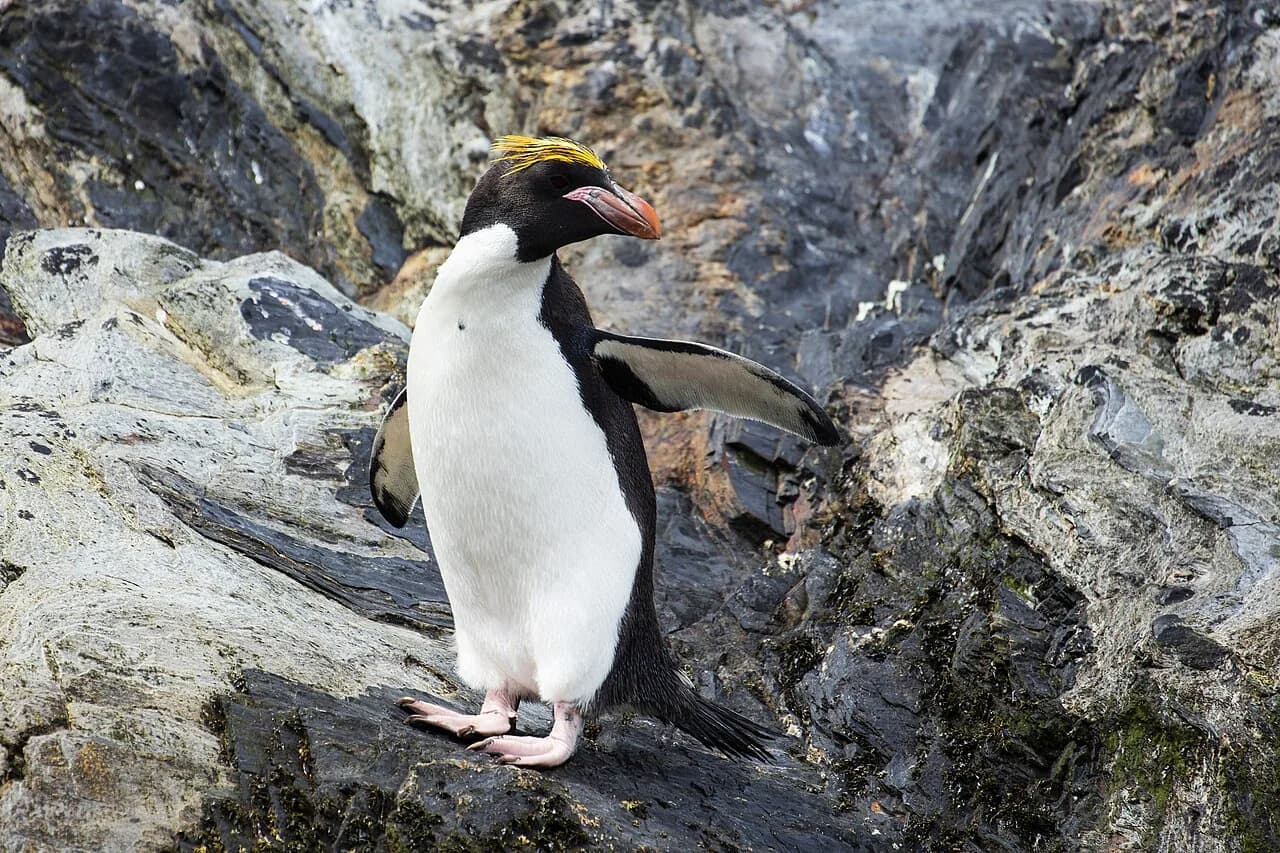
Macaroni Penguin
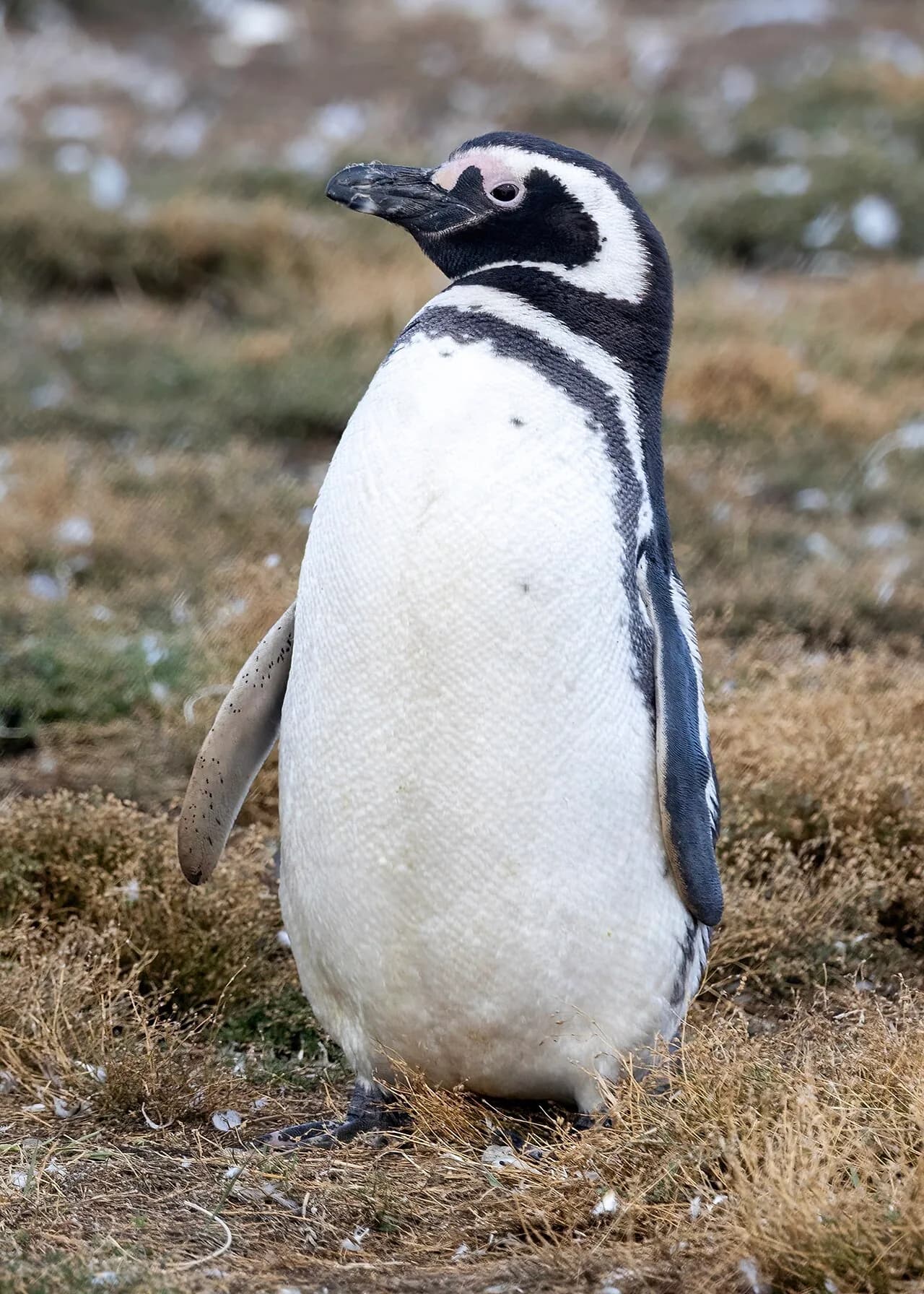
Magellanic Penguin
Size Comparison
Macaroni Penguin
51-77 cm
3.3-6.6 kg
Magellanic Penguin
61-76 cm
2.7-6.5 kg
| Feature | Macaroni Penguin | Magellanic Penguin |
|---|---|---|
| Conservation | Vulnerable | Least Concern |
| Scientific Name | Eudyptes chrysolophus | Spheniscus magellanicus |
| Height | 51-77 cm | 61-76 cm |
| Weight | 3.3-6.6 kg | 2.7-6.5 kg |
| Lifespan | 8-15 years | 25-30 years |
| Population | ~6.3 million breeding pairs | ~1.8 million breeding pairs |
| Diet | Krill, Squid, Small fish, Crustaceans | Fish, Squid, Crustaceans, Krill |
| Habitat | Rocky, cliff-bound coastlines, Sub-Antarctic islands | Coastal burrows, Rocky shores, Grasslands |
| Regions | South Georgia, Falkland Islands, Crozet Islands, Kerguelen Islands, Heard Island, South Sandwich Islands | Argentina, Chile, Falkland Islands, Southern Brazil |
| Genus | Eudyptes | Spheniscus |
Conservation Status
Macaroni Penguin
VulnerableMagellanic Penguin
Least ConcernScientific Name
Macaroni Penguin
Eudyptes chrysolophus
Magellanic Penguin
Spheniscus magellanicus
Height
Macaroni Penguin
51-77 cm
Magellanic Penguin
61-76 cm
Weight
Macaroni Penguin
3.3-6.6 kg
Magellanic Penguin
2.7-6.5 kg
Lifespan
Macaroni Penguin
8-15 years
Magellanic Penguin
25-30 years
Population
Macaroni Penguin
~6.3 million breeding pairs
Magellanic Penguin
~1.8 million breeding pairs
Diet
Macaroni Penguin
Krill, Squid, Small fish, Crustaceans
Magellanic Penguin
Fish, Squid, Crustaceans, Krill
Habitat
Macaroni Penguin
Rocky, cliff-bound coastlines, Sub-Antarctic islands
Magellanic Penguin
Coastal burrows, Rocky shores, Grasslands
Regions
Macaroni Penguin
South Georgia, Falkland Islands, Crozet Islands, Kerguelen Islands, Heard Island, South Sandwich Islands
Magellanic Penguin
Argentina, Chile, Falkland Islands, Southern Brazil
Genus
Macaroni Penguin
Eudyptes
Magellanic Penguin
Spheniscus
Key Differences
Not a second table — the reasons the numbers diverge.
Survival problem
Macaroni Penguin: Macaronis have to feed enormous krill-driven colonies, so sustained changes in Southern Ocean productivity hit them at industrial scale. Magellanic Penguin: A Magellanic colony has to hold together through heat, storms, oil pollution, and long foraging commutes, all while chicks remain trapped in burrows waiting on adult return trips. Those two sentences are the comparison’s spine — stats only make sense if they map back to the problem each bird is actually solving.
Size is close
Macaroni Penguins and Magellanic Penguins sit in a similar size class: 51–77 cm and 3.3–6.6 kg versus 61–76 cm and 2.7–6.5 kg. When stature barely separates them, behaviour, range, and food access usually matter more than the ruler.
Habitat logic
Macaroni Penguins use rocky, cliff-bound coastlines and sub-antarctic islands; Magellanic Penguins use coastal burrows, rocky shores, and grasslands. There is little shared nesting or haul-out habitat between them. Habitat here is architecture, not scenery: shelter, predators, and access to prey decide who can breed successfully.
Partial range overlap
Their maps meet in Falkland Islands, but each also holds ground the other does not: Macaroni Penguins additionally use South Georgia, Crozet Islands, Kerguelen Islands, Heard Island, and South Sandwich Islands, while Magellanic Penguins extend into Argentina, Chile, and Southern Brazil. Overlap zones are where comparison is most useful; exclusive range is where threats diverge.
What they hunt
Macaroni Penguins eat krill, squid, small fish, and crustaceans; Magellanic Penguins eat fish, squid, crustaceans, and krill. Distinct items on each list (small fish versus fish) hint at different dive depths and foraging schedules. Both still lean on krill, squid, and crustaceans, so ocean productivity swings can hit them together.
Dive depth
The Macaroni Penguin reaches 115 m, against 97 m for the Magellanic Penguin. Depth buys access to prey that shallower divers never reach, and it is paid for in oxygen storage, muscle chemistry, and the time each foraging trip takes.
Abundance
There are roughly 3.5 times as many Macaroni Penguins as Magellanic Penguins — ~6.3 million breeding pairs against ~1.8 million breeding pairs. Rarity is not the same as risk, but it sets how little has to go wrong before a decline becomes irreversible.
Conservation pressure
The Macaroni Penguin carries the sharper label (Vulnerable, population ~6.3 million breeding pairs) against the Magellanic Penguin's Least Concern (~1.8 million breeding pairs). Classified as Vulnerable despite still numbering around 6. The lower-risk bird is not “safe”; it simply has a wider margin before the same kinds of ocean or land failure become terminal.
Lifespan window
Magellanic Penguins are built for a longer adult career (25–30 years) than Macaroni Penguins (8–15 years). Longer lives amplify the cost of a bad breeding decade; shorter lives put more pressure on every successful chick year.
Key Similarities
Same family, different genera
Both are penguins in Spheniscidae, yet they sit in different genera (Eudyptes vs Spheniscus). That distance usually shows up as different colony style, crest or band patterns, and how hard each bird depends on a single prey or ice type.
Overlapping prey
They both take krill, squid, and crustaceans. Shared prey is a coupling: a krill or forage-fish crash can stress both populations even when colonies sit far apart.
Shared geography
Ranges meet in Falkland Islands. In those waters they can face the same currents, storm seasons, and human disturbance, which is why regional management decisions often matter to more than one species at once.
How to read this matchup
Read this pair as neighbours, not twins. Shared water in Falkland Islands does not erase different nest logic and prey. If you only track one threat story, start with the Macaroni Penguin; if you want the ecological contrast, watch how the Macaroni Penguin and Magellanic Penguin spend the same ocean differently.
About Each Species
Macaroni Penguin
Macaroni Penguins may be among the most numerous penguins on Earth, which makes them dangerous to underestimate. A giant population can still be living on borrowed ecological luck.
One of the most numerous penguin species with an estimated 6.3 million breeding pairs, named after the flamboyant 18th-century 'Macaroni' fashion trend. Despite their huge numbers, they are Vulnerable due to rapid declines.
Full Macaroni Penguin profileMagellanic Penguin
Magellanic Penguins are burrow birds living in an exposed climate. Their problem is not just predators; it is trying to raise chicks while weather and human coastline pressure keep changing the rules.
Named after Ferdinand Magellan who first spotted them in 1520, these medium-sized South American penguins are among the most migratory penguin species, with distinctive two black bands between head and breast.
Full Magellanic Penguin profileFrequently Asked Questions
Which is bigger, the Macaroni Penguin or the Magellanic Penguin?
They are close in stature: 51–77 cm and 3.3–6.6 kg for the Macaroni Penguin, versus 61–76 cm and 2.7–6.5 kg for the Magellanic Penguin.
Which is more endangered, the Macaroni Penguin or the Magellanic Penguin?
The Macaroni Penguin sits higher on the IUCN ladder (Vulnerable, ~6.3 million breeding pairs) than the Magellanic Penguin (Least Concern, ~1.8 million breeding pairs). Classified as Vulnerable despite still numbering around 6.
Do Macaroni Penguins and Magellanic Penguins live in the same place?
Yes, ranges meet in Falkland Islands. Nesting and haul-out still split: Macaroni Penguins use rocky, cliff-bound coastlines and sub-antarctic islands; Magellanic Penguins use coastal burrows, rocky shores, and grasslands.
What do Macaroni Penguins and Magellanic Penguins eat?
Both take krill, squid, and crustaceans. Full lists: krill, squid, small fish, and crustaceans for the Macaroni Penguin; fish, squid, crustaceans, and krill for the Magellanic Penguin.
What is the biggest survival difference between Macaroni Penguins and Magellanic Penguins?
Macaroni Penguin: Macaronis have to feed enormous krill-driven colonies, so sustained changes in Southern Ocean productivity hit them at industrial scale. Magellanic Penguin: A Magellanic colony has to hold together through heat, storms, oil pollution, and long foraging commutes, all while chicks remain trapped in burrows waiting on adult return trips.
Are Macaroni Penguins and Magellanic Penguins closely related?
They are both penguins (Spheniscidae) but sit in different genera: Eudyptes (Macaroni Penguin) and Spheniscus (Magellanic Penguin). That is family-level relatedness, not a close sister-species pair.
Which lives longer, the Macaroni Penguin or the Magellanic Penguin?
The Magellanic Penguin generally has the longer window (25–30 years) versus 8–15 years for the Macaroni Penguin.