Antarctica is the coldest, windiest, driest continent on Earth. Winter temperatures on the sea ice regularly drop below minus 40 degrees Celsius, and wind chill can push the effective temperature far lower. Yet Emperor Penguins breed through this season, and Adelie Penguins return to the continent's edges as soon as conditions allow. How do they do it?
The answer is not one adaptation. It is a layered system where feathers, fat, blood flow, body shape, and behavior all work together.
Feathers: The First Line of Defense
Penguin feathers are unlike those of almost any other bird. They are short, stiff, and packed at extraordinary density, with over 100 feathers per square centimeter in some species. Each feather has a downy base that traps a layer of air against the skin, while the outer portion overlaps tightly to form a windproof and waterproof shell.
This system works on land and in water. On land, the trapped air provides insulation against wind. In the ocean, the feather layer keeps cold water from reaching the skin directly. When penguins emerge from the sea, they shake off water quickly because the feather surface sheds moisture almost like a waxed jacket.
Blubber: The Energy Reserve That Also Insulates
Beneath the feathers, penguins carry a layer of subcutaneous fat, or blubber. This layer serves two purposes: it stores energy for fasting periods and it adds insulation. In Emperor Penguins preparing for the winter breeding fast, the blubber layer can be several centimeters thick.
Blubber alone is not enough, though. Penguins are much smaller than seals and whales, which means their surface-area-to-volume ratio is less favorable for heat retention. They need every other trick in the system to compensate.
Counter-Current Heat Exchange
One of the most elegant adaptations is the counter-current heat exchange system in penguins' flippers and legs. Warm arterial blood flowing toward the extremities passes alongside cooler venous blood returning to the body core. Heat transfers from the warm outgoing blood to the cool incoming blood, which means the core stays warm while the extremities are allowed to run cold.
This is why a penguin can stand on ice without freezing its feet. The feet are maintained at a temperature just above freezing, cold enough to minimize heat loss to the ice but warm enough to avoid tissue damage.
Body Shape and Size
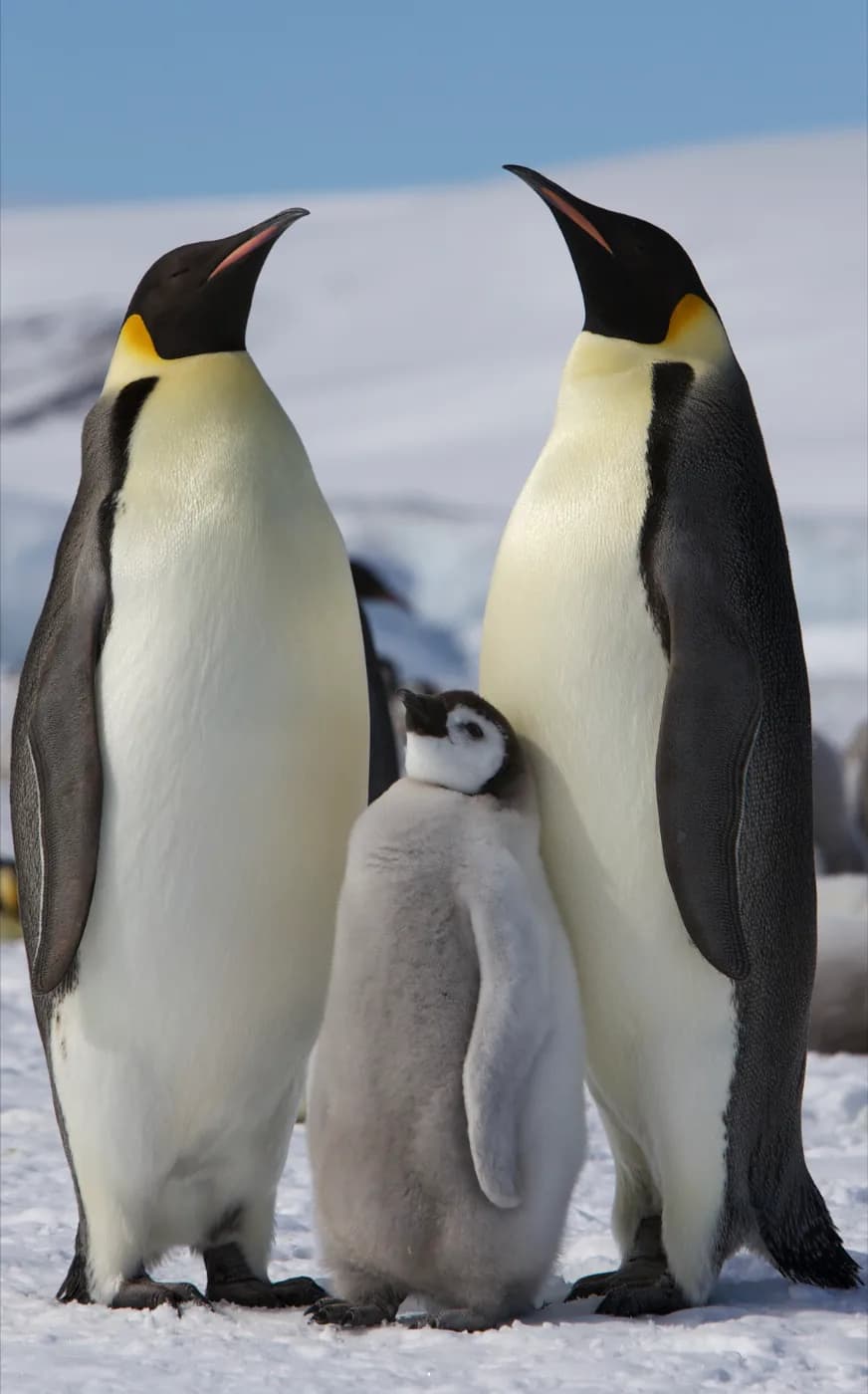
Antarctic penguins benefit from compact, rounded body shapes that minimize exposed surface area relative to body volume. The Emperor Penguin is the largest penguin species, and its size is directly tied to cold survival. Larger bodies lose heat more slowly than smaller ones, a principle known in biology as Bergmann's rule.
Even the Emperor's short bill, small flippers relative to body size, and tucked posture all reduce the amount of skin exposed to cold air.
Huddling: The Social Survival Strategy
Emperor Penguins take thermal management to a collective level through huddling. During winter storms, thousands of birds press together into tight groups where temperatures at the center can reach over 37 degrees Celsius, even as the air outside drops below minus 40.
The huddle is not static. Birds on the exposed outer edge slowly rotate inward while those in the warm center eventually drift outward. This rotation ensures that no single bird endures the worst exposure for too long. Research has shown that huddling can reduce individual energy expenditure by up to 50 percent.
Behavioral Timing
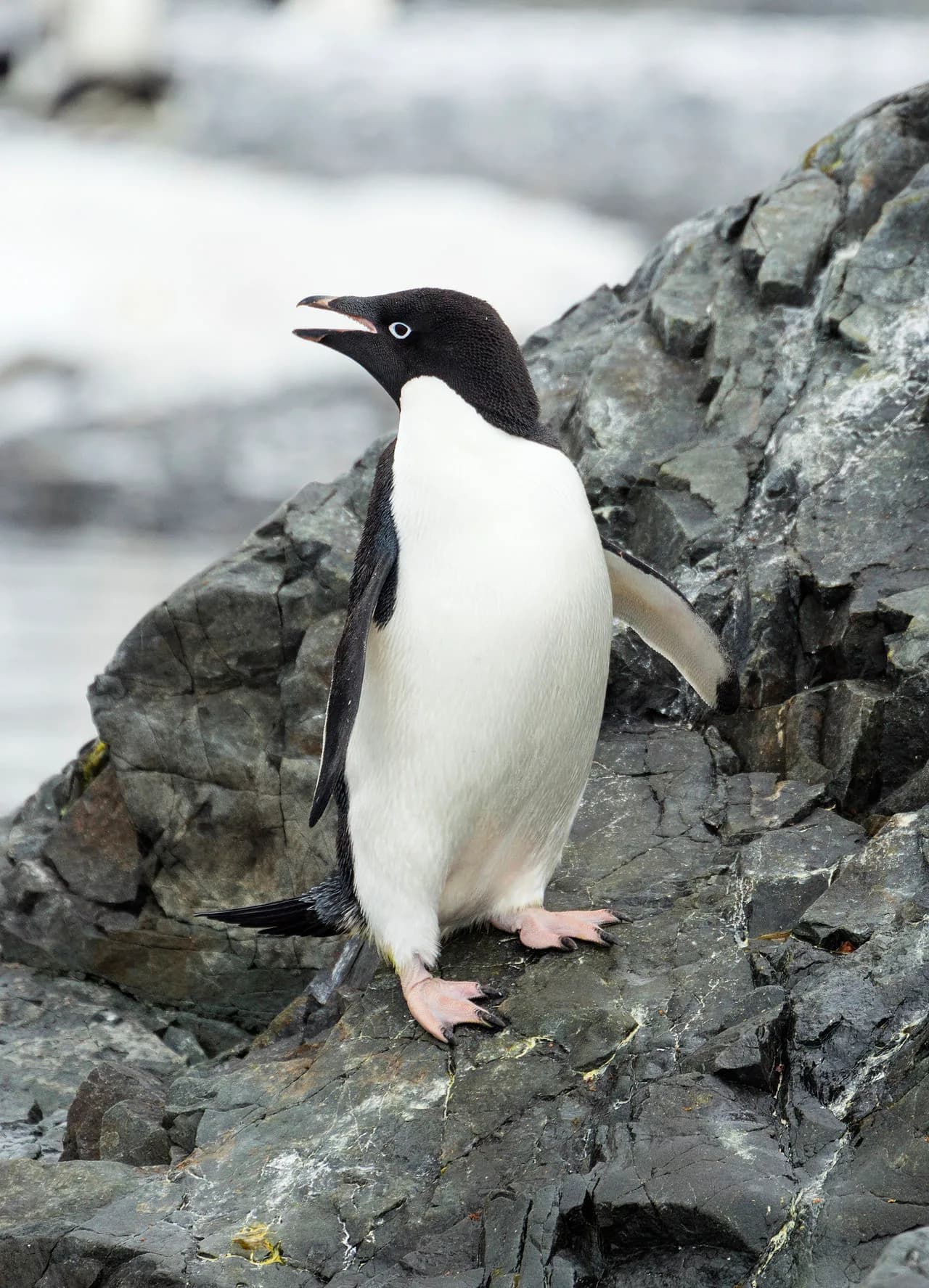
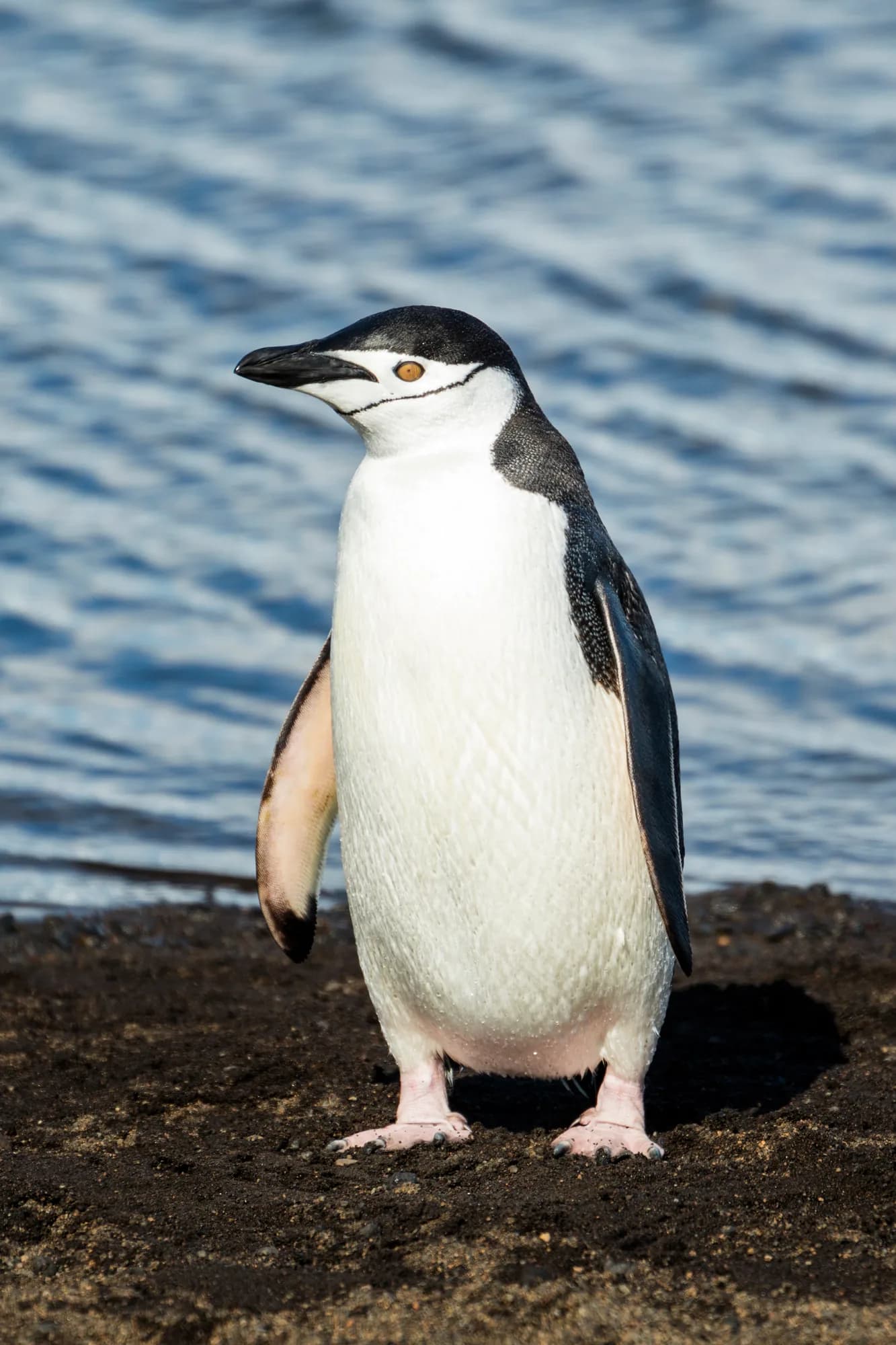
Antarctic penguins also manage cold through timing. Chinstrap Penguins and Adelie Penguins breed during the austral summer when conditions are merely harsh rather than lethal. Emperor Penguins breed in winter, but their chicks fledge in summer when food is most available. Every species aligns its most vulnerable life stages with the least punishing window it can find.
When conditions turn extreme, penguins reduce activity, tuck their heads, and minimize exposed surfaces. They are not passive about cold. They actively manage their posture, position, and energy expenditure throughout the day.
Key Takeaways
- Penguin cold survival depends on a layered system: dense feathers, subcutaneous fat, counter-current heat exchange, compact body shape, and behavioral strategies like huddling.
- No single adaptation is sufficient on its own. The system works because every component reduces heat loss in a different way.
- Emperor Penguins represent the extreme case because they breed through the Antarctic winter, but all Antarctic species use variations of the same toolkit.
- The real vulnerability is not the cold itself but changes to sea ice timing and prey availability that can disrupt the carefully timed breeding cycle.
Where to Go Next
For the full species profile, see Emperor Penguin and Adelie Penguin. To learn how cold tolerance connects to breeding, read Emperor Penguin Breeding. For a guide to penguin habitats beyond Antarctica, explore the species directory.