
Antarctic sea ice Habitat
Emperor Penguin is the standout user of Antarctic sea ice in this catalogue. Habitat pages with one species show architecture, not a crowd.
Penguins linked with Antarctic sea ice use that setting because it solves a real problem: shelter, breeding, shade, access to prey, or all four at once. On this page that means one bird first: Emperor Penguin. Everything about an emperor colony depends on stable sea ice lasting long enough for one chick to hatch, survive the coldest weeks of the year, and meet open water again before the platform breaks apart.
Species in lens
1
Singleton hub — depth over breadth
Profile focus
Emperor Penguin
Up to 130 cm
Highest risk in view
Emperor Penguin
Endangered
Species profile entry
Penguins linked with Antarctic sea ice use that setting because it solves a real problem: shelter, breeding, shade, access to prey, or all four at once.
Signature insight
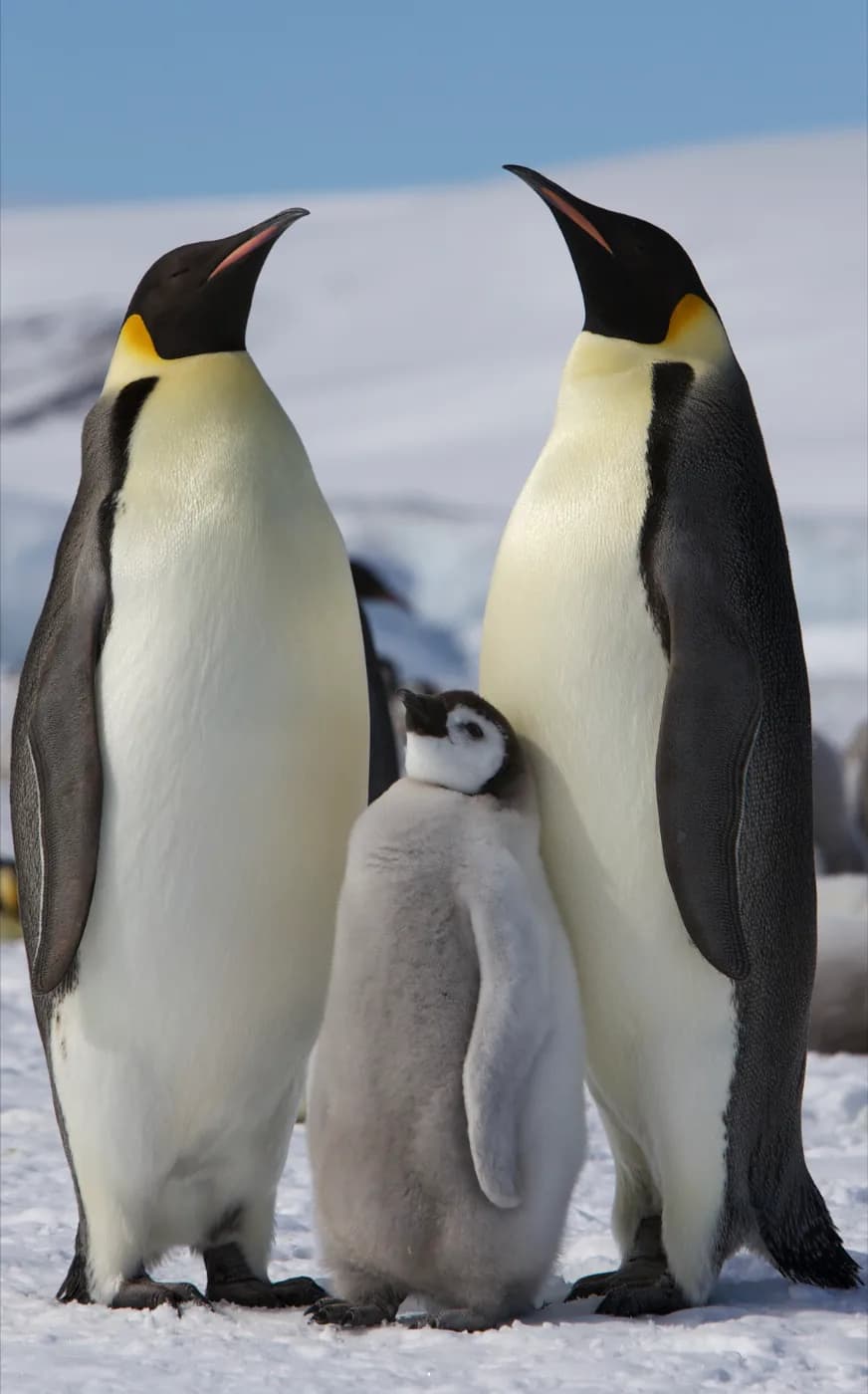
The Emperor Penguin is not built to defeat Antarctic winter. It survives by turning a breeding pair into a relay team, with the male becoming a walking incubator on sea ice.
Open full Emperor Penguin profileWhat this view reveals
- Emperor Penguin is the only species in this habitat view right now.
- Everything about an emperor colony depends on stable sea ice lasting long enough for one chick to hatch, survive the coldest weeks of the year, and meet open water again before the platform breaks apart.
- Conservation: Endangered · ~595,000 individuals.
Read next
All guidesWhy Penguins Don't Freeze
How Emperor Penguins and their relatives stay alive in lethal cold, from feather geometry to blood-flow tricks and huddle physics.
Open guideHow Penguins Survive Long Fasts
Why fasting is normal penguin biology, from Emperor males on winter sea ice to chicks and moulting birds trapped on land.
Open guidePenguin Breeding and Chicks
How penguins turn sea ice, burrows, bare rock, and dense vegetation into nurseries, and why breeding style is really a survival strategy.
Open guideUnderstanding Antarctic sea ice Habitat
Antarctic sea ice habitat currently highlights one species in this catalogue: Emperor Penguin (Aptenodytes forsteri). The Emperor Penguin is not built to defeat Antarctic winter.
Survival brief: Everything about an emperor colony depends on stable sea ice lasting long enough for one chick to hatch, survive the coldest weeks of the year, and meet open water again before the platform breaks apart. Myth people still carry: Big penguins are basically untouchable in Antarctica. What the evidence supports instead: Emperors are spectacularly specialized, but that specialization is also the trap. Lose the right sea-ice timing and the colony can fail.
Field numbers: 100–130 cm, 22–45 kg, lifespan about 15–20 years. Status Endangered; population ~595,000 individuals; trend decreasing.
Where and what: ranges include Antarctica; habitats Antarctic sea ice and Antarctic coastline; diet fish, squid, and krill. Uplisted from Near Threatened to Endangered on the IUCN Red List in April 2026, in an assessment coordinated by BirdLife International. Open the full profile for sources, research gaps, and related species.
Frequently asked questions
Which penguins use Antarctic sea ice?
In this catalogue, Emperor Penguin is the species tied to this habitat page. The largest penguin species, Emperor Penguins are the only animal to breed during the Antarctic winter, trekking up to 120 km over sea ice to reach their colonies and enduring temperatures below −40 °C.
What is the main survival problem for Emperor Penguin?
Everything about an emperor colony depends on stable sea ice lasting long enough for one chick to hatch, survive the coldest weeks of the year, and meet open water again before the platform breaks apart.
What is the conservation status of Emperor Penguin?
Emperor Penguin is listed as Endangered, with an estimated population of ~595,000 individuals. Trend: decreasing. Uplisted from Near Threatened to Endangered on the IUCN Red List in April 2026, in an assessment coordinated by BirdLife International.