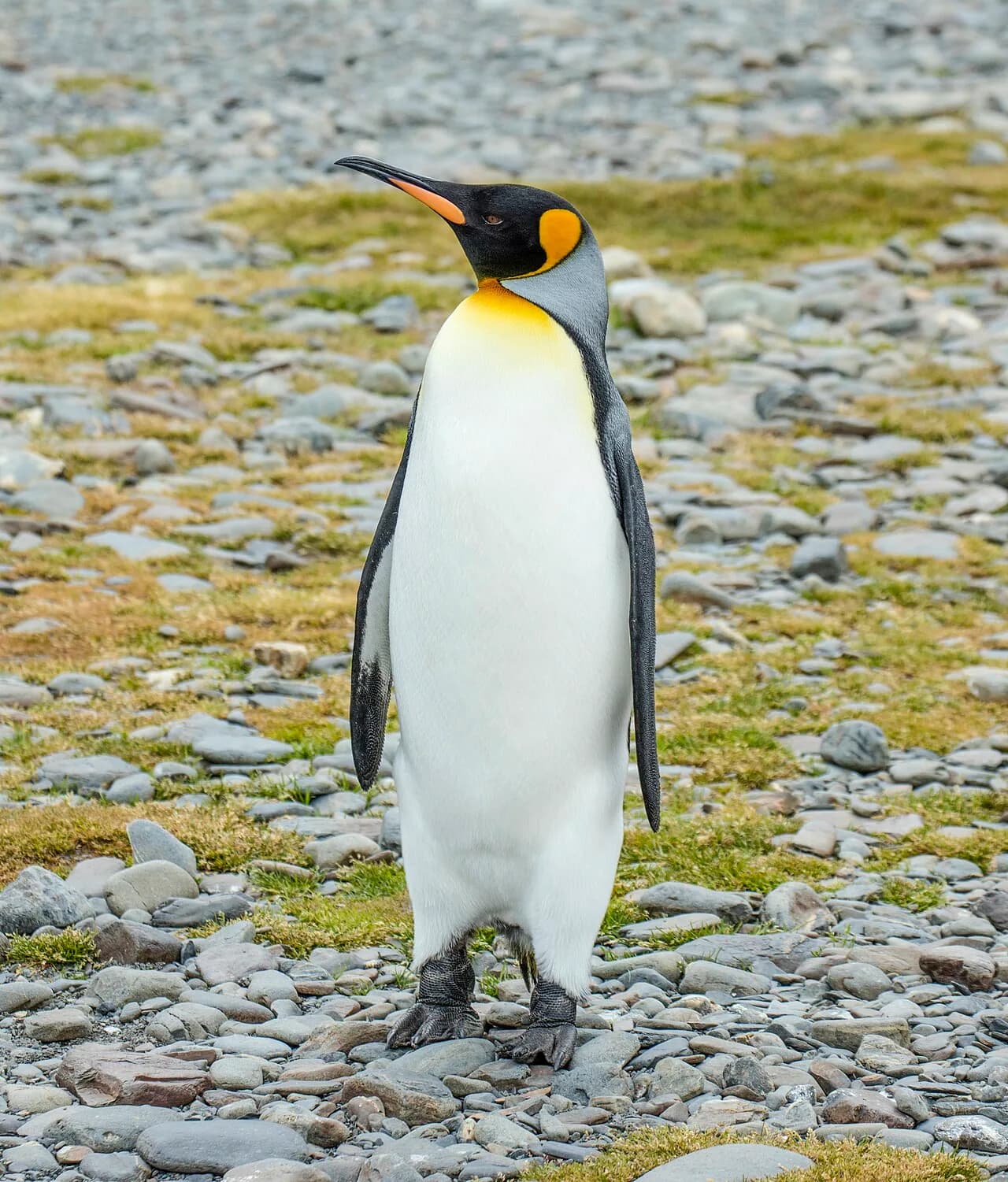
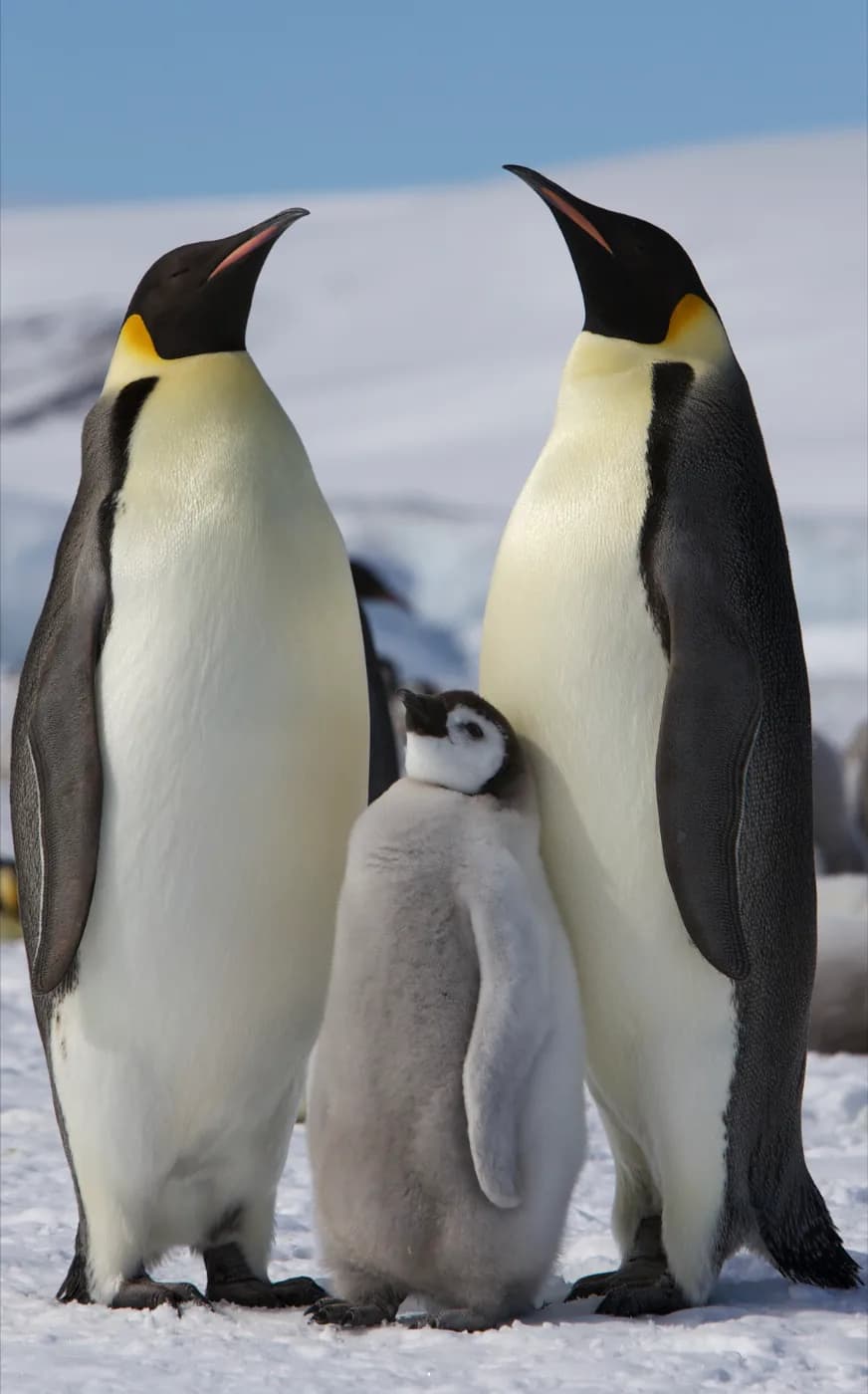
A male Emperor Penguin walks into his colony in autumn weighing somewhere near 38 kg. He walks back out months later at roughly half that.1 In between he eats nothing at all. The impressive part is not that he survives it. The impressive part is that his body knows, to within a couple of kilograms, exactly when to quit.
What Most People Get Wrong
Fasting is a scheduled cost, not an emergency
Long fasting sounds like something that happens to an animal. In penguins it is something the animal budgets for. Birds fast through courtship, through incubation, through the annual moult, and through the gaps between foraging trips when a chick is waiting.2 Hunger is not the edge case of penguin life. It is written into the calendar.
The capacity scales with body size, and the range is enormous:
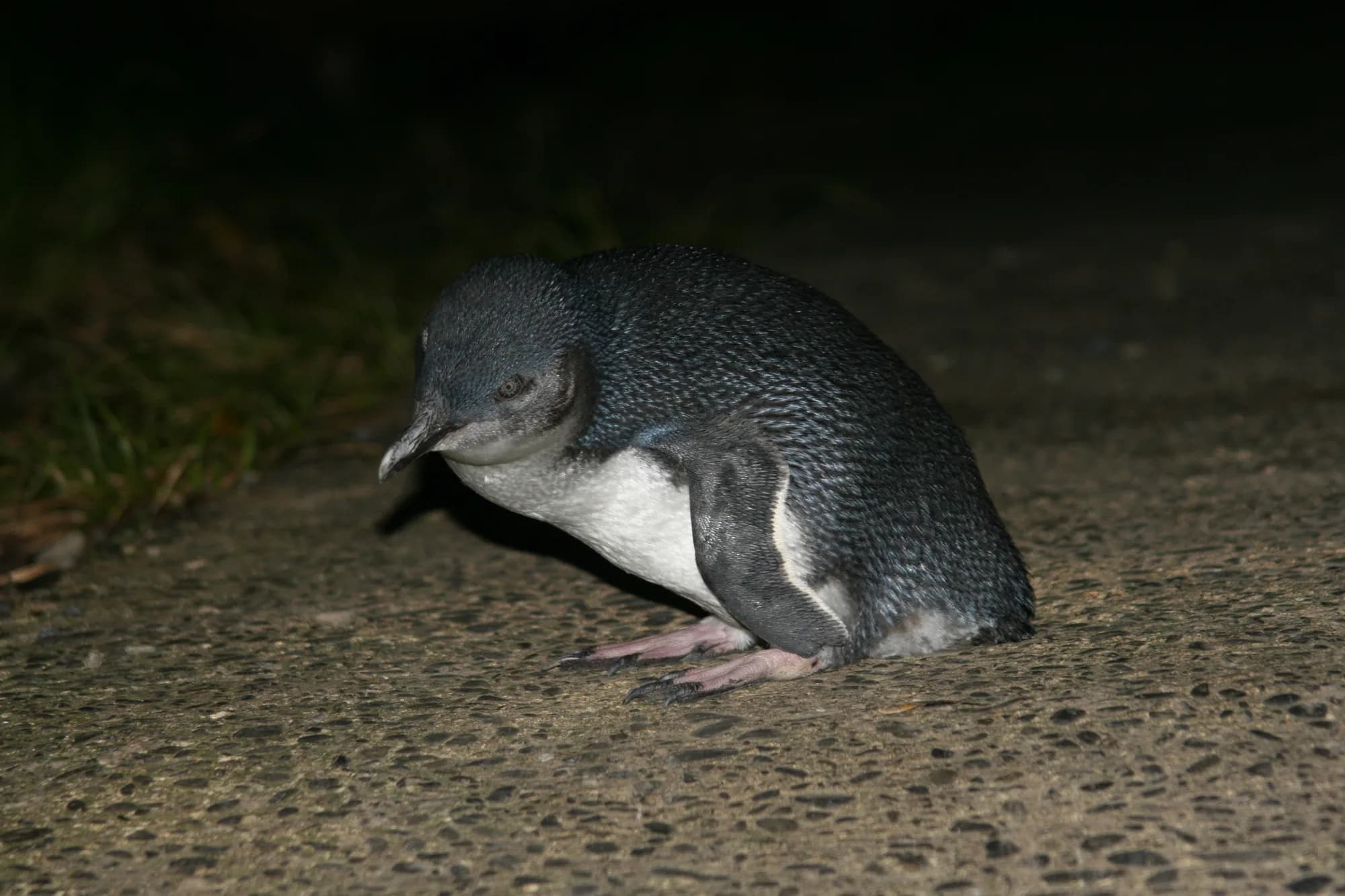
- Little Blue Penguins fast for one to three days at a time.
- Moult fasts across the family run roughly two to five weeks, depending on species.
- A male Emperor at an inland colony can go without food for something close to four months.2
The result is not heroic endurance. It is a budget with a hard floor and an alarm bolted to it.
Fasting and starvation are different events
A fasting penguin is spending fat it deliberately laid down beforehand, while actively protecting its own body protein. A starving animal has run out of the first and has started dismantling the second. In fasting birds and mammals generally, death has been reported once body protein loss reaches somewhere around 30–50 per cent — a range wide enough to be useless as a warning. The entire architecture of penguin fasting exists to stop the bird from ever getting near it.
Why This Problem Is Hard
The colony is nowhere near the food
Emperors breed on fast ice, and depending on the year and the site that can put the colony 50–120 km from open water. The distance is not fixed, which means the cost of the strategy is not fixed either. A bird that has to walk further arrives with less fat and starts the clock at a worse number.
The moult makes feeding physically impossible
Penguins replace their entire plumage in one concentrated burst rather than shedding feathers gradually. While that is happening the bird has no reliable waterproof, insulating layer, so it cannot forage in cold water without losing heat faster than it can generate it. This fast is not a scheduling choice. It is imposed by physics. Moult fasts are also anticipated differently: birds bank fat and protein beforehand, because feathers themselves are built from protein.2
Protein is not a fuel you can freely spend
Fat is a store. Protein is the animal. The pectoral muscles a penguin would burn for energy are the same muscles that power the swim back to food, which is why protein sparing — not raw reserve size — is the real skill on display.
What Scientists Know
The fast runs in three phases
French work on emperors at Pointe Géologie, mostly by Robin, Groscolas, Cherel and Le Maho, established a three-phase structure that has since been found in a wide range of fasting birds and mammals.3 Each phase has its own fuel, its own blood chemistry and its own behaviour.
| Phase | Body mass | Fuel | Blood markers | Movement |
|---|---|---|---|---|
| Phase I | First few days ashore | Recent food, then stored glycogen | Protein breakdown drops away | Transitional |
| Phase II | Roughly 38 kg down to 24 kg | 96 per cent lipid, 4 per cent protein | Uric acid and urea low and flat | Almost none |
| Phase III | Below roughly 24 kg | Protein, 14 times the phase II rate by 18 kg | Uric acid, urea and corticosterone rise | Climbing steeply |
The switch into phase III is not a decision. Fat stores approach exhaustion and the bird has nothing left to spend but itself.
Phase II is the whole trick. Ninety-six per cent lipid is an extraordinary ratio to hold for months, and holding it is why an emperor can spend a winter on sea ice instead of a fortnight.1
Phase III is a signal, not a failure
The most useful finding in this literature is behavioural. When captive male emperors dropped below about 24 kg, their spontaneous locomotor activity rose up to eight-fold, escape attempts rose up to fifteen-fold, and display songs — silent for months — resumed. At the same time corticosterone climbed and beta-hydroxybutyrate, the ketone marker of fat burning, fell away. Researchers named this the refeeding signal.4
In the field, that is the moment a male starts leaving the egg unattended for longer and longer stretches, then finally walks for the sea. Read from the outside it looks like the bird has broken. It has not.
The bird is not abandoning the egg out of weakness. It is refusing to die for it.
Later proteomic work sharpened the picture: birds depart when protein depletion starts coinciding with measurable defects in glucose handling, fatty acid use, insulin production and possibly kidney function.5 The alarm is not "you are thin." It is "your metabolism is beginning to fail," and it fires while there is still enough left to make the walk.
Chicks run the same programme
King Penguins show it on a longer timescale. At Possession Island in the Crozet archipelago, chicks were fed on average only once every 39 days between mid-April and early September. Some were not fed at all.6 Captive chicks fasted an average of five months, falling from 12.5 kg to 4.0 kg — a 68 per cent loss — with phase II alone lasting about four months. Chicks whose parents return too late die at around 3.0 kg.7 Roughly half of the chicks did not survive that winter and the spring that followed.6
That is the honest version of the king penguin story, and it is worth holding next to the emperor comparison: one species pushed the adult fast to its limit, the other pushed the chick fast instead.
Moult is the expensive one
Adult king penguins fast ashore for about a month to moult and lose 44 per cent of their pre-moult mass doing it. Protein supplies 15 per cent of the energy used — twice the share it takes during a non-moulting breeding fast — because feathers have to be built, not just paid for. Mean energy expenditure runs about 21 per cent higher than in a normal fast. The accounting is remarkably specific: the skin and its underlying fat provide roughly 72 per cent of the lipid burned, and the pectoral muscles supply around 57 per cent of the protein needed.8
Moult is not a fast with feathers added. It is a construction project run on a closed account.
Savings happen at every level
The economy is not only behavioural. In winter-acclimatised king penguin chicks, muscle mitochondria run about 15 per cent more efficiently when fasting than when fed, and letting body temperature drift from 38°C down to 30°C adds another 23 per cent to that coupling efficiency — together accounting for perhaps a quarter of the measured drop in mass-specific metabolic rate.9 Above that sits the behaviour: near-total stillness through phase II, and huddling, which is covered properly in why penguins don't freeze.
What refills the account matters as much as what drains it. A bird rebuilding reserves in krill-dominated water is working with a different density and a different seasonal window than one chasing dispersed fish, and that difference propagates straight into how long the next fast can safely run.
What Is Still Unclear
How long the emperor fast actually is
The famous figure — 115 days for a male, arriving at about 36 kg and losing 45–50 per cent of his mass — traces back to Prévost's 1961 observations at a single colony.10 It has been repeated for sixty years as though it were a species constant. It probably is not. Researchers working near Cape Washington in the Ross Sea recorded emperors diving in open water at night in late May, before laying, which means males at colonies close to the ice edge may fast for considerably less.10 The incubation shift itself, around 64–67 days, is not in dispute. The pre-laying portion very much is.
Where the threshold really sits
The 24 kg switch comes from a modest number of birds, many of them captive. Whether it shifts with age, breeding experience or season is poorly measured — and there is direct evidence it can move. During short spring fasts of two to three weeks, emperors lost mass 2.5 times faster during phase II than they did in winter, apparently because they started with smaller lipid reserves. Protein sparing is not a fixed capability. It depends on what you brought with you.11
Nor is there a good field estimate of what fraction of wild males reach phase III in a typical season. That number would tell us how much margin the population is actually operating on, and nobody has it.
Whether the alarm still points at food
The refeeding signal assumes that leaving now means finding food soon. That assumption is not physiological. It is oceanographic. A trigger calibrated over evolutionary time to a certain distance and a certain prey density does not recalibrate when the ice edge moves or the fish move first. This is the sharp end of the emperor's uplisting to Endangered: the fasting machinery is not failing, but the environment it was tuned against is changing faster than the tuning can.
Where To Go Next
For the breeding side of the same ledger, read Penguin Breeding and Chicks. For what all that stored fat is spent on at sea, see how penguins dive so deep. For where the population numbers stand now, the conservation tracker is the current record.
References
-
Robin, J.-P., Frain, M., Sardet, C., Groscolas, R. & Le Maho, Y. (1988). Protein and lipid utilization during long-term fasting in emperor penguins. American Journal of Physiology 254: R61–R68. https://doi.org/10.1152/ajpregu.1988.254.1.R61 ↩ ↩2
-
Groscolas, R. & Robin, J.-P. (2001). Long-term fasting and re-feeding in penguins. Comparative Biochemistry and Physiology A 128: 643–653. https://doi.org/10.1016/S1095-6433(00)00341-X ↩ ↩2 ↩3
-
Cherel, Y., Robin, J.-P. & Le Maho, Y. (1988). Physiology and biochemistry of long-term fasting in birds. Canadian Journal of Zoology 66: 159–166. https://doi.org/10.1139/z88-022 ↩
-
Robin, J.-P., Boucontet, L., Chillet, P. & Groscolas, R. (1998). Behavioral changes in fasting emperor penguins: evidence for a "refeeding signal" linked to a metabolic shift. American Journal of Physiology 274: R746–R753. https://doi.org/10.1152/ajpregu.1998.274.3.R746 ↩
-
Bertile, F., Fouillen, L., Wasselin, T., Maes, P., Le Maho, Y., Van Dorsselaer, A. & Raclot, T. (2016). The safety limits of an extended fast: lessons from a non-model organism. Scientific Reports 6: 39008. https://doi.org/10.1038/srep39008 ↩
-
Cherel, Y., Stahl, J.-C. & Le Maho, Y. (1987). Ecology and physiology of fasting in king penguin chicks. The Auk 104: 254–262. https://doi.org/10.1093/auk/104.2.254 ↩ ↩2
-
Cherel, Y. & Le Maho, Y. (1985). Five months of fasting in king penguin chicks: body mass loss and fuel metabolism. American Journal of Physiology 249: R387–R392. https://doi.org/10.1152/ajpregu.1985.249.4.R387 ↩
-
Cherel, Y., Charrassin, J.-B. & Challet, E. (1994). Energy and protein requirements for molt in the king penguin Aptenodytes patagonicus. American Journal of Physiology 266: R1182–R1188. https://doi.org/10.1152/ajpregu.1994.266.4.R1182 ↩
-
Monternier, P.-A., Marmillot, V., Rouanet, J.-L. & Roussel, D. (2014). Mitochondrial phenotypic flexibility enhances energy savings during winter fast in king penguin chicks. Journal of Experimental Biology 217: 2691–2697. https://doi.org/10.1242/jeb.104505 ↩
-
Kooyman, G. L., van Dam, R. P. & Hückstädt, L. A. (2018). Night diving by some emperor penguins during the winter breeding period at Cape Washington. Journal of Experimental Biology 221: jeb170795. https://doi.org/10.1242/jeb.170795 ↩ ↩2
-
Cherel, Y. & Groscolas, R. (1999). Relationships between nutrient storage and nutrient utilisation in long-term fasting birds and mammals. In: Adams, N. J. & Slotow, R. H. (eds) Proceedings of the 22nd International Ornithological Congress, Durban: 17–34. https://www.internationalornithology.org/PROCEEDINGS_Durban/Symposium/S01/S01.2.htm ↩