
Penguins in Galapagos Islands (Ecuador)
Galapagos Islands (Ecuador) is linked here mainly with Galapagos Penguin. Regional hubs with one species are still useful: they show the place-specific trap that bird is in.
Galapagos Islands (Ecuador) is part of the penguin world because the surrounding seas, nesting ground, and climate make life possible there. On this page that means one bird first: Galapagos Penguin. This species survives only while cool upwelling keeps fish available around a tiny range. When strong El Nino events flatten productivity, the margin disappears fast.
Species in lens
1
Singleton hub — depth over breadth
Profile focus
Galapagos Penguin
Up to 53 cm
Highest risk in view
Galapagos Penguin
Endangered
Species profile entry
Galapagos Islands (Ecuador) is part of the penguin world because the surrounding seas, nesting ground, and climate make life possible there.
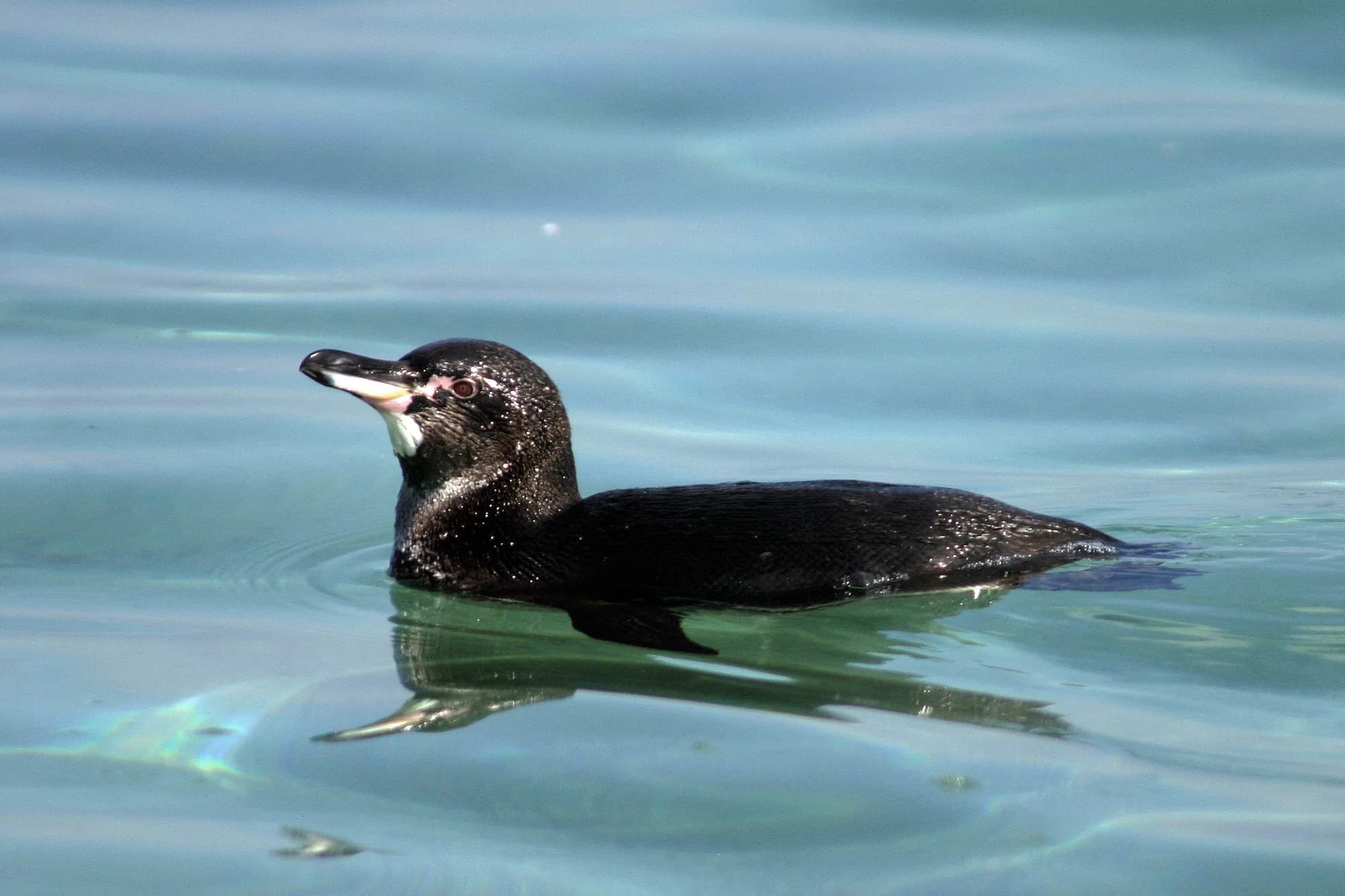
Signature insight
Galapagos Penguins are the cleanest proof that penguins do not worship latitude. They worship cold, productive water, even on equatorial islands.
Open full Galapagos Penguin profileWhat this view reveals
- Galapagos Penguin is the only species in this region view right now.
- This species survives only while cool upwelling keeps fish available around a tiny range.
- Conservation: Endangered · ~1,200 mature individuals.
Read next
All guidesWhy Some Penguins Live in Hot Places
Why penguins show up on tropical and desert coasts, and why warm-weather species still depend on cold, productive oceans.
Open guideWhere Penguins Live
A Survival Lab series map of the penguin world, from Antarctic fast ice to New Zealand forest edges and the equatorial Galapagos.
Open guideSmallest Penguins
The shortest penguins in the world, and why being tiny changes everything from nest choice to heat loss and predator risk.
Open guideUnderstanding Penguins in Galapagos Islands (Ecuador)
Galapagos Islands (Ecuador) currently highlights one species in this catalogue: Galapagos Penguin (Spheniscus mendiculus). Galapagos Penguins are the cleanest proof that penguins do not worship latitude.
Survival brief: This species survives only while cool upwelling keeps fish available around a tiny range. When strong El Nino events flatten productivity, the margin disappears fast. Myth people still carry: The Galapagos Penguin's main challenge is staying cool on land. What the evidence supports instead: Shade matters, but the real existential problem is marine productivity. If the fish vanish, the colony crashes no matter how cool the nest site is.
Field numbers: 49–53 cm, 1.7–2.6 kg, lifespan about 15–20 years. Status Endangered; population ~1,200 mature individuals; trend decreasing.
Where and what: ranges include Galapagos Islands (Ecuador); habitats Volcanic coastlines and Rocky shores; diet small fish, mullet, and sardines. Classified as Endangered with only about 1,200 individuals. Open the full profile for sources, research gaps, and related species.
Frequently asked questions
Which penguins live in Galapagos Islands (Ecuador)?
In this catalogue, Galapagos Penguin is the species tied to this region page. The only penguin species found north of the equator in the wild and the smallest South American penguin, Galápagos Penguins survive in a tropical setting thanks to cool upwelling from the Humboldt and Cromwell Currents.
What is the main survival problem for Galapagos Penguin?
This species survives only while cool upwelling keeps fish available around a tiny range. When strong El Nino events flatten productivity, the margin disappears fast.
What is the conservation status of Galapagos Penguin?
Galapagos Penguin is listed as Endangered, with an estimated population of ~1,200 mature individuals. Trend: decreasing. Classified as Endangered with only about 1,200 individuals.