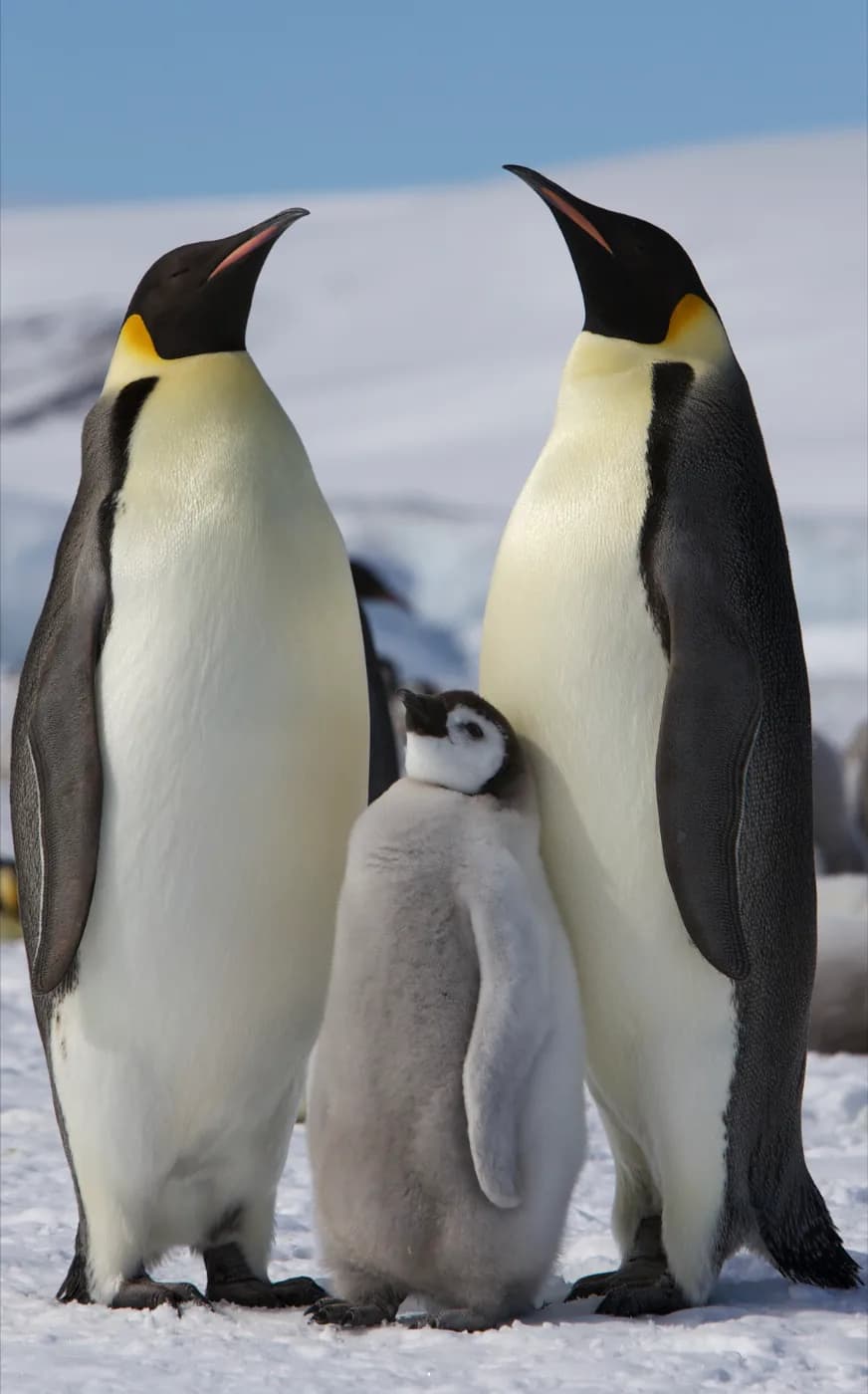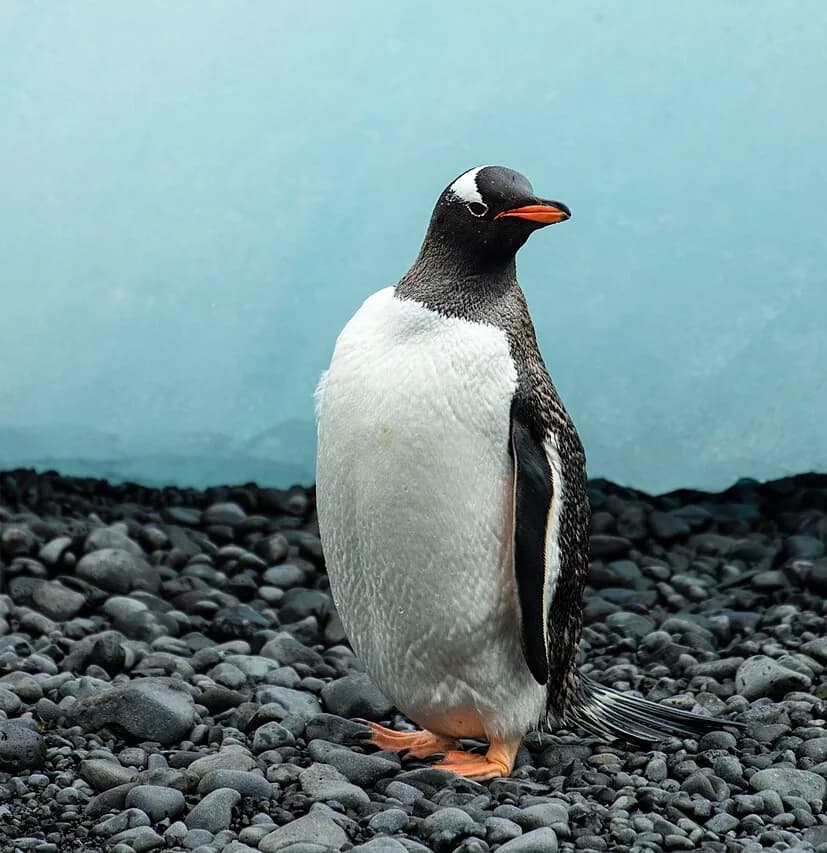
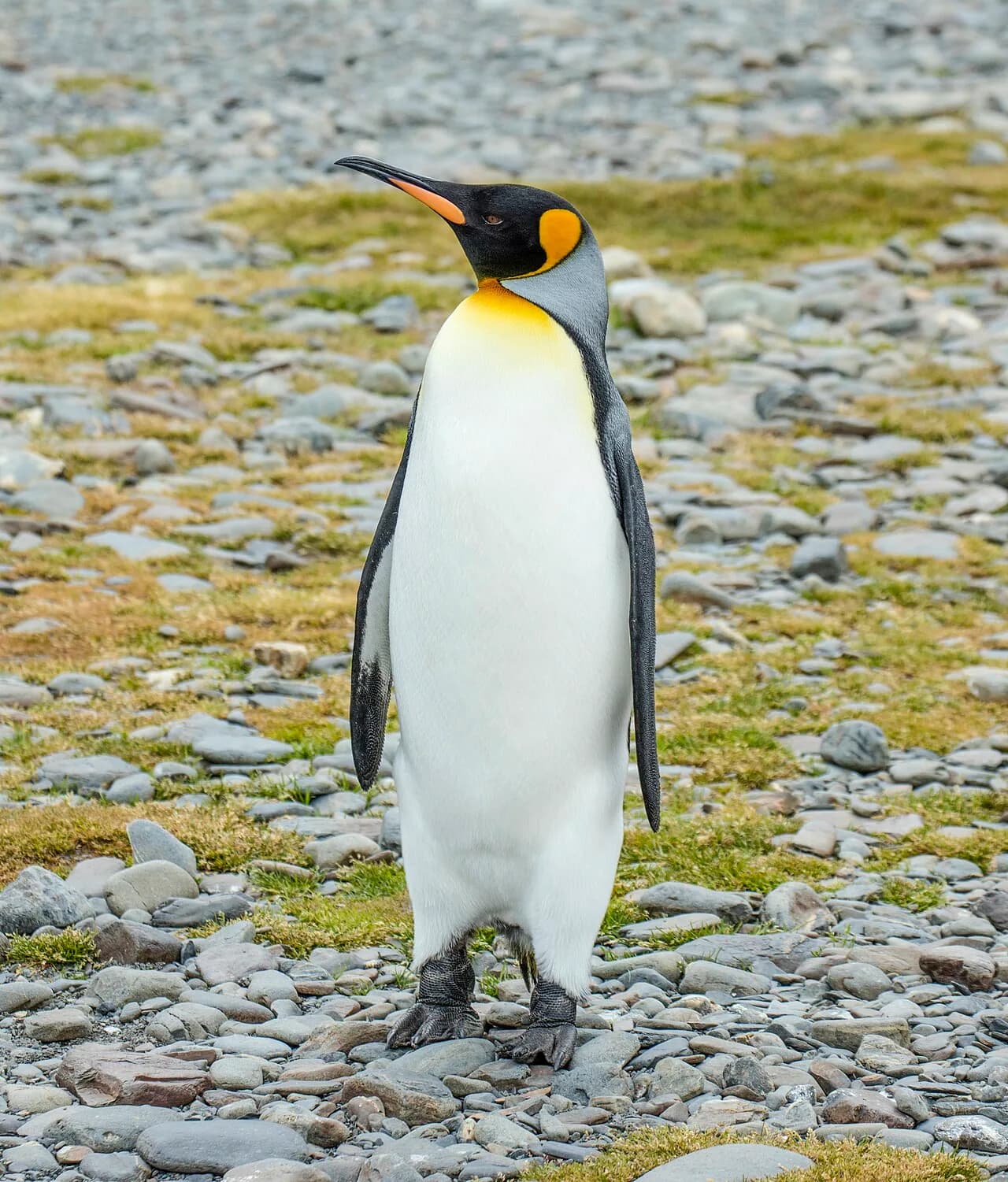
The Emperor Penguin holds the record at 565 m, deeper than any other bird. The important idea is bigger than one species and stranger than the record suggests. Deep diving is not a display of strength. It is an oxygen budget, spent under pressure, against a clock the bird cannot see.
What Most People Get Wrong
A dive is accounting, not athletics
People imagine deep diving as raw power: strong flippers, brave bird, problem solved. Muscle matters, but it is not the constraint. The constraint is that a penguin carries a fixed quantity of oxygen down with it, in three separate stores, and every second underwater draws that account down. Getting deep is easy. Getting back up with the account still solvent is the whole problem.
The limiting number is not the depth. It is the time.
Record dives are rare, not routine
Across seven research seasons and 22 years at the Cape Washington colony, researchers logged 83,314 emperor dives. Only 1,418 of them — under 2% — went past 400 m. The deepest in that dataset was 552 m.1 At Coulman Island, five birds logged nearly 16,000 dives across foraging commutes averaging 14.9 days, at about 213 dives per day; the modal foraging depth was 21–40 m and the modal duration was four to five minutes.2
Most of a deep diver's life happens shallow. The record is the tail of the distribution, not the shape of it.
Depth is not the same as speed
| Species | Deepest recorded dive | Top swimming speed |
|---|---|---|
| Emperor Penguin | 565 m | 11 km/h |
| King Penguin | 343 m | 12 km/h |
| Gentoo Penguin | 200 m | 36 km/h |
| Adélie Penguin | 180 m | 15 km/h |
| Chinstrap Penguin | 121 m | 13 km/h |
| Little Blue Penguin | 72 m | 6 km/h |
The fastest penguin in the world is not the deepest. Gentoo Penguins reach 36 km/h, roughly three times emperor cruising speed, and stop about 365 m short of the emperor record.3 Speed buys pursuit. Depth buys access. They are separate currencies.
Why This Problem Is Hard
Pressure attacks the air the bird needs
Bird lungs are rigid. Air capillaries do not collapse the way a mammal's alveoli do, and that rigidity is a liability under pressure. Reconstructions from CT scans of live Adélie, king and emperor penguins put hard numbers on the squeeze: reaching 200 m, 400 m and 600 m respectively without barotrauma would require moving essentially all air-sac air into the lungs and reducing the combined tracheobronchial and parabronchial volume by 24% in Adélies, 53% in kings and 76% in emperors.4
That is a severe requirement, and it sits awkwardly with the other job the same air has to do. The respiratory system holds 33–48% of a diving penguin's total body oxygen store.4 The air is both the fuel tank and the structural hazard.
The gas that stays behind is also a problem
Arterial and venous nitrogen partial pressures measured in emperors at 20–37 m depth were about 2.5 times surface values, at roughly 2.1 atmospheres absolute.5 Gas exchange keeps running during a dive. Whatever protects these birds from decompression injury across hundreds of serial dives is doing so while nitrogen is genuinely loading.
Oxygen has to be rationed by tissue, not just by time
Swimming muscle is the biggest consumer and the least essential organ to keep perfused. Brain and heart are the opposite. A dive that spends oxygen evenly across the body is a short dive.
What Scientists Know
Where the oxygen actually sits
Emperor pectoral muscle carries myoglobin at about 6.4 g per 100 g of muscle — among the highest concentrations measured in any vertebrate.6 That is a private oxygen supply, held inside the muscle, usable when the blood supply is shut off.
Alongside it sit ordinary energy stores in unexpected roles. Measured phosphocreatine and glycogen concentrations in emperor locomotory muscle, 20.8 and 54.6 mmol kg⁻¹, are unremarkable — close to values in non-diving animals. Modelled against a diving muscle oxygen consumption of about 12.4 ml O₂ kg⁻¹ min⁻¹, they still provide a large anaerobic reserve, enough to keep muscle working past 20 minutes.7
How the spending is controlled
Resting heart rate in an emperor is about 56 beats per minute. Median heart rate during a dive is 64 — higher than rest, because diving is work. But in the deepest segments of deep dives, recorded heart rates fell as low as 10 beats per minute, and dives beyond the aerobic dive limit ran a lower median than dives inside it.8
Bradycardia plus peripheral vasoconstriction has a specific consequence: the swimming muscle is cut off from the circulation and runs on its own myoglobin. Two patterns show up in the data. In Type A dives — roughly a fifth of them, and shorter than the aerobic limit — myoglobin desaturates fast and steadily, consistent with essentially no muscle blood flow. In Type B dives it declines slowly and unevenly, sometimes plateauing, consistent with muscle staying partly perfused.6 The dive response is not one switch. It is a range of settings the bird appears to choose between.
The clearest evidence for muscle isolation is what the blood does not contain. Blood lactate in diving emperors stayed below 2 mmol l⁻¹ as far as 10.5 minutes into a dive — well past the measured aerobic dive limit of 5.6 minutes.5 The lactate is being made. It simply cannot wash out until the muscle is reconnected on the surface.
The airframe
Penguin bones are dense, but not in the way often described. Histology shows the density comes from compaction of the internal cortex and reduction of the marrow cavity — osteosclerosis rather than pachyostosis. The flipper humerus in particular kept changing for tens of millions of years after penguins lost flight, which suggests the underwater airframe was still being optimised long after the switch.9
Descent and ascent rates in deep emperor dives sit between 1.0 and 2.0 m s⁻¹ and were never recorded above 2.5 m s⁻¹. Bottom time accounts for only 0.22–0.28 of a dive deeper than 100 m.2 Most of a deep dive is commuting, which is exactly why the transit has to be cheap. The same counter-current plumbing described in why penguins don't freeze is part of what keeps the thermal bill down while it happens.
Shallow specialists solve a different equation
Not every penguin needs the extreme version, and the smaller species show how tight the margin gets. Adélie Penguins forage between 3 and 98 m with a mean around 26 m, and most hunting dives last 60–90 seconds against an estimated aerobic dive limit of only 46–68 seconds — meaning a large share of ordinary Adélie dives are already partly anaerobic.10 Chinstraps take about 90% of their dives shallower than 45 m and 40% shallower than 10 m, catching roughly 16 krill per dive.11 Little Blue Penguins work the top 72 m.
Dive behaviour follows food, not prestige. What a species eats predicts its depth profile better than its size does, which is the argument developed in what penguins eat.
What Is Still Unclear
The aerobic dive limit is measured but not explained
The 5.6-minute figure is real and repeatable. Its physiological basis is not settled. Blood and respiratory oxygen stores are demonstrably not exhausted at 5.6 minutes; the leading hypothesis is that isolated locomotory muscle hits its own local limit first. The classic oxygen-store formula only reproduces the 5.6-minute value if you assume a metabolic rate twice the resting prediction, while the longest recorded dives only make arithmetic sense at about half the resting rate.12 The same bird cannot be both. Something in the standard model is wrong.
Baroprotection does not fully add up
The CT-derived volume reductions required to protect emperor air capillaries at 600 m are extreme, and it is not established that penguins achieve them. Air-sac volumes measured at high inflation pressure were two to three times larger than end-of-dive volumes, which has led to the suggestion that penguins exhale during the later stages of deep dives.13 Whether they do, and how they avoid barotrauma if they do not, is open.
Nobody knows what the deepest dives are for
Dives past 400 m cluster in daylight hours2 and run 7–13 minutes, more than twice the aerobic dive limit, with recovery intervals of 10–20 minutes.1 They are rare, expensive, and consistent across individuals and seasons — which argues they matter. What they are catching down there, and why the shallower fish layers will not do, has not been resolved. That gap matters, because a species with an already narrow depth economy pays more for the same meal when prey fields shift.
Where To Go Next
For the thermal half of the same body plan, read why penguins don't freeze. For the prey side, read what penguins eat. The two great divers belong to the same genus, Aptenodytes, and the sharpest way to see the trade-offs is the emperor and king comparison.
References
-
Kooyman, G. L., Goetz, K. T., Williams, C. L., Ponganis, P. J., Sato, K., Eckert, S., Horning, M., Thorson, P. H. & Van Dam, R. P. (2020). Crary Bank: a deep foraging habitat for emperor penguins in the western Ross Sea. Polar Biology 43: 801–811. https://doi.org/10.1007/s00300-020-02686-3 ↩ ↩2
-
Kooyman, G. L. & Kooyman, T. G. (1995). Diving behavior of emperor penguins nurturing chicks at Coulman Island, Antarctica. The Condor 97: 536–549. https://digitalcommons.usf.edu/condor/vol97/iss2/23/ ↩ ↩2 ↩3
-
Guinness World Records. Fastest bird swimmer (gentoo penguin, Pygoscelis papua, 36 km/h). https://www.guinnessworldrecords.com/world-records/70933-fastest-bird-swimmer ↩
-
Ponganis, P. J., Williams, C. L. & Scadeng, M. (2025). Respiratory anatomy and physiology in diving penguins. Philosophical Transactions of the Royal Society B 380: 20230422. https://doi.org/10.1098/rstb.2023.0422 ↩ ↩2
-
Ponganis, P. J., Stockard, T. K., Meir, J. U., Williams, C. L., Ponganis, K. V. & Howard, R. (2009). O₂ store management in diving emperor penguins. Journal of Experimental Biology 212: 217–224. https://doi.org/10.1242/jeb.026096 ↩ ↩2
-
Williams, C. L., Meir, J. U. & Ponganis, P. J. (2011). What triggers the aerobic dive limit? Patterns of muscle oxygen depletion during dives of emperor penguins. Journal of Experimental Biology 214: 1802–1812. https://doi.org/10.1242/jeb.052233 ↩ ↩2
-
Williams, C. L., Sato, K., Shiomi, K. & Ponganis, P. J. (2012). Muscle energy stores and stroke rates of emperor penguins: implications for muscle metabolism and dive performance. Physiological and Biochemical Zoology 85: 120–133. https://doi.org/10.1086/664698 ↩
-
Wright, A. K., Ponganis, K. V., McDonald, B. I. & Ponganis, P. J. (2014). Heart rates of emperor penguins diving at sea: implications for oxygen store management. Marine Ecology Progress Series 496: 85–98. https://doi.org/10.3354/meps10592 ↩
-
Ksepka, D. T., Werning, S., Sclafani, M. & Boles, Z. M. (2015). Bone histology in extant and fossil penguins (Aves: Sphenisciformes). Journal of Anatomy 227: 611–630. https://doi.org/10.1111/joa.12367 ↩
-
Chappell, M. A., Shoemaker, V. H., Janes, D. N., Bucher, T. L. & Maloney, S. K. (1993). Diving behavior during foraging in breeding Adélie penguins. Ecology 74: 1204–1215. https://doi.org/10.2307/1940491 ↩
-
Lishman, G. S. & Croxall, J. P. (1983). Diving depths of the chinstrap penguin Pygoscelis antarctica. British Antarctic Survey Bulletin 61: 21–25. https://nora.nerc.ac.uk/id/eprint/504753/ ↩
-
Ponganis, P. J., Meir, J. U. & Williams, C. L. (2010). Oxygen store depletion and the aerobic dive limit in emperor penguins. Aquatic Biology 8: 237–245. https://doi.org/10.3354/ab00216 ↩
-
Ponganis, P. J., St Leger, J. & Scadeng, M. (2015). Penguin lungs and air sacs: implications for baroprotection, oxygen stores and buoyancy. Journal of Experimental Biology 218: 720–730. https://doi.org/10.1242/jeb.113647 ↩