Most field references say there are about 18 living penguin species.1 This site publishes 19. Neither figure is an error, and the gap between them is the most useful thing in penguin taxonomy. A species count is not a headcount. It is a summary of where a group of biologists decided to draw lines through a set of continuously varying birds, and the lines move when the evidence improves.
What Most People Get Wrong
The number is a decision, not a measurement
People expect a species count to behave like counting chairs in a room. It does not. Penguins are a small, recently diversified family, and the boundaries between the youngest lineages sit inside a grey zone where different kinds of evidence disagree with each other.
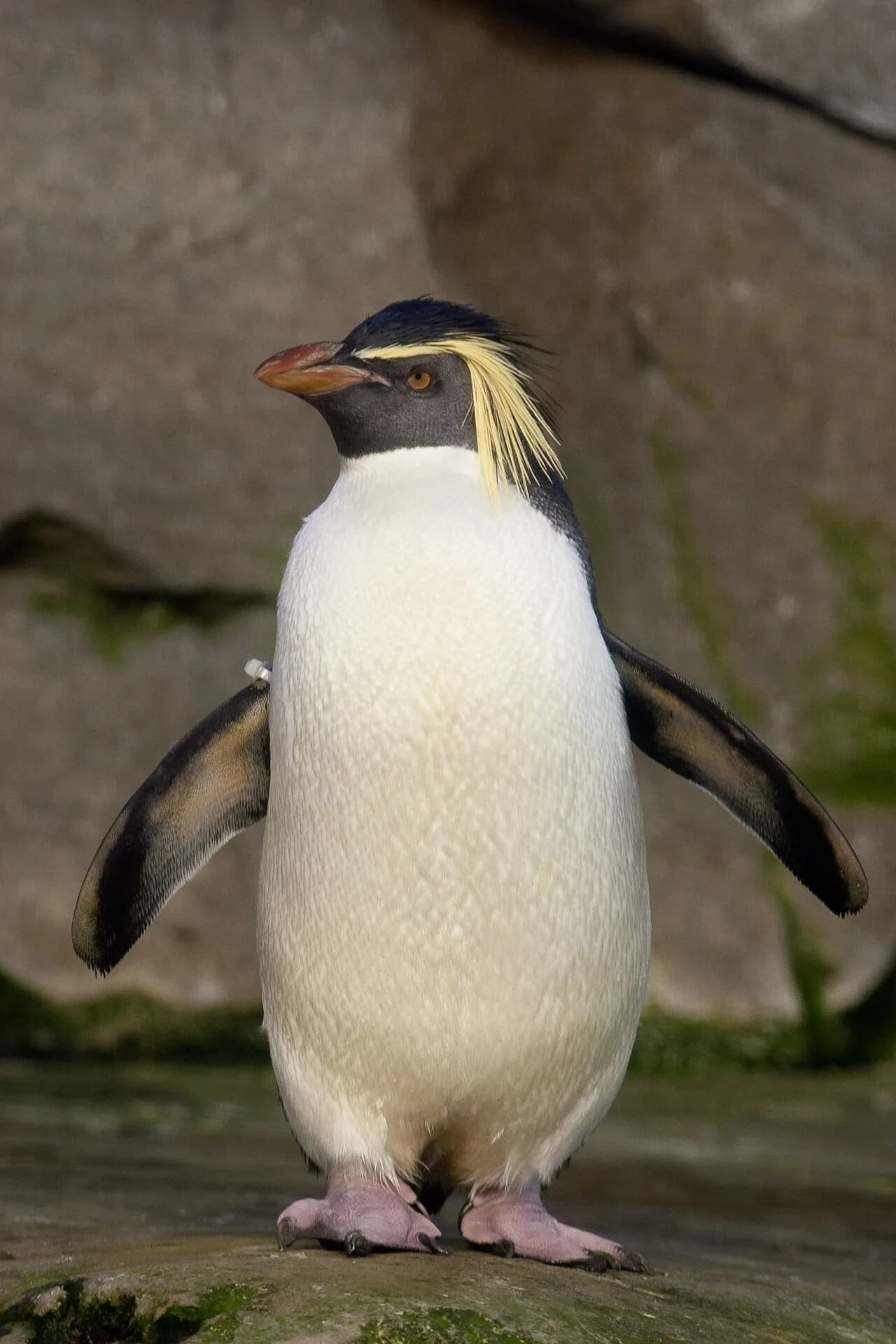
The entire 18-versus-19 disagreement comes down to one bird: whether the Eastern Rockhopper Penguin is a full species or a subspecies of the Western Rockhopper Penguin. Everything else on the list is broadly agreed.
Taxonomy is not bookkeeping. It is a running argument about how much difference is enough.
The family is not one bird with variations
The second mistake is treating penguins as a single design in different sizes. The living species span a 4.3-fold difference in height and roughly a 30-fold difference in mass, from a 30 cm Little Blue Penguin to a 130 cm Emperor Penguin. They also span every latitude band from the equator to the fast ice.
| Genus | Living species | Height range (cm) | Character of the group |
|---|---|---|---|
| Eudyptes | 8 | 45–77 | Crested, cliff-nesting, mostly sub-Antarctic |
| Spheniscus | 4 | 49–76 | Banded, burrow-nesting, warm-water upwelling coasts |
| Pygoscelis | 3 | 46–90 | Brush-tailed, Antarctic and Peninsula specialists |
| Aptenodytes | 2 | 85–130 | The two giants; single-egg clutch, no nest |
| Megadyptes | 1 | 62–79 | Solitary forest-edge nester, New Zealand only |
| Eudyptula | 1 | 30–33 | The smallest penguin; nocturnal on land |
The genera are extremely uneven
Eight of the 19 species — 42% of the family — sit in Eudyptes alone. Two genera contain a single species each. That imbalance is not a filing quirk. It tells you that one lineage radiated hard across the sub-Antarctic island chain while others did not, and it is exactly the lineage where species limits are hardest to settle.
Why This Problem Is Hard
Recent divergence produces ambiguous evidence
Multilocus work dates the split between the northern and southern rockhopper lineages to about 0.97 million years ago.2 On that timescale, gene trees have often not finished sorting, plumage and body size may not have diverged at all, and calls and mating displays may be the only visible signal. Jouventin and colleagues built the original case for the Northern Rockhopper Penguin largely on voice and sexual signalling rather than measurements.3
Different markers give different answers
This is the crux, and it is worth being blunt about. Three serious studies of the same birds reached three different emphases.
- A 2018 analysis using two mitochondrial and two nuclear markers across 13 locations found strong phylogeographic structure supporting three separate rockhopper species.4
- A 2019 study using multilocus data from 114 individuals across 12 colonies confirmed the northern lineage as distinct but failed to delimit eastern from western rockhoppers, recommending they be kept as one species with two management units.2
- A 2021 genome-scale reassessment argued the opposite direction, concluding that taxonomy built on limited genomic markers may underestimate rockhopper diversity and thereby understate conservation risk.5
None of these is bad science. They differ because the amount of genome you sample changes what you can resolve.
Gene flow does not stop at the line
The same 2019 work detected gene flow between the northern and southern lineages — taxa nearly everyone accepts as separate species.2 A clean, gene-tight species boundary is the exception in this family, not the rule.
Size gives no help at all
Eastern and western rockhoppers are the same bird by the numbers: 45–55 cm tall, 2.0–3.5 kg, both diving to about 113 m, both incubating for 32–34 days. Where morphology is silent, the decision falls entirely to molecular and behavioural evidence, which is precisely where the disagreement lives.
What Scientists Know
The rockhopper split, in figures
| Rockhopper | Scientific name | Breeding range | Population (pairs) | IUCN status |
|---|---|---|---|---|
| Western | Eudyptes chrysocome | Falklands, southern South America | 1,500,000 | Vulnerable |
| Eastern | Eudyptes filholi | Sub-Antarctic Indian and Pacific islands | 1,600,000 | Vulnerable |
| Northern | Eudyptes moseleyi | Tristan da Cunha, Gough, Amsterdam, St Paul | 240,300 | Endangered |
Read the last row and the argument for splitting becomes concrete. The northern lineage holds roughly 7% of the rockhopper total. Lumped into a single 3.3-million-pair species, it disappears into a rounding error. Split out, it is Endangered and visible.
Splitting is a conservation act, not a labelling exercise
A split species always has a smaller population than the aggregate it came from, a narrower range, and less internal buffering against a bad decade. Conservation assessment operates almost entirely at species level, so where the line falls determines which birds get counted, funded and protected. That is the argument developed in penguin conservation status explained, and it applies with unusual force here.
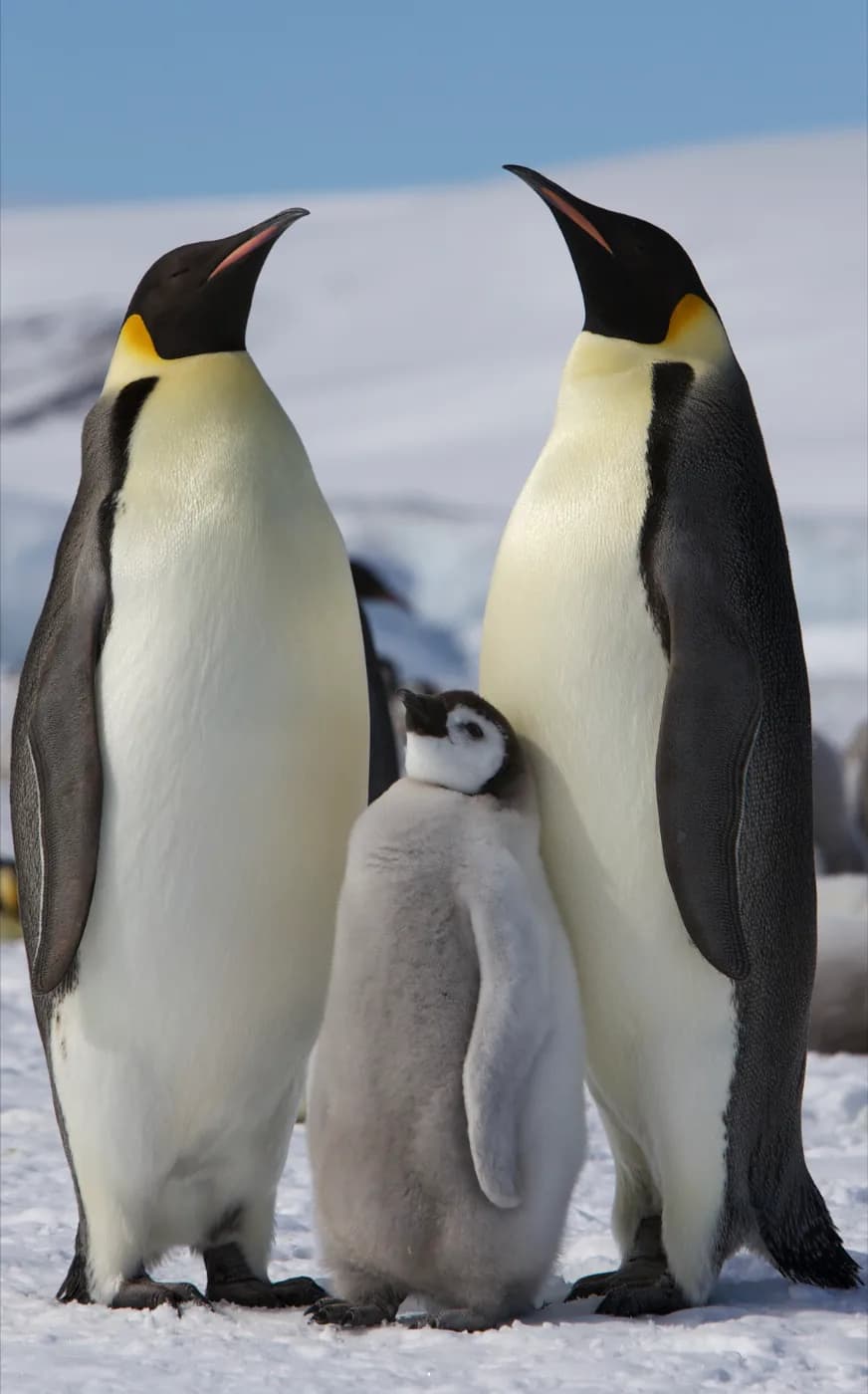
The current listing across the 19 species is not comfortable reading: 12 are assessed as threatened — Vulnerable, Endangered or Critically Endangered — which is 63% of the family. The Emperor Penguin joined that group on 9 April 2026 when it was uplisted to Endangered.6
The same argument is running in two other genera
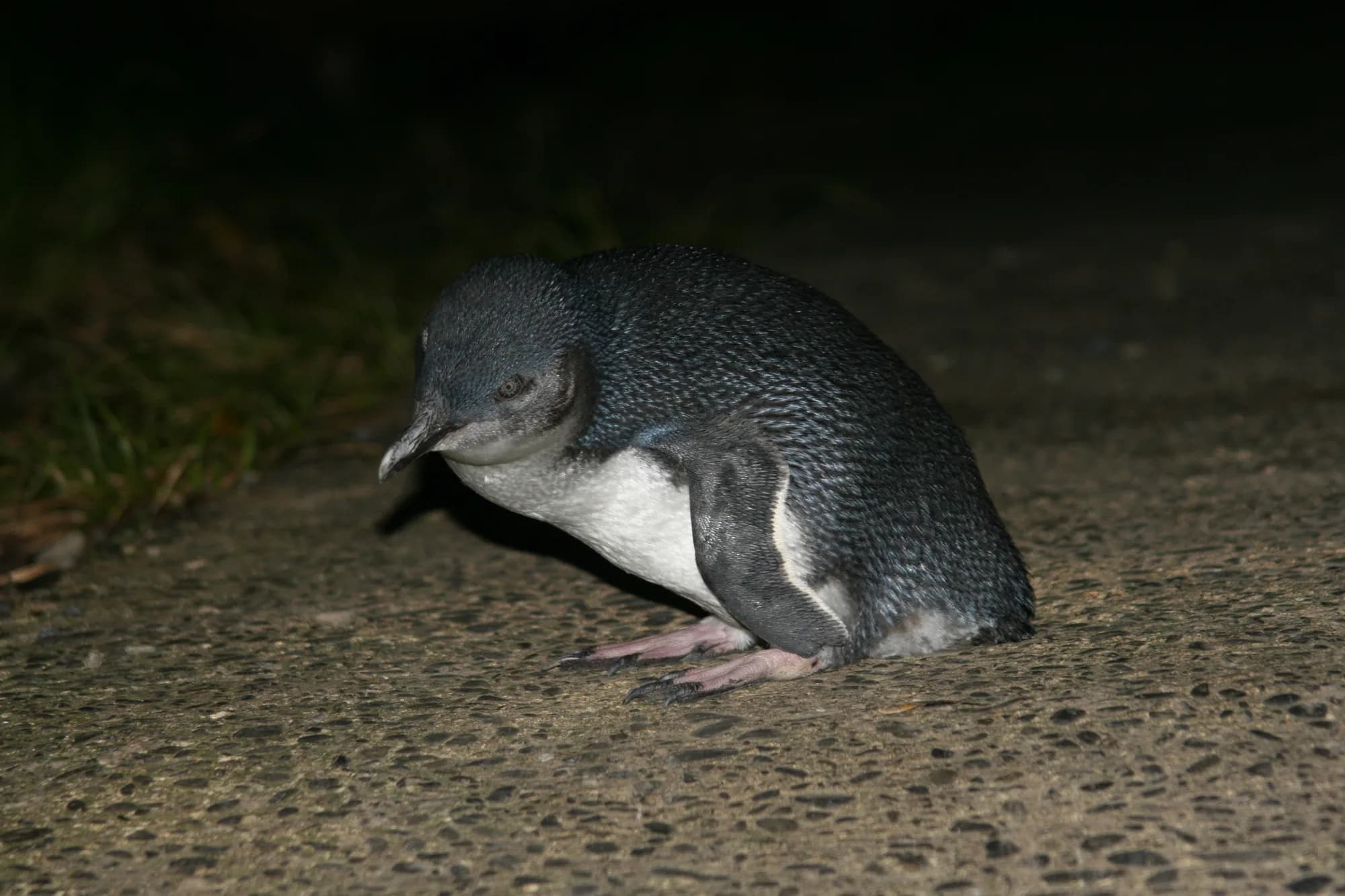
Little penguins. The genus Eudyptula was reduced from two species to one with six subspecies in 1976 on morphometric grounds.7 Genetic work since has repeatedly recovered two clades — one endemic to New Zealand, one spanning Australia and south-eastern New Zealand — with only low levels of hybridisation where they meet.8 Coalescent modelling and ancient DNA suggest the Australian lineage colonised southern New Zealand only in recent centuries, after human-driven declines in the endemic form.9 This site keeps Eudyptula at one species.
Gentoos. A 2020 integrative study of morphometrics and genetics proposed four gentoo species — in the Falklands, the South Shetlands and Western Antarctic Peninsula, Kerguelen and South Georgia — with formal nomenclatural changes.10 Later genomic work has recovered four divergent lineages with lineage-specific selection signals in genes for thermoregulation, oxygen transport and metabolism.11 This site keeps the Gentoo Penguin as one species. If that proposal is adopted, the published count moves to 22.
Where the family came from
A five-gene phylogeny estimated that penguins originated roughly 71 million years ago in Gondwanaland, with an Antarctic origin for the living taxa and more derived lineages occurring at progressively lower latitudes.12 The family did not radiate outward from the tropics. It moved out of the cold, which is why the modern geography looks the way it does — the subject of where penguins live.
What Is Still Unclear
The rockhopper decision is genuinely open
The status of filholi has been under active review by regional classification committees rather than settled.13 Any site publishing a number is choosing a side. This one publishes 19 and says so; a reader who prefers the conservative reading can treat eastern and western as subspecies without changing a single biological fact on either profile.
The macaroni and royal problem
Here is the uncomfortable part. The 2018 molecular study that supported three rockhopper species found no genetic divergence between Macaroni and Royal Penguins, which are almost universally treated as two species.4 A catalogue that splits rockhoppers on molecular evidence and keeps macaroni and royal apart despite the absence of it is not internally consistent under any single standard. Very few published lists are.
How many gentoo species there are is unresolved
Four lineages are well supported. Whether they are four species depends on which species concept is applied, and the IUCN has not reassessed them separately.10
The count will move again
There is no reason to expect stability. Genome-scale data are still arriving for most penguin taxa, and the direction of travel across birds generally has been towards recognising more cryptic species, not fewer.
Where To Go Next
For the full catalogue as this site publishes it, start with all penguin species or browse by genus. For how the threat categories in the table above are assigned, read penguin conservation status explained. For the ecological version of the same diversity story, open where penguins live and what penguins eat. Unfamiliar terms are defined in the glossary.
References
-
Boersma, P.D., Borboroglu, P.G., Gownaris, N.J., Bost, C.A., Chiaradia, A., Ellis, S., Schneider, T., Seddon, P.J., Simeone, A., Trathan, P.N., Waller, L.J. & Wienecke, B. (2020). Applying science to pressing conservation needs for penguins. Conservation Biology 34(1): 103–112 — the IUCN SSC Penguin Specialist Group Steering Committee writing of "the world's 18 penguin species". https://pubmed.ncbi.nlm.nih.gov/31257646/ ↩
-
Mays, H.L. Jr, Oehler, D.A., Morrison, K.W., Morales, A.E., Lycans, A., Perdue, J., Battley, P.F., Cherel, Y., Chilvers, B.L., Crofts, S., Demongin, L., Fry, W.R., Hiscock, J., Kusch, A., Marin, M., Poisbleau, M., Quillfeldt, P., Raya Rey, A., Steinfurth, A., Thompson, D.R. & Weakley, L.A. (2019). Phylogeography, population structure, and species delimitation in rockhopper penguins (Eudyptes chrysocome and Eudyptes moseleyi). Journal of Heredity 110(7): 801–817 — divergence time 0.97 Ma, 114 individuals from 12 colonies, gene flow between moseleyi and chrysocome, delimitation of chrysocome from filholi unsupported. https://pubmed.ncbi.nlm.nih.gov/31737899/ ↩ ↩2 ↩3
-
Jouventin, P., Cuthbert, R.J. & Ottvall, R. (2006). Genetic isolation and divergence in sexual traits: evidence for the northern rockhopper penguin Eudyptes moseleyi being a sibling species. Molecular Ecology 15(11): 3413–3423. https://pubmed.ncbi.nlm.nih.gov/16968279/ ↩
-
Frugone, M.J., Lowther, A., Noll, D., Ramos, B., Pistorius, P., Dantas, G.P.M., Petry, M.V., Bonadonna, F., Steinfurth, A., Polanowski, A., Raya Rey, A., Lois, N.A., Pütz, K., Trathan, P., Wienecke, B., Poulin, E. & Vianna, J.A. (2018). Contrasting phylogeographic pattern among Eudyptes penguins around the Southern Ocean. Scientific Reports 8: 17481 — two mtDNA (HVRI, COI) and two nuclear (ODC, AK1) markers from 13 locations; three rockhopper species supported; no genetic divergence between macaroni and royal penguins. https://doi.org/10.1038/s41598-018-35975-3 ↩ ↩2
-
Frugone, M.J., Cole, T.L., López, M.E., Clucas, G., Matos-Maraví, P., Lois, N.A., Pistorius, P., Bonadonna, F., Trathan, P., Polanowski, A., Wienecke, B., Raya-Rey, A., Pütz, K., Steinfurth, A., Bi, K., Wang-Claypool, C.Y., Waters, J.M., Bowie, R.C.K., Poulin, E. & Vianna, J.A. (2021). Taxonomy based on limited genomic markers may underestimate species diversity of rockhopper penguins and threaten their conservation. Diversity and Distributions 27(11): 2277–2296. https://nora.nerc.ac.uk/id/eprint/531105/ ↩
-
IUCN (2026). Emperor penguin and Antarctic fur seal now Endangered due to climate change – IUCN Red List. Press release, Gland, 9 April 2026 — emperor penguin moved from Near Threatened to Endangered. https://iucn.org/press-release/202604/emperor-penguin-and-antarctic-fur-seal-now-endangered-due-climate-change-iucn ↩
-
Kinsky, F.C. & Falla, R.A. (1976). A subspecific revision of the Australasian blue penguin (Eudyptula minor) in the New Zealand area. Records of the National Museum of New Zealand 1(7): 105–126. The morphometric basis and the six subspecies recognised are set out in Banks, J.C., Mitchell, A.D., Waas, J.R. & Paterson, A.M. (2002), An unexpected pattern of molecular divergence within the blue penguin (Eudyptula minor) complex, Notornis 49: 29–38. https://www.birdsnz.org.nz/wp-content/uploads/2021/12/Notornis_49_1_29.pdf ↩
-
Grosser, S., Burridge, C.P., Peucker, A.J. & Waters, J.M. (2015). Coalescent modelling suggests recent secondary-contact of cryptic penguin species. PLOS ONE 10(12): e0144966 — two Eudyptula taxa co-occur in southern New Zealand with only low levels of hybridisation, the Australian lineage having expanded there recently. https://journals.plos.org/plosone/article?id=10.1371/journal.pone.0144966 ↩
-
Grosser, S., Rawlence, N.J., Anderson, C.N.K., Smith, I.W.G., Scofield, R.P. & Waters, J.M. (2016). Invader or resident? Ancient-DNA reveals rapid species turnover in New Zealand little penguins. Proceedings of the Royal Society B 283: 20152879 — arrival of E. novaehollandiae dated to c. AD 1500–1900, following the anthropogenic decline of the endemic E. minor. https://pubmed.ncbi.nlm.nih.gov/26842575/ ↩
-
Tyler, J., Bonfitto, M.T., Clucas, G.V., Reddy, S. & Younger, J.L. (2020). Morphometric and genetic evidence for four species of gentoo penguin. Ecology and Evolution 10(24): 13836–13846 — four genetically and morphologically distinct populations (Falklands, South Shetlands/Western Antarctic Peninsula, Kerguelen, South Georgia), with formal nomenclatural changes and a recommendation that the IUCN reassess each separately. https://pubmed.ncbi.nlm.nih.gov/33391684/ ↩ ↩2
-
Noll, D., Younger, J., Pertierra, L., Greve, M., Pizarro, E., León, F., Brandt, D., Tyler, J., Clucas, G., Levy, H., Simison, W., McInnes, J., Pistorius, P., Le Bohec, C., Bonadonna, F., Trathan, P., Barbosa, A., Raya Rey, A., Dantas, G., Bowie, R., Poulin, E. & Vianna, J. (2026). Integrative evidence reveals adaptive divergence and speciation in gentoo penguins. Communications Biology 9: 798 — four divergent lineages with lineage-specific positive selection in genes related to thermoregulation, oxygen transport, metabolism and skeletal development. https://doi.org/10.1038/s42003-026-10081-7 ↩
-
Baker, A.J., Pereira, S.L., Haddrath, O.P. & Edge, K.-A. (2006). Multiple gene evidence for expansion of extant penguins out of Antarctica due to global cooling. Proceedings of the Royal Society B 273: 11–17 — five genes (12S, 16S, cytochrome b, COI and nuclear RAG-1); origin about 71 Ma in Gondwanaland, Antarctic origin of extant taxa, more derived taxa at lower latitudes. https://pmc.ncbi.nlm.nih.gov/articles/PMC1560011/ ↩
-
Remsen, J.V. Jr. Proposal (1001) to the South American Classification Committee: treat Eudyptes filholi as a separate species from E. chrysocome — one of several cases referred to regional committees for review by the IOU Working Group on Avian Checklists; filholi is currently treated as a subspecies by IOC and Clements. https://www.museum.lsu.edu/~Remsen/SACCprop1001.htm ↩